


"I've been to Egypt 12 times, it's no better there." Belarusians share how they vacation in domestic sanatoriums
A trip to a sanatorium in Belarus costs about the same as a seaside vacation somewhere. Devby.io asked Belarusian IT specialists who have experienced this firsthand and can compare what makes sanatoriums good or bad for them.
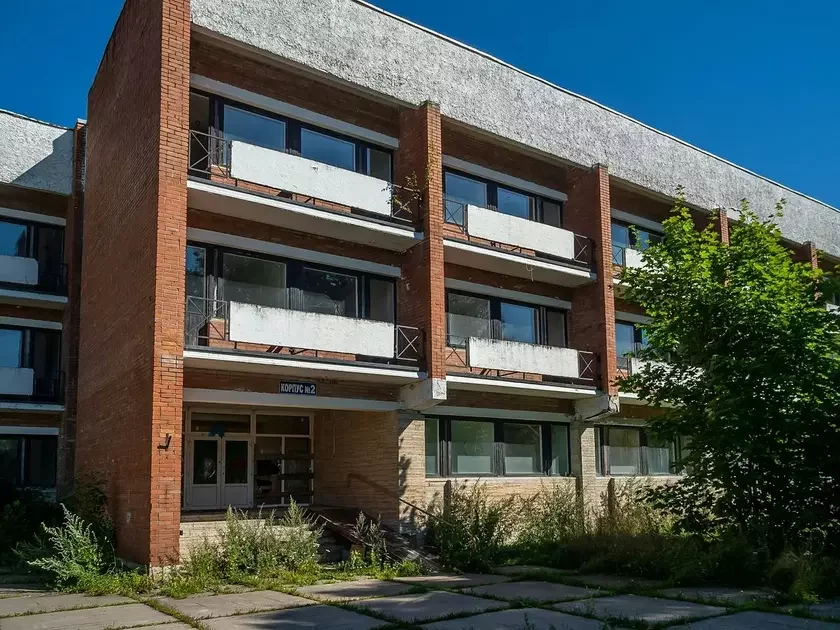
"For colleagues, sanatoriums are 'Ugh!'"
Natalia:
— I've vacationed a lot in sanatoriums: I've been to "Yunatstva" about 30 times — I had a "gold card" there that gave the maximum discount; I went to "Plisa", to "Pryaziorny", to "Sputnik", I can't remember all of them now. But I can say that compared to "Yunatstva", all the others are not very good.
Previously, "Yunatstva" had a great director who assembled an excellent team; the sanatorium was very beautiful, the food was delicious, the service was at a European level, the best specialists — pure bliss, in short. And the cost was about 700 dollars for 10 days.
I went to "Yunatstva" for about 8 years — several times a year. But the director changed there, and for a year or two now they've canceled discount cards for regular customers — which is unpleasant. The sanatorium somehow started to focus more on Russians, prices "skyrocketed" (now about 50% of guests there are from Russia, and for them the prices are OK, especially for those from Moscow or St. Petersburg), and vouchers are hard to get.
The last time I vacationed there was last autumn, in winter I already went to "Sputnik" — and that, by the way, was a complete disappointment after "Yunatstva" (as was "Pryaziorny"): after all, employees who live in the capital are significantly better than the guys and girls from the provinces. Even in the SPA, this difference is visible — the money is the same, but the massage is qualitatively different. And the food is better.
What I'll say to those who think you can vacation in Egypt for the same money — I've been to Egypt 12 times, and no, it's not better there. The sanatorium is cleaner, the staff is more polite, the food is healthier and tastier, and there are no intrusive Egyptians. In Egypt, there's only one plus — the Red Sea.
Not everyone understands this: among my colleagues, for example, there's no one else who goes to sanatoriums — it's purely my "thing", and for them, sanatoriums are "Ugh!" and "for old fogeys." Sometimes they tease me that my "target audience is grandpas." Although there are far fewer grandpas in sanatoriums than grandmas. There are generally few men in sanatoriums, and those who are there are with their wives. Sanatoriums are a kingdom of women, sometimes with children, very small or not so much.
And yes, in sanatoriums almost everything is designed for those "over 60": discos, movies, excursions, karaoke with an accordion, and master classes on straw weaving and egg painting, as well as sales of honey, sweets, and Belarusian knitwear, and concerts by Belarusian artists — in short, trash, revelry, and debauchery.
But I go there to wander through the pine forest, and in the evening I go to the pool and sauna — walking past this horror in my bathrobe.
"Going without kids to palm trees — the stigma of the worst parents ever, but going without them to a sanatorium — totally fine"
Ryhor (name changed):
— My wife says that "you just need to grow into sanatoriums" — and we've grown into them.
Overall, it's worth saying that fate gave us a great gift in the form of triplets. While the children were small, we still tried to travel with them: we went to Turkey, to Bulgaria, to Greece... In the end, only the hotel names and the color of the sun loungers' mattresses changed, otherwise it was the same strip of sky, strip of sea, and strip of beach, and you tan vertically, because you can't lie down for a second — the children scatter like cockroaches, going everywhere.
Now they are teenagers, which means hotels equate them to adults — calculate how much a seaside vacation for five adults would cost at current prices. Going without them to palm trees means getting the label "worst parents ever" from grandmothers, but going without them to a sanatorium is fine, because "Ugh, that's for pensioners" and "What will we do there? You go yourselves!"
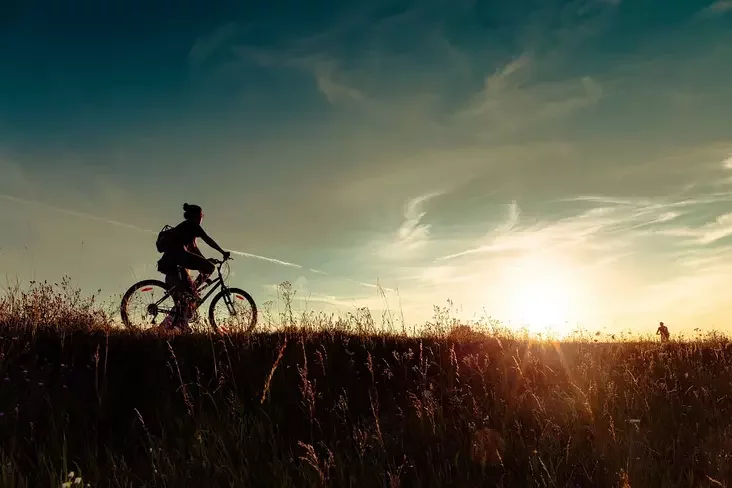
We go during the off-season when the grandmothers' dacha work is over. The children are in school at this time — and they're not interested in the sanatorium anyway. We take bikes with us — we ride or walk for half a day, and spend another half-day on procedures and in the pool. In the evenings, we watch movies, read books (I only find time to read non-educational literature in sanatoriums), and play board games. Pensioners are having a blast at discos — but we, as introverts, don't need that; we recharge in silence.
We were in "Pryaziorny". We were in "Belaya Rus" on Narach — I no longer remember how much the vouchers cost. The food there was decent, "buffet" style. We liked the procedures. And "Belaya Rus" also has a first coastline.
Last autumn we went to "Borovoye" — paid a little less than 3000 rubles per person for 12 days. That was also not bad.
A colleague went with his family to a sanatorium for the weekend (which one specifically, I don't know) — and was indignant: they paid as much as for 3 days in a five-star hotel in Turkey (without flight), but the rooms were "tired," the food "canteen-like," on the territory there was neither a decent cafe nor a restaurant; they don't cover you completely with mud, but apply applications, baths are only pine-needle, you have to pay extra for others; a swimming cap is required in the pool. "How do you go?"
But I go for something else: my wife and I are not bothered or constantly pestered with "mo-o-om" and "da-a-ad" during this time; we are not responsible for anyone. We just cycle, walk, or soak in the water — and recharge.
"Everything was fine, but closer to the end, she was happy to go home — at least she had someone to talk to there"
Anton (name changed):
— I don't go to sanatoriums. I've always thought that accommodation and service prices are inflated (for that money you could vacation in Georgia), and the quality is "a solid C," a Soviet C on a five-point system. Recently, my opinion was reinforced.
In spring, I had to pick up a colleague's mother from a sanatorium. He himself lives abroad, and his mother is here, in Belarus. They couldn't get her a visa, and she wouldn't have gone anyway — heart problems and an age unsuitable for spending a day stuck in a bus at the border.
My colleague thought about it — and bought her a voucher for the "Yunatstva" sanatorium. And I was supposed to drive her there and then pick her up (don't think anything bad about my colleague — I offered myself). So, here's a summary of my conversation with this nice lady.
The cost of one night in a room was almost 370 rubles, meaning for 10 days — nearly 3700 (now it would be 4370 — I checked the sanatorium's website). Many procedures were not allowed for her — I won't specify why, there are contraindications. She could go to the pool and, according to my interlocutor, most people spent almost all their time there: "in robes in the morning, in robes during the day, even in robes in the evening." But my colleague's mother doesn't swim, plus she shared her fear of slipping on wet tiles — and breaking her hip. So the woman spent almost all her time outdoors, walking around the grounds.
The feedback on the food was good — my interlocutor praised the dishes, but the selection, as I understood it, is standard for most establishments operating on a "buffet" system.
My colleague's mother thought that, like in Soviet times, she would be seated at a table with someone else ("assigned a spot") — and she would meet other guests. But "people didn't communicate with each other," and if anyone had to sit next to her during peak hours, they "ate silently, and after eating, wished a good evening and said goodbye." For me, this isn't a drawback, but my interlocutor was a bit disappointed.
“Everything was fine,” but closer to the end of her stay, the woman was happy to go home — at least she had someone to talk to there. And yes, she thought her son had wasted his money — she would have preferred to spend time at her dacha, “you can walk there too.”
After this trip, I asked my wife if she would like to go to a sanatorium. She said she'd prefer to go to the sea. And I agree with her.
%MCEPASTEBIN%
-
Will medical universities face a shortfall this year? Ministry of Health commented
-
Representative of the Armed Forces: Young men who score 400 out of 400 possible points also enroll in military education
-
Sergei was in Polotsk without a place of residence. He had no property, so his son had to sue to at least get his father's military earnings


Comments