


In Belarus, the list of books whose distribution the authorities consider a threat to national interests is rapidly growing. Today, the register contains over 250 entries: from works about the Gulag to world literary classics, which are massively banned due to any mention of LGBT or sexuality. The fate of printed publications is decided by a special Republican Commission, which includes many security officials.
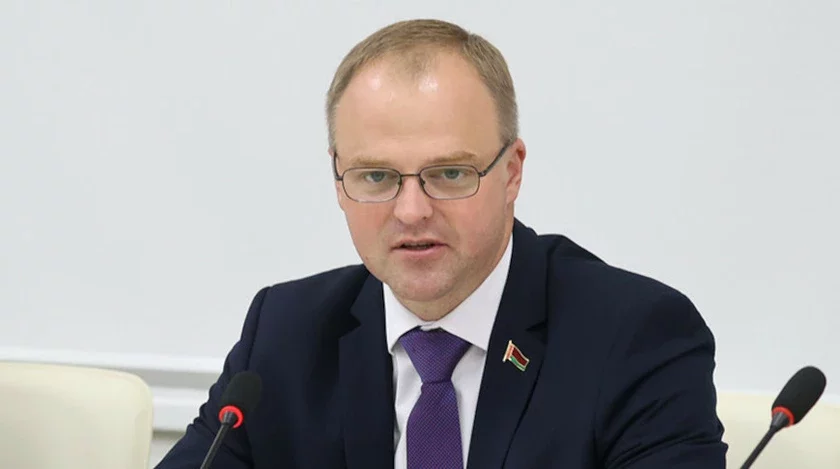
This censorship body — the Republican Commission for the Assessment of Symbols, Attributes, and Information Products — was established under the Ministry of Information in October 2021 to search for signs of "extremism" and rehabilitation of Nazism in media and on the internet.
The Ministry of Information describes in its releases the official criteria by which the commission is guided when selecting banned publications, as follows:
"Printed publications that distort historical truth and justice, promote non-traditional sexual relations, religious intolerance, violence, cruelty and pornography, incite enmity and hatred, popularize subcultures untraditional for Belarusian society, as well as publications on sex education for children that can have a negative impact on their physical and psychological development, distorting the understanding of true family values."

After the commission issues a conclusion on the "harmfulness" of a book, the Ministry of Information adds it to the public register. Retail chains and online stores are obliged to remove these items from sale. Otherwise, the authorities revoke the business's license for distributing printed products.
What is being banned
Historical research became the first targets of the Republican Commission for the Assessment of Symbols, Attributes, and Information Products. Among the banned books immediately were Zakhar Shybeka's "An Essay on the History of Belarus," Vadzim Dzeruzhynski's "Secrets of Belarusian History," and a collection of works by Kastus Tsvirka. Next, the censors turned to foreign authors. The fundamental works of American-British researcher Anne Applebaum "Gulag" and "Iron Curtain: The Crushing of Eastern Europe" were included in the register. Later, the list was supplemented by a book by Polish researcher Dorota Michaluk on the history of the Belarusian People's Republic, which was banned at the initiative of the Horki district prosecutor's office for not complying with Aliaksandr Lukashenka's directive on state ideology.
However, the most massive block of banned literature is related to the theme of human sexuality. After the Ministry of Culture in 2024 effectively equated any display of homosexuality and transgenderism with pornography, world literary classics fell under the knife.
The works of American literature classic James Baldwin and his novel "Giovanni's Room" (1956), books by British writer Christopher Isherwood, Michael Cunningham's novel "A Home at the End of the World," as well as Elizabeth Wurtzel's autobiographical work "Prozac Nation" and Chuck Palahniuk's "Lullaby" were recognized as harmful to Belarus.
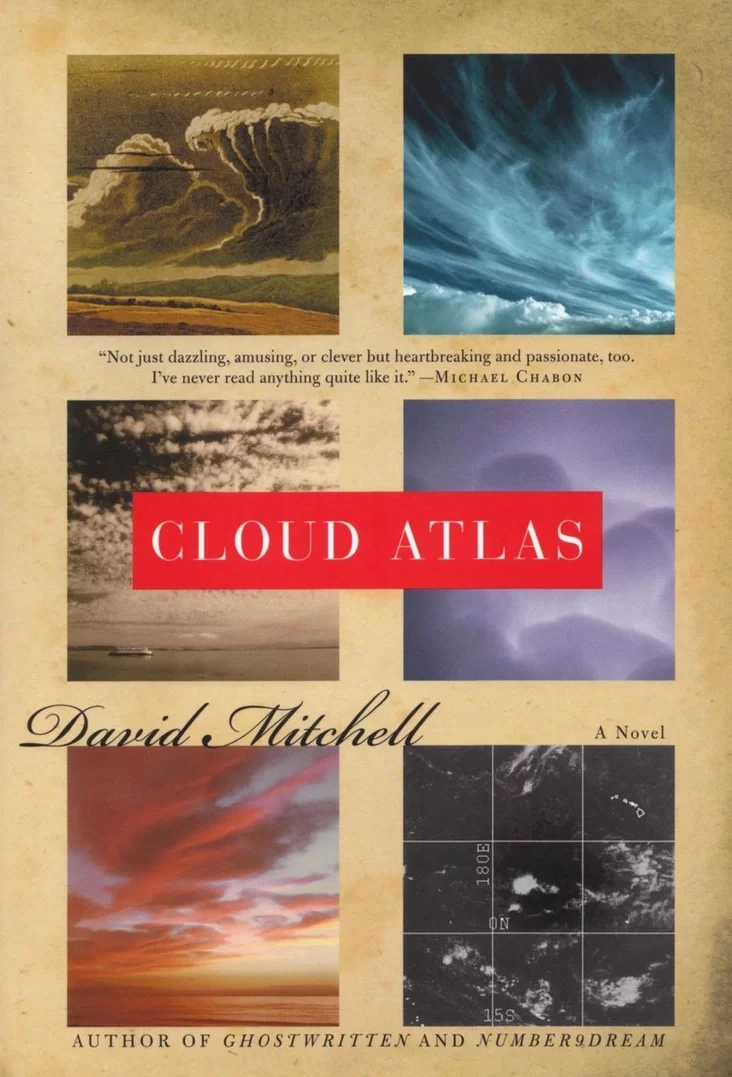
The most prominent literary hits of recent years also fell victim to censorship. The commission banned the distribution of David Mitchell's novel "Cloud Atlas" (which was shortlisted for the Booker Prize), Madeleine Miller's international bestseller "The Song of Achilles," books by Hanya Yanagihara and Donna Tartt, as well as Garrard Conley's autobiography "Boy Erased," which tells about the horrors of conversion therapy — a pseudoscientific method for changing sexual orientation.
The search for sedition reaches back even to the century before last: it goes so far as the state banning the classic gothic novella "Carmilla" by Irish writer Joseph Sheridan Le Fanu, published in 1872, simply because it contains the image of a lesbian vampire.
A separate block of banned items includes world counterculture and literature about the lives of marginalized people. Thanks to the commission, it is now impossible to legally purchase Hunter S. Thompson's cult novel "Fear and Loathing in Las Vegas," William S. Burroughs' "Naked Lunch," and Irvine Welsh's "Trainspotting" in Belarus. Works by contemporary Russian authors also fell into this category: Viktor Pelevin's "The Lamp of Methuselah" and Vladimir Sorokin's dystopias "Day of the Oprichnik" and "The Sugar Kremlin."
State experts literally hunt for mentions of non-traditional relationships, even if they are only background.
Many mentions can only be found through deep searches within the works themselves, or by carefully reading reviews scattered across various websites — in any case, it is a significant targeted effort to find new books for banning and confiscation.
Lesser-known romance novels, detective stories, the entire layer of popular Japanese comics, such as the manga series "Tokyo Ghoul," "Jujutsu Kaisen," and Chinese fantasy novels, are being banned. Children's science-pop on sex education also fell under the ban.
Leadership: Former Minister and a Factory Commodity Expert
Who are these people searching for sedition in 19th-century books? The composition of the commission is approved by the Council of Ministers. Its last update occurred on May 25, 2026. In total, there are 22 members, representing a mix of officials, representatives of security agencies, and state scientific institutions.
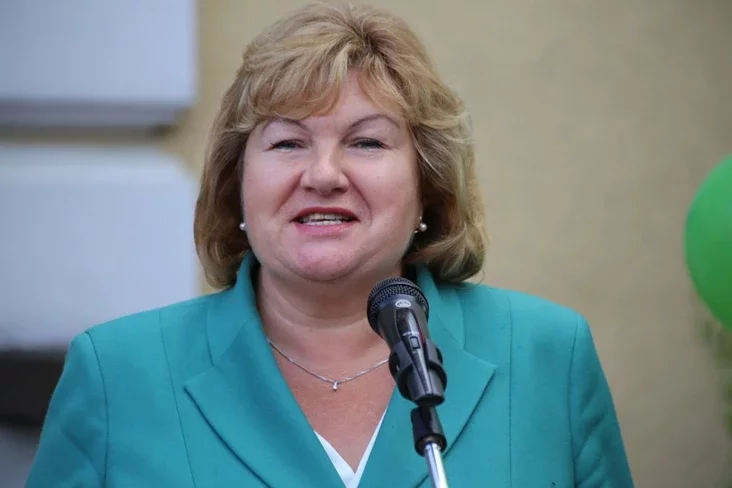
The commission is headed by former Minister of Information and ex-deputy Lilia Ananich. Her name has already become synonymous with bans: it was during her leadership of the Ministry of Information that independent websites began to be massively blocked and warnings issued to the press in Belarus. She practically does not comment publicly on book bans, leaving this role to her deputy.
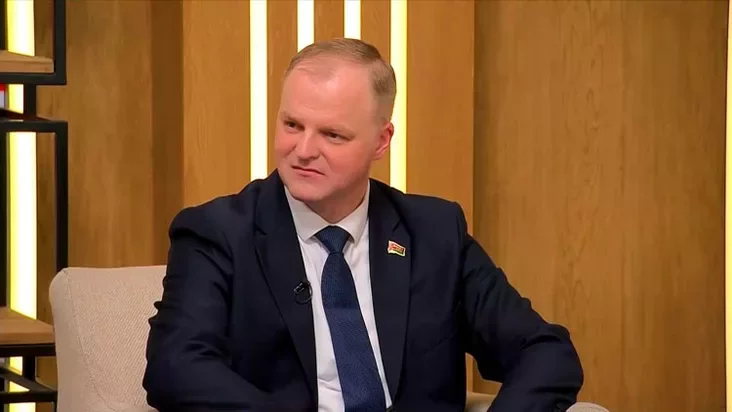
The deputy chairman of the commission is Dzianis Yazierski, who concurrently holds the position of Deputy Minister of Information. Unlike his colleagues with a humanities background, he has a technical education and began his career as a commodity expert at the Homiel Plywood and Match Factory. All his subsequent career was built exclusively along ideological lines: from heading the district committee of the Belarusian Republican Youth Union (BRSM) to the position of chief ideologist of the Homiel region.
It is Yazierski who acts as the main speaker and explains the motives behind book censorship. In March 2025, at the "Writer and Time" literary symposium, he called the literature of Western authors "trash":
"Mainly Russians, businesses that published under licenses, issued liberal-minded European writers (...) a lot of American, Korean literature, authors who purely promote LGBT, violence and other absolutely immoral things that are completely alien to our way of life."
In October 2025, in a conversation with state journalists, the deputy minister articulated the authorities' global vision of the problem:
"This list includes 173 books, 99% of which are books that popularize the LGBT agenda, non-traditional sexual relations, gender change, cruelty, and so on. (...) Young people absorb all of this. We will have to face many more challenges. We must limit, including through bans, our society and youth from destructive influence, which is primarily aimed at preventing our continuation, at making us disappear as quickly as possible and freeing up space for those who desire it. Of course, this cannot be allowed."
Security Bloc: GUBOPiK, Customs Officers, and an Anonymous KGB Officer
A distinctive feature of the Republican Commission is the predominance of the security bloc. Half of its members — 11 people — are employees of special services, operatives, customs officers, border guards, and military ideologues. Determining which books "distort historical truth" or "harm national interests" in any form is effectively entrusted to people in uniform.
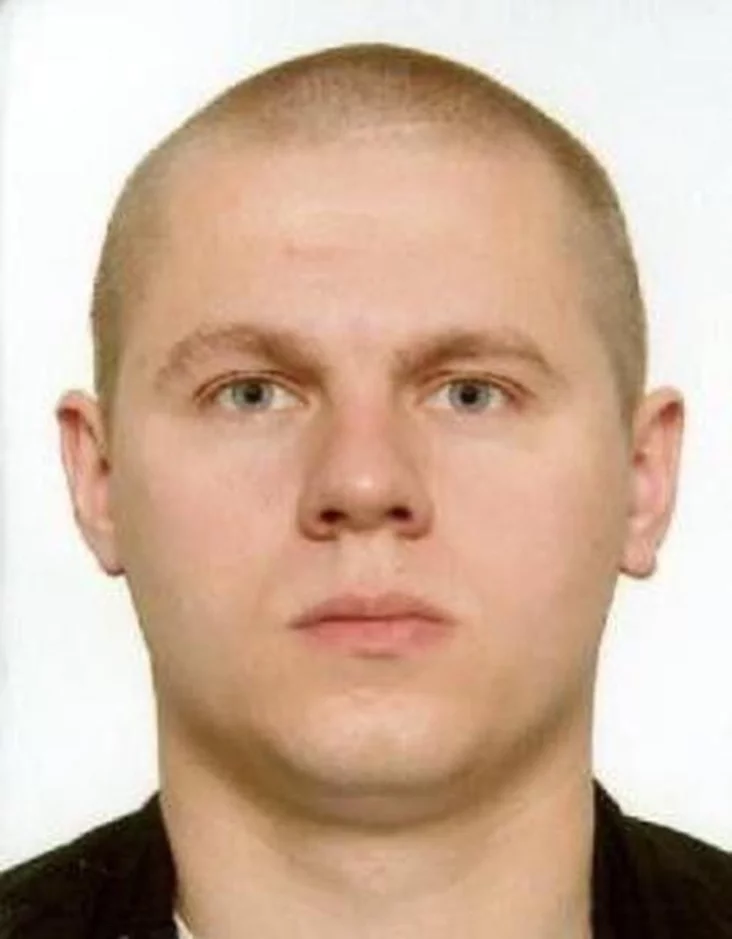
Two heads of departments of the Main Directorate for Combating Organized Crime and Corruption of the Ministry of Internal Affairs (GUBOPiK) — Dzianis Ilyashevich and Artsiom Shkrobat — have been officially approved as members of the commission. The Investigative Committee is represented by Siarhei Kabakovich, head of the Information and Public Relations Department.
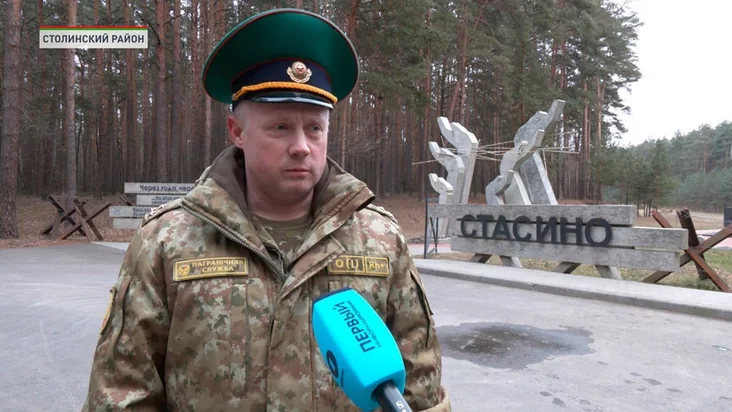
The State Border Committee delegated two representatives. One of them is Maksim Litvinsky, Deputy Head of the Ideological Work Department. In August 2023, he was remembered for his appearance on state television. Litvinsky was answering a question about whether Belarusian border guards genuinely damage the fence on the border to help migrants enter Poland:
"Well, you know, it's... Pff-ff-f... Such insinuations... Because... Well... Somewhere they need an information agenda, somewhere to solve their own issues... Uh-uh-uh, political... So there, on the eve of elections... So this is such an attempt to escalate..."
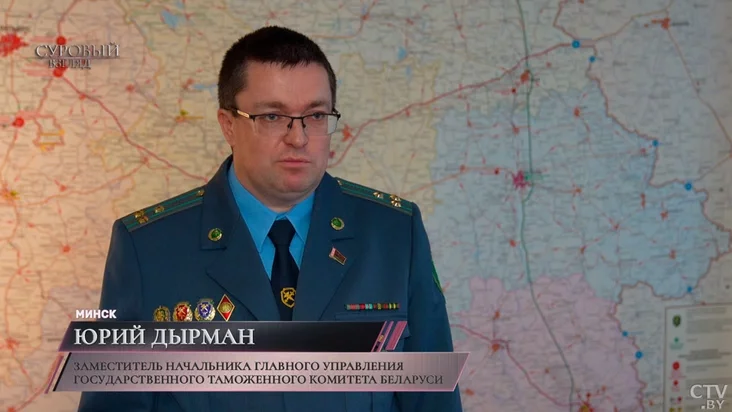
Also, the artistic value of books in the commission is assessed by Yury Dyrman, head of the customs investigations department of the State Customs Committee.
It's interesting that while in 2021, the Deputy Head of the KGB's Main Directorate, Ihar Zhukau, openly appeared in the commission's composition, since 2023, the mandatory presence of an authorized KGB official, whose name is not disclosed, has simply been stipulated.
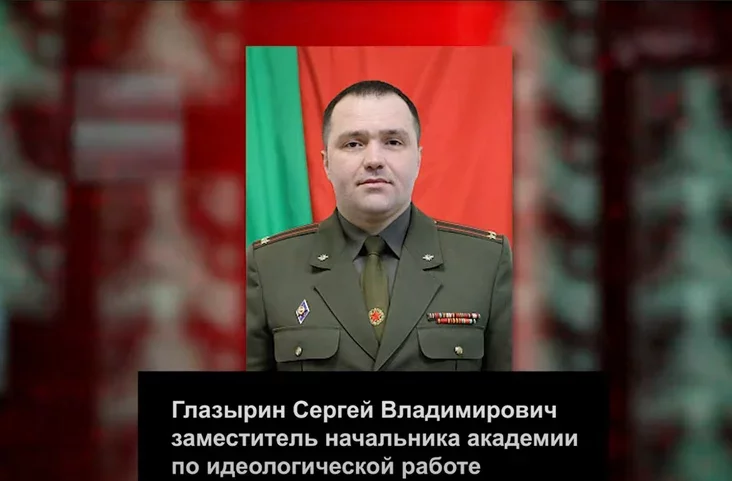
A notable block in the commission consists of military ideologues. The Military Academy is represented by Colonel Siarhei Hlazyrin and Aliaksandr Haradnichenka, as well as Professor Uladzimir Makarau.
Makarau worked for a long time as the press secretary of the Ministry of Defense and repeatedly made resonant political statements. For example, in 2017, he reacted to a petition from citizens who asked not to hold military parades within the city limits: "This holiday did not become a holiday for Belarusian radicals, those who are ideological descendants of Wilhelm von Kube."
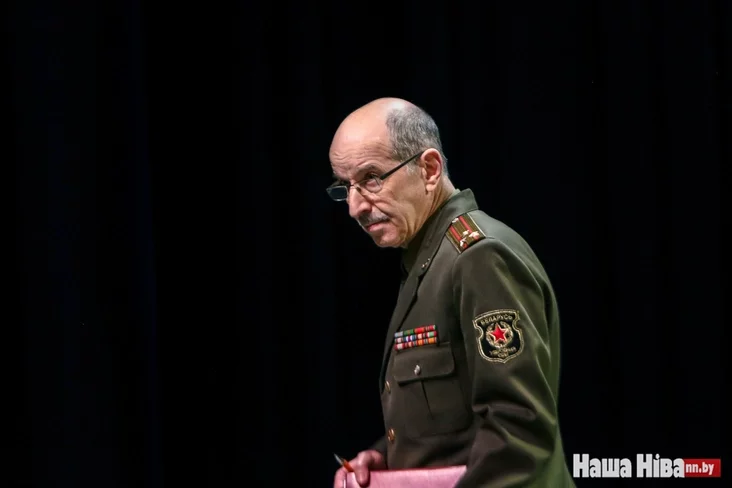
In 2020, an article was published in "Belarusian Military Newspaper" claiming that mass executions in Kuropaty were carried out by German occupiers, not the NKVD. Makarau, defending this publication, told journalists:
"We have a free country, a free press. And the opinion of a scholar (...) is very, very valuable in this matter. (...) Your positions are true totalitarianism; you do not listen to alternative opinions. Please listen, and think."
Yulia Yarotskaya, head of the laboratory of the State Forensic Examination Committee, who specializes in detecting destructive symbolism, provides technical expertise of texts.
Civilians
In addition to Ananich and Yazierski, the Ministry of Information is represented by commission secretary Anastasiya Kudreyka and Larysa Melhui, who heads the sector for media legislation control.
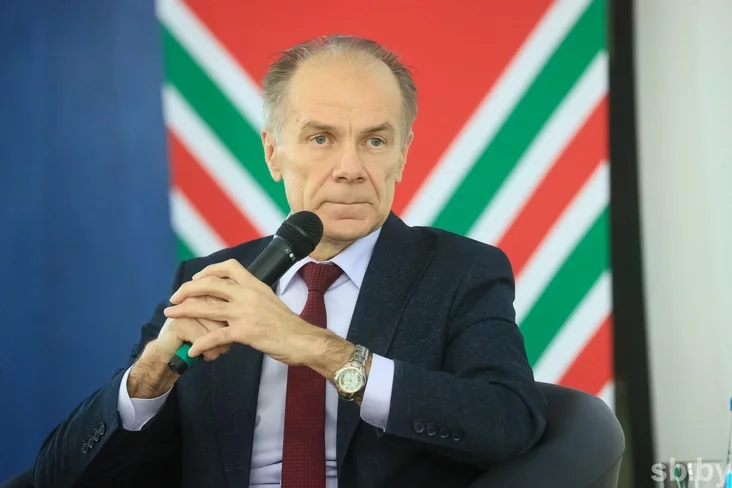
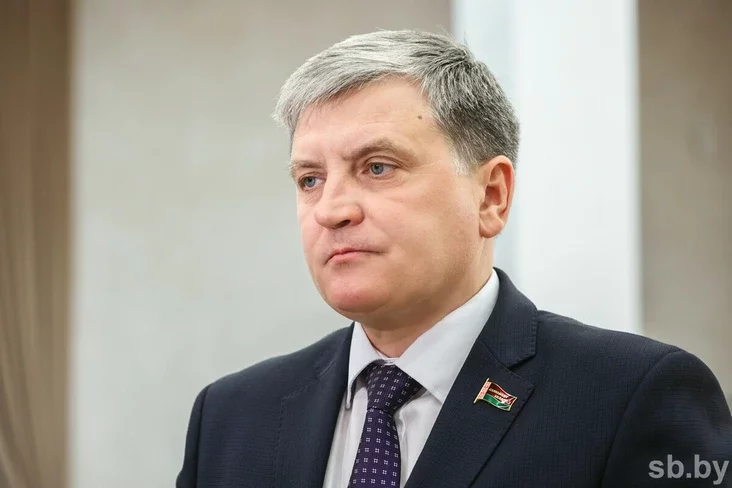
The commission also includes former Prosecutor General and ex-chairman of the Constitutional Court Ryhor Vasilievich and the head of the ONT TV channel and senator Ihar Lutski. Lutski directly links cultural issues with geopolitics and Western influence:
"Look at Georgia — foreign agents and LGBT values almost led the country to conflict. But the Georgian people and politicians timely stopped this situation."
From the educational sphere, the commission includes two employees of the state Academy of Education — Halina Nikolaenka, chief researcher of the humanitarian education laboratory, and Liudmila Filipovich, head of the center for social, educational, and ideological work, as well as Nadzeya Shyshkina, head of the Department of Editorial and Publishing Technologies at BSTU.
As for academics, previously the commission included specialized experts: Andrey Dudchyk, deputy director of the Institute of Philosophy, and Vadzim Lakiza, director of the Institute of History of the National Academy of Sciences, who were later excluded from it.
In subsequent compositions of the commission, the representative of the Academy of Sciences was Aliaksandr Lakotka, director of the Center for Research of Belarusian Culture, who in 2026 was replaced by Volha Papko from the same Center. She is a former deputy of the House of Representatives.
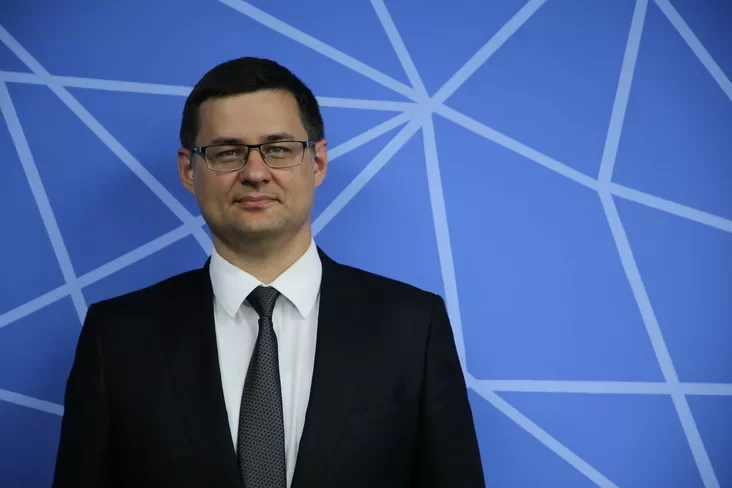
Similarly, in 2023, Dzmitry Bezniuk from the Institute of Sociology of the National Academy of Sciences was replaced by his colleague Mikalai Sukhotski, who came from the Belarusian Institute for Strategic Studies (BISS), which serves the ideological needs of the authorities.
The new approaches of the state were not limited to book confiscation. Since the beginning of 2026, amendments to the Law "On the Rights of the Child" came into force, explicitly prohibiting "the propaganda of homosexual relations, gender change, and childlessness." On April 2, 2026, a new article was introduced into the Code of Administrative Offenses (19.16 CAO).
Now, due to maximally vague criteria, any neutral or positive coverage of this topic carries gigantic fines — up to 7400 Belarusian rubles for legal entities, and in case of access to information by minors, one can receive up to 15 days of arrest. What began as a bureaucratic assessment of fiction at commission meetings has grown into a full-fledged punitive mechanism.
«Nasha Niva» — the bastion of Belarus
SUPPORT US


Comments
[Зрэдагавана]