


Ukrainian Armed Forces strikes on targets deep inside Russia and the frontline zone have increased. How did Ukraine pull ahead in the technological race?
Ukraine has made a qualitative leap in the development of unmanned systems and has an advantage in the so-called "small sky." This is a key zone near and on the line of combat engagement, where various drones are massively used for reconnaissance and attacks. This is acknowledged by both military observers and participants in hostilities from the Russian side, writes BBC military observer Ilya Abishev.
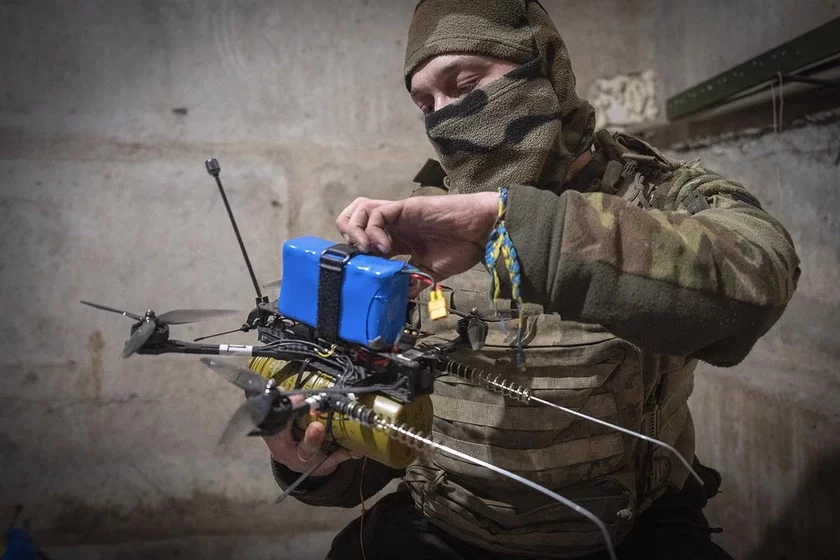
Ukrainian Armed Forces strikes on Russian rear areas are also becoming increasingly effective — oil depots and refineries are burning throughout the European part of Russia, attack drones are targeting military factories, warehouses, airfields, ports, and other strategic objects.
How did Ukraine manage to pull ahead in the technological race, how does this affect the course of hostilities, and what can Russia counter this with?
Modern unmanned strike systems can be divided into three classes — long-range, medium-range, and short-range. The classification by range is quite conditional and not the only one. This article does not consider naval combat operations, where a different type of unmanned aerial vehicle — uncrewed surface vessels — is used.
Thus, tactical drones, or short-range drones, are those that operate on the battlefield or in the near rear zone, usually up to 10-15 km deep, sometimes a little more. This is the most diverse class of drones, including aerial drones of various types — both copters and fixed-wing aircraft, as well as ground robotic systems.
Medium-range drones, the so-called middle strike, attack targets at a greater depth, on average up to 120 km, but can also reach 200, or even 300 km. Like long-range drones, these are fixed-wing UAVs.
Long-range drones, deep strike, include all unmanned aerial vehicles capable of striking at distances exceeding 200-300 km. We will start with them.
Long-Range Drones
Regarding long-range strike capabilities, Ukraine lagged significantly from the very beginning of the war. It had nothing to respond to Russian strikes on rear areas — no missiles, no bombers.
Furthermore, Russia received a ready-made development of cheap "Shahed"-type drones from Iran, improved them, scaled up production, and can launch them at Ukraine sometimes by several hundred per day.
Ukraine was engaged in its own development of long-range drones almost from scratch. Enthusiasts assembled the first samples in semi-handicraft conditions, experiments with commercial drones continued, and old Soviet developments like the jet-powered "Strizh" were attempted.
Initially, attempts to use Ukrainian long-range drones seemed unsystematic. Reports came from various regions of Russia about unidentified flying objects appearing in the sky — some were shot down, some crashed on their own, and some exploded on the ground without causing serious damage.
Over time, alarming calls became more frequent, and the geography of attacks expanded. Ukrainian drone raids began on the Moscow region and other regions up to the Urals, two drones struck the dome of the Senate Palace in the Kremlin, and reports of explosions at military warehouses, airfields, and oil depots emerged.
By the beginning of this year, Ukrainian Armed Forces drone strikes on targets deep inside Russia began to occur regularly and with severe consequences. Burning oil terminals in the Baltic and Black Seas, other oil depots in Krasnodar Krai, Leningrad, Nizhny Novgorod, Yaroslavl, Samara Oblasts, Bashkortostan, Volgograd, Perm — this is an incomplete list of attacked objects on Russian territory. And this is just for one month.
What explains such a sharp increase in the effectiveness of Ukrainian strikes? There are several reasons.
Firstly, there has been a dramatic increase in drone production in Ukraine. By early spring, for the first time since the start of the war, the country surpassed Russia in the number of long-range drone launches. Financial assistance from European allies largely contributed to this.
It is practically impossible to shoot down all drones. Despite all their experience and anti-drone developments, the Ukrainian Armed Forces shoot down an average of 85-95% of Russian "Geran" and other attack drones.
As a rule, the more launched — the more reach their target (exceptions occur, but rarely). Air defense systems become more overloaded, and ammunition runs out faster. In addition, in the case of large stationary objects, such as factories and oil depots, a series of pinpoint strikes on one target leads to more serious destruction than isolated attacks on different ones.
Thus, according to Reuters, as a result of a strike on the night of Tuesday, May 5, on the Kirishi Oil Refinery, the second largest in Russia, three out of four processing units were damaged, as well as secondary equipment. The plant ceased operations.
Secondly, the nomenclature of Ukrainian kamikaze drones is significantly more diverse than Russia's. The Ukrainian Armed Forces have at least a dozen and a half long-range drones that noticeably differ in flight characteristics, control and guidance systems, and cost.
Some, such as "Chaklun", use stealth technologies. Others, for example, the AQ-400 "Kosa" (Scythe), are literally made of plywood. The "Lyutyi" (Fierce) drone is the most effective, but also one of the most expensive. The FP-1 drone is the most mass-produced.
The UJ-26 "Bober" (Beaver) is the most maneuverable: one Ukrainian Armed Forces video shows it evading a missile launched by a Russian "Pantsir" and hitting the launcher. The E-300 "Horynych," created on the basis of the French light aircraft SkyRanger, is the longest-range, capable of covering up to 3,000 kilometers.
The variety of Ukrainian strike drones allows the Ukrainian Armed Forces to vary their tactical application methods. Cheap devices can be used for diversionary attacks and detecting launcher locations, while more advanced ones can be used for breaking through defenses and delivering high-precision strikes.
A large number of stealthy drones, which are difficult to identify and move at different speeds and altitudes, greatly complicates the operation of air defense systems.

Furthermore, Russia was late in implementing comprehensive countermeasures against strike drones — acoustic detection systems, mobile fire groups, cheap interceptor drones, etc., and now, according to some reports, faces a shortage of conventional air defense assets — small anti-aircraft missiles.
Thirdly, the geographical concentration of production in Russia is having an effect. While Ukraine tried to maximally hide and disperse its important military and industrial objects from the first days of the war, this process has not even begun in Russia.
Another difficulty in repelling drone attacks is related to the geographical location of coastal cities — Tuapse, Novorossiysk, Ust-Luga, and others. They are poorly protected from the sea; drones approaching their target are difficult, and sometimes impossible, to detect in advance, so the first line of sky defense becomes the last.
But there is another reason why deep strike drones have so often begun to penetrate Russian air defenses. Ukraine has significantly advanced in the development, production, and combat application of other drones — middle strike.
Medium-Range UAVs
Unlike strategic drones, whose strike consequences are widely covered in the media and social networks, the effect of medium-range drones is less noticeable, but the results are no less important.
These drones strike targets in the enemy's operational rear, systematically destroying its infrastructure — logistics, command centers, UAV control points, fuel and ammunition depots, military equipment.
This not only deprives it of the ability to accumulate forces for large-scale offensive operations but also complicates the supply of troops directly on the front line.
Middle strike drones are cheaper and more accurate than long-range drones. They can use Starlink satellite communication systems and be controlled by an operator in FPV mode. Their mass application began relatively recently.

At the beginning of the war, the Ukrainian Armed Forces were in a poor state regarding fire strike capabilities in the frontline zone.
Barrel artillery is not suitable for this — it lacks range, a maximum of 40 km, and no one in their right mind would place long-range howitzers on the front line. Old Soviet multiple launch rocket systems and "Tochka-U" missiles are not distinguished by accuracy, and their stockpiles are small. There was little aviation, and Russia had plenty of air defense forces.
American HIMARS operational-tactical systems partially helped solve the problem. But their supplies were limited, missiles were expensive, and the Russian army soon adapted to them by moving its important objects deeper into the rear.
The Russian army, albeit to a lesser extent, had similar problems. It began to solve them by massively using guided aerial bombs (KAB) — this allowed aircraft to attack targets in the rear without entering the zone of Ukrainian air defense.
This method also has drawbacks — despite the power of aerial bombs, they often deviate from the target, and radars manage to detect the bomber's approach and issue an alarm.
Ukraine took a different path — it began developing cheap, high-precision drones capable of striking at operational depth. The country now produces a range of medium-range strike drones. The most famous of them is the FP-2 by FirePoint. It is based on the long-range FP-1, has a shorter range, but a more powerful warhead.
Among the latest Ukrainian medium-range UAV developments is the B-2 strike drone, which in shape and thanks to the use of stealth technologies resembles the American B-2 Spirit strategic bomber. It is designed for attacks on air defense systems, and it is significantly harder to detect and shoot down than a conventional combat aircraft.
“I confirm the qualitative leap of Ukrainian UAVs,” writes Russian military blogger Alexander Kharchenko. “Now transport is burning at a distance of 40+ km from the line of contact. The number of loitering munitions hunting for equipment within a 100 km radius of the line of contact has significantly increased. Cheap mass-produced strike drones are combined with expensive foreign analogues. Everything that can fly and strike moving equipment — Ukraine instantly scales up and applies at the front.”

The actual attack range of Ukrainian middle strike drones is even higher — they struck the vicinity of Mariupol 120 km from the front line, eastern Luhansk Oblast 170 km away, and Crimea over 200 km away.
Their primary targets are Russian radar stations and surface-to-air missile launchers. Their destruction creates air corridors through which long-range drones can then penetrate deeper into Russian territory.
And there, the saturation of air defense systems is significantly lower than in the frontline zone — naturally, with the exception of Moscow and particularly important guarded objects.
Tactical Drones
Regarding short-range drones, Ukraine has not yet had such a noticeable advantage, although it was the first to implement this type of weaponry. Russia is trying not to lag behind — it is forming its own unmanned systems forces, creating specialized drone operator units, and increasing the production of FPV drones.
For a long time, the war on and near the line of combat engagement was roughly even: both sides hunted enemy equipment and personnel, depriving them of the ability to act actively.
Significant human losses of the Russian army were not so much due to the numerical superiority of the Ukrainian Armed Forces in tactical drones, but rather to its persistent and simultaneously slow offensive actions.

But now the situation has gradually begun to change, Russian military sources acknowledge.
“In my opinion, with each passing day, the small sky is increasingly dominated by the enemy. And it's not just about FPV and ‘fiber.’ You don't fear them as much anymore,” testifies Russian military correspondent Alexander Simonov. “It’s about ‘Martian’ and similar drones. These drones are equipped with excellent artificial intelligence and are absolutely invulnerable to electronic warfare; they are practically impossible to hear, and sometimes even to see, due to their very high attack speed. A second — and you're already burning in a car. And enough cars are burning. Both on the front line and in places that were previously not so dangerous. We are moving purely on military fort and with God's help. I haven't seen anything like it yet. And haven't heard.”
“Martian” (its other name is “Hornet”) is another new Ukrainian development. It is a high-speed, almost silent, FPV drone resistant to electronic warfare, capable of attacking any targets both on the front line and at a depth of 50 km or more. This means it can also operate at medium distances.
If Ukraine manages to consolidate its advantage in the development of middle-strike drones and take control of the sky to a depth of at least 40-50 km, the situation on the front could change dramatically.
Because it is in this zone that all of Russia's first-line drone control infrastructure is located, and without it, other ground units, primarily infantry, will be left without support.
Given the Russian army's chronic communication problems, the situation is becoming quite serious, Z-bloggers warn. The systematic suppression of rear infrastructure to a great depth "not only slows down the offensive actions of our troops but also creates preconditions for counter-offensive operations by the Ukrainian Armed Forces," notes the author of the Telegram channel "Philologist in Ambush."
“Madyar [Commander of Ukraine's Unmanned Systems Forces, Robert Brovdi. — Ed.] provided food for thought,” writes a Russian participant in hostilities, author of the Telegram channel "When the Cannons Sang." “Today, the Armed Forces of Russia are fully and completely trying to use his developments and act with the same methods.”
For now, the Russian army is not abandoning its chosen tactics, although the pace of its offensive in 2026 has significantly slowed. Russia continues constant pressure on various sections of the front, compensating for heavy human losses by attracting volunteers to high-paying contracts. Perhaps the Russian command hopes to gain time and overcome the technological lag in this way.
On the other hand, it is still unclear how the Ukrainian command plans to use the open window of opportunity. In 2022, with the receipt of significant volumes of Western aid, the Ukrainian Armed Forces managed not only to halt the Russian offensive but also to deliver a series of painful counterstrikes, liberating large territories.
But repeating that success four years later will not be easy. A mere advantage in unmanned systems is not enough for this.


DDoS attack targets websites of several Belarusian media outlets simultaneously. It may be related to the sixth anniversary of the 2020 popular uprising and the "New Belarus" conference, which opened today

DDoS attack targets websites of several Belarusian media outlets simultaneously. It may be related to the sixth anniversary of the 2020 popular uprising and the "New Belarus" conference, which opened today

"Poland flourishes in Latin, Lithuania flourishes in Ruthenian". A patriotic masterpiece of the 17th century turned out to be a Russian forgery of the 19th century.


Comments
Большасць дронаў - хутчэй за ўсе уласная зборка. З-за мяжы паступаюць ў асноўным запчасткі.
Вялікая колькасць кустарных цэхаў стала магчымай з-за мінімізацыі бюракратыі так як фронт прымае ўсе чым магчыма біць ворага. Баявыя брыгады аўтаномны і працуюць з валанцёрамі на прамую. А іх дзякуй Богу шмат.
Такое не магчыма пры бюракратыі дыктатуры, але магчыма пры лібералізацыі, дэмакратыі і прадпрымальніцкай свабодзе.
Эўропе дзякуй за грошы.
Масковія праіграла не адну вайну і Масковія праігрывае заўжды акрамя як калі завальвае ворага гарматным мясам і ваюе загадзя супраць слабага.
***
Нават маршал Масковіі Жукаў - прайграў усе бітвы ў другой сусветнай вайне, так як страты арміямі якімі кіраваў Жукаў заўжды былі большыя чым ў немцаў. Ў бітве пад Бодамі (1941) Жукаў меў больш за 3400 танкаў супраць 728 нямецкіх. За бітву Жукаў страціў 2648 танкаў супраць 85 нямецкіх. Жукаў уцек ў Маскву, а саветы атрымалі Уманскі, Кіеўскі і Мелітопальскі кацёл. Ў дадатак да Вяземскага і Бранскага катла. І хто яго ведае як пайшла б далей гісторыя з такімі гора камандуючымі не дапамажы Саветам ЗША і Вялікабрытанія?
***
Масковія за апошняе стагоддзе праіграла
* Крымскую вайну (1853—1856)
* Расейска-японскую вайну (1904-1905)
* Першую Сусветную вайну (1914-1917)
*Савецка-фінскую вайну (1918-1920)
* Савецка-эстонскую вайну (1918-1920)
* Савецка-польсаую вайну (1919-1921)
* Савецка-фінскую вайну (1939-1940)
* Аўганскую вайну (1979-1989)
* Першую чачэнскую вайну (1994-1996).
***
Як паказвае гісторыя, міфы аб нязломнасці Масковіі - гэта міфы і ў значнай меры з'яўляюцца выдумкамі.
Украінскую вайну Масковія так сама хутчэй за ўсе праіграе. Не першы раз Масковіі цярпець паразу.