


Returned from Lithuania — and was arrested for donations. This biologist previously researched leukemias — his philosophy inspires
64-year-old Siarhei Sheleh found himself behind bars for solidarity with Belarusians: he donated to organizations that, after some time, retrospectively, were recognized as extremist and terrorist. June 21 became an unexpected day for him: after a visit to Minsk by US President's Special Representative Keith Kellogg, 14 people were released, including Siarhei. If this had not happened, the biologist, who specialized in rare genetic diseases, would have had to serve an unreasonably harsh sentence: eight and a half years in a general regime colony.
Siarhei told "Nasha Niva" about a place in Belarus that he considers a branch of hell, about his family, a Hollywood twist of fate, travels as a toughening of spirit, and helping people as a mission he does not intend to abandon.
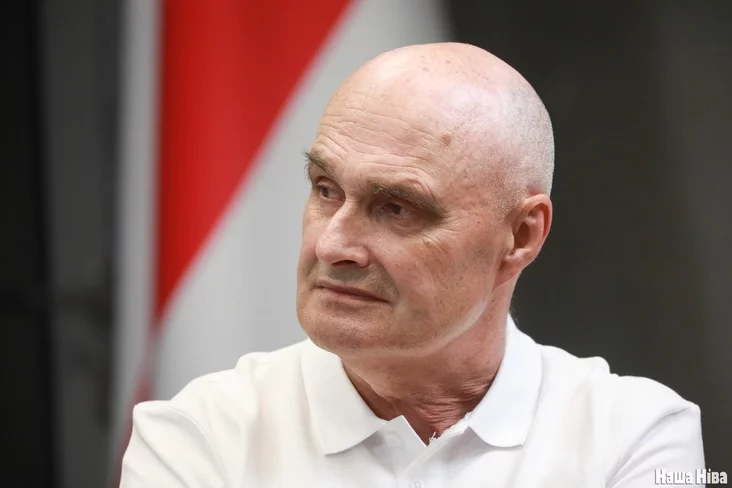
Siarhei Sheleh is a biologist by education. He was a researcher at the Institute of Hematology in Minsk, and before his arrest, he worked at the representative office of a large foreign pharmaceutical company. The man has two sons. His elder son, together with his first wife, a geneticist, has lived in the USA since 1996 (because of this, Siarhei has an American residence permit, and therefore he was on the list for release as an "American"). His younger son from his second marriage is 11 years old.
"After university, I ended up at the Institute of Hematology and Blood Transfusion and worked in the laboratory for almost 15 years"
"Nasha Niva": How do you feel physically? At the press conference, you recalled that you slept poorly the first few days because "you don't get used to freedom immediately."
Siarhei Sheleh: I managed to catch a cold, so physically, I feel even worse than on my first day of freedom. I even joked that, apparently, they did not disinfect the bags they put on our heads when taking us out of the country, and the viruses that remained there from many people transferred to me.
But overall, in terms of my internal sensations, I don't observe any noticeable health deterioration. On the contrary, I hope there will be an improvement, as I've lost weight — at least 15 kilograms. That's beneficial. We'll see, I'll need to get checked and have tests done to say for sure.
"NN": You said that the aesthetics in Belarusian colonies are such that you involuntarily start to hate yourself, that prison kills individuality. Do you feel that you have lost a part of yourself and will have to rebuild it?
Siarhei Sheleh: I didn't spend that much time in captivity — twenty-three months proved insufficient to seriously affect my inner world. I like an English proverb that a gentleman from west of Sudan differs from a gentleman from east of Sudan.
I certainly don't consider myself a gentleman, but this ability to adapt and separate what's inside you from what's outside — that helped me prevent prison from entering me.
"NN": Many noticed the group photo where you and other political prisoners are already free in Vilnius, but everyone is holding their hands behind their backs.
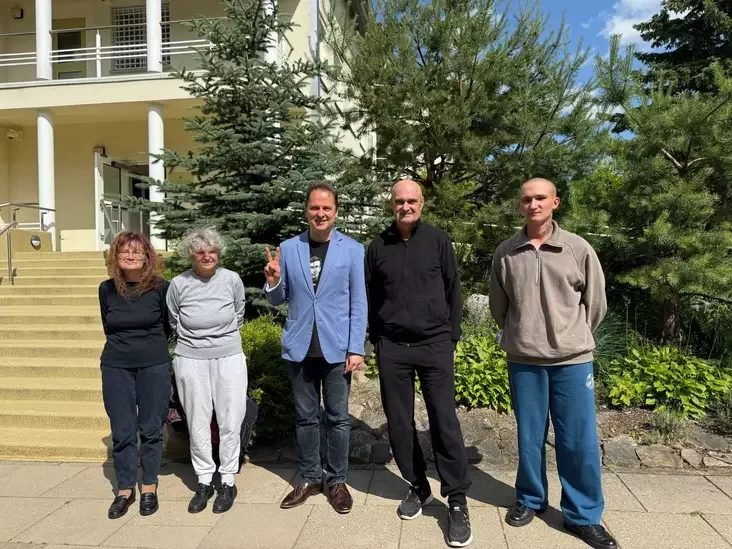
Siarhei Sheleh: Actually, it's just comfortable for me to hold my hands behind my back. In the pre-trial detention center, a prisoner must always hold their hands in this manner; this is required by escorts and others, for example, when taking them out of the cell for a walk. But in the colony, it's the opposite – there you must hold your hands in front. I don't know why, but institutions differ by this rule.
Of course, for the disciplinary cell, it's different again – there you have to hold your hands behind your back, but I wasn't there in the colony.
"NN": Tell us a little about yourself, why did you choose a biological profile in your time?
Siarhei Sheleh: I was born in Minsk. By education, I am a biologist, graduated from the Faculty of Biology at BSU. I was simply interested in biology; there wasn't any profound reason for my choice. When I entered, no one could have imagined that biology would play such a role in modern society's life.
But there were also some elements in my biography, similar to Hollywood movies. When I was in my first year, a misfortune happened in my family: my father died of stomach cancer. And that was the last time my mother and I spent our holidays together, and she her vacation. We traveled along the Volga on a steamboat. And a young couple kept us company. I was bored, and I told everyone about what I had learned in my first year at the Faculty of Biology. In particular, I really liked to start conversations about hematopoiesis and everything in that vein.
The man from that couple listened to me, listened, listened…
And by the end of our journey, which lasted several weeks, he pulled out his business card and said: "Young man, if you want to pursue hematology at the end of your university studies, then come to my laboratory." He was a Doctor of Science who had just recently defended his dissertation on hematopoiesis.
So, right after university, I ended up at the Institute of Hematology and Blood Transfusion of the Ministry of Health. And for almost 15 years, I worked in the laboratory of pathophysiology of leukemias.
"It was natural for me to help my compatriots — I did it, assuming that I live in a country where universal human values are dominant"
"NN": In one of your comments to journalists, you mentioned that you are an apolitical person, and now you are being sent to prison for 8.5 years…
Siarhei Sheleh: My apolitical stance is connected to the fact that for many years I worked first as a scientific researcher (and scientific researchers in the Soviet Union were largely apolitical). I perfectly remember my worldview then — I conducted my scientific work in various institutions of the Soviet Union. I visited Moscow, St. Petersburg, in large institutes where very interesting people gathered, with whom it was fascinating to discuss the world view and what was happening in our country.
My apolitical nature can, in a sense, be called cosmopolitanism — the habit of looking at the world as a single whole.
And then — the independence of Belarus, I worked both within the country and in Luxembourg, went on internships in Great Britain, Japan. The borders of the world expanded even more. I started working in a large international pharmaceutical company, where such, purely universal human values, dominated. A habit formed of treating all people as people.
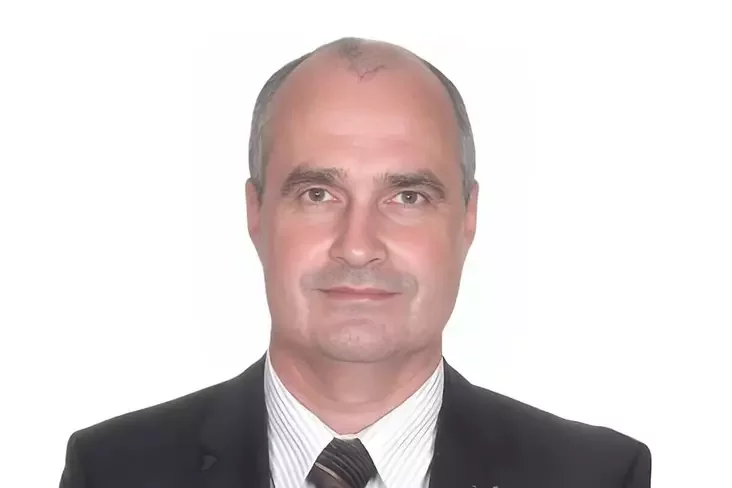
Moreover, for many years I also supervised humanitarian programs related to helping people. Therefore, it was natural for me to help my compatriots who found themselves in a difficult situation. I did this, assuming that I live in a country where universal human values are also dominant. Naively assuming, now I have realized.
"NN": For which specific donations were you convicted?
Siarhei Sheleh: I had an app installed that I deleted from my phone when all these repressions began. It was called "Help" or something like that. And there, I randomly selected the people for whom money was being collected, without paying much attention to who technically carried out the collection. It turned out that some of those organizations in our country ended up on the list of terrorist and extremist organizations (of course, they were recognized as such retrospectively, after I had donated to them).
There was one donation for "BYPOL", one for Nexta (this, actually, cost me additional years of imprisonment, because both "BYPOL" and Nexta are recognized as terrorist organizations, I was even very surprised why the media is terrorist here). Most donations, probably, were for "Country for Life", there they were collecting for aid to volunteers and their families. There was a donation to some Ukrainian blogger, related to the beginning of the war in Ukraine (I don't even remember his name today). And also — to Andrei Kureichyk's channel, who is a member of the Coordination Council, so donating to him also became a crime.
The court quickly proved that I acted "knowingly, supporting extremist and terrorist activities," although, of course, this is not true.
"Perhaps all those who transferred money to BYPOL are under special control"
"NN": You were arrested on August 1, 2023. Did you really not fear detention at that time? Because people were already starting to be interrogated for donations.
Siarhei Sheleh: I, of course, received information from various sources. But I assumed that donations were a mass phenomenon, and much of the atmosphere that everyone would be punished was propaganda, so it wasn't particularly worth paying attention to. Especially since I periodically disappeared from the Belarusian horizon: I spent some time in the USA, then worked in Kazakhstan.
And I was arrested, by the way, a few days before my next flight to America, immediately upon returning from Druskininkai. My probability theory didn't work.
I later mused that perhaps there are some trigger things for our special services — that all those who, for example, transferred money to BYPOL, are under special control. Or that my traveling from country to country attracted attention: my passport didn't last more than two years because of it (and this is logical, as I worked for a foreign company and had many trips). But these are just my guesses.
"NN": How did the arrest proceed?
Siarhei Sheleh: Everything went more or less politely. Three young men in civilian clothes, who carried out all the necessary actions — witnesses, search. After it, my house didn't look like a battlefield: they carefully examined all electronic devices.
But such politeness, perhaps, is even worse, in the sense that when you are brutally detained, you somehow concentrate on what is happening here and now. And when all this is done politely, and you understand that these polite hands will not let you go, you think more about what will happen next. Sometimes this is worse than being absorbed in the present moment.
Then I was taken to the KGB. They didn't deal with me for long — by evening, they transferred me to the Investigative Committee.
"NN": Was your then 10-year-old son home? How did he cope with it?
Siarhei Sheleh: It's difficult to say, because after that I only saw my son during visits. He had his own phone and tablet, so he was asked to open all that too – meaning he participated in the process. Outwardly, he looked very calm. Perhaps only on the outside. I assume such events could have affected him.
"NN": That moment when you receive your sentence — 8.5 years for helping people, a punishment that not every murderer gets — what did you feel?
Siarhei Sheleh: Of course, it's not a pleasant feeling. It's hard to describe in one word, but I was quite calm. I don't know, maybe it's personality traits, happy biochemistry of the nervous system, a tendency to euphoria — hopes that they say eight and a half years, but whether you will remain in captivity for so long is unknown.
For some reason, I often recalled a joke about Hodja Nasreddin — how he undertook to teach the Iranian shah's donkey Persian. Hodja received money for teaching the donkey to speak Persian within a year. And when he was told, "Well, that's impossible, you'll have to answer for it in a year," Hodja replied: "No problem, I have the money, and what will happen in a year? Either the donkey will die, or I, or the shah."
"I understood that my option was far from the worst, that there are people who are imprisoned in the prison of their own bodies from birth"
"NN": Did the worst-case scenario — that you would serve the entire term — not cross your mind?
Siarhei Sheleh: Of course, it did. But I somehow built a system of coordinates within myself, that eight and a half years is not eternity, it's only 102 months, not much more than 3000 days, and it's something a person can endure.
Plus, you see, I was constantly connected to, or near, serious illnesses. And many seriously ill people, those with leukemias, were role models for me. I had someone to look up to. I understood that my situation was far from the worst, that there are people who are imprisoned in the prison of their own bodies from birth, and they continue to live, dream, and make plans. Also, working in a large Western company, where I sometimes had to deal with quite harsh living conditions, toughened me up. Business is such a thing.
Perhaps it's a little funny, but as a student, I was fascinated by various practices related to autogenic training. That is, the ability to immerse oneself in a state of trance, to somewhat distance oneself from the outside world. I mastered these techniques, and it also helped — at least, to sleep normally in prison.
Because when I entered my first cell in Valadarka, I had the distinct feeling that I had fallen into some branch of hell. It was one of the strong impressions associated with my almost two years behind bars.
I ended up in the legendary part of Valadarka, which is called Shanghai: there are many people in the cells, three-level, high bunks (in local slang, the upper shelves were called "palm"), little air, very hot, steam rises from human bodies and cigarette smoke. And from this fog, people emerge, dressed in shorts.
It was still summer then, but I walked around in shorts in those cells almost until November.
"NN": You said that although no physical violence was used against you, the conditions of detention themselves could be compared to torture. What exactly do you mean?
Siarhei Sheleh: First and foremost, I mean my 10 days in Akrestsina. It's difficult to get a better lesson in hatred for how people are allowed to be treated in Belarus. It's such a charge of antipatriotism. I ended up in Akrestsina on the first day of my detention, deep at night, in a cell designed for one person. I later counted that it was about six square meters. And into this cell, they gradually packed 10, 11, 12, 13 people. It was cramped even to stand, and to lie down, you had to try very hard.
Like sprats in a can, we lay, hugging the toilet drain. And we had to sleep on the cement floor, and I was arrested in a summer T-shirt. I truly perceived this as torture.
I asked one employee whose instruction it was to subject people to such inhumane trials. He replied that he also wondered about this question and even took some steps so that those he supervised would not be in such conditions. But he was politely told that it was not his business.
Against this background, I can't even say anything about the colony. Few in the administration paid attention to me there. Of course, I had restrictions, stipulated by my 10th, "extremist" profile — sleeping on the top bunk, priority checks. The colony was better than Akrestsina, one might say. Moreover, I didn't experience the slave labor of a prisoner there: as a pensioner, I was exempt from it — I turned 63 a couple of months after my arrest. But the working conditions there for people, especially in winter, are not the most pleasant, to put it mildly.
"NN": Which political prisoners did you cross paths with behind bars? How are they?
Siarhei Sheleh: Oh, I was very happy to see journalist Ihar Karnei in the group for exchange with me. I crossed paths with him in a cell on Valadarski — it was one of those very pleasant acquaintances: he had traveled a lot around the world, and I also a lot, so it was interesting for us to learn from each other where things were.
By the way, traveling also helps. I lived in some African countries in conditions that differed little from a cell — meaning I wasn't a person completely detached from comfortable city life. So people, travel more! It sometimes helps to endure the trials of fate.
"Within myself, I am considering the possibility of organizing assistance to those Belarusians who, for some reason, have not received treatment and cannot leave the country"
"NN": Natallia Dulina, in an interview with "Nasha Niva," stated that for her it would have been better to serve her term just to stay in Belarus, that "freedom is not worth being given by force," and that she was released without being asked if she wanted to be taken out. Do you not have such thoughts?
Siarhei Sheleh: I don't have such thoughts. These are still lost years. A person should be free!
I was reminded of the words of Henry Kissinger, at one time the US President's National Security Advisor, about how we adhere to our values, of course, but this is only possible if we stay alive. And I perfectly understood that with the level of medical care in colonies, there's a chance that you simply won't live to the end of your term.
Although I am not a medic, I was involved with the healthcare system, and in various prisons, I asked the medical services: "In case of a heart attack, can I be in a medical facility within an hour?"
This is of great importance in the event of a heart attack, because if more than an hour passes after the incident, the treatment must follow a different, more complex, and less effective method. And in Minsk, it was a great achievement when ambulance services reached this standard of care — for a person to be on the operating table within an hour of the call.
My question was perceived by them as some kind of nonsense. Although it should be noted, when a cellmate from Sri Lanka had a heart attack in Valadarka, help was provided quite promptly there. The man only spoke English, so I acted as a translator. He was quickly taken to a civilian hospital, and after some time, he returned already with a set of necessary medications — his attack was stopped. Could the same have happened in the Navapolatsk colony or any other? I don't know. But in Valadarka, we, apparently, scared people — it happened at night, there were fewer superiors, so everyone acted strictly according to instructions.
"NN": Do you wish to continue working in pharmacology?
Siarhei Sheleh: I, of course, joke that maybe I've done enough saving people, I should start saving some turtles or frogs on the verge of extinction. Maybe I will eventually get to that: volunteering on a beach where little turtles hatch.
But I would still like to use my competencies, because in recent years I have been involved in rare genetic diseases. The whole complex related to diagnosis and the country's legislation — to ensure people receive treatment.
And I understand that in Belarus, despite the fact that sanctions do not affect the supply of medicines (I know that many pharmaceutical companies work in our market through intermediaries), this still limits our population's access to new drugs. What is invented and only appears on the market. And in the field of genetic diseases, a new drug can be the only thing that allows at least somehow to influence the course of the disease.
And within myself, I am considering the possibility of organizing assistance through humanitarian programs for those Belarusians who, for some reason, have not received treatment in their country and cannot leave its borders. I worked in a large pharmaceutical company, and, at least, I can discuss such a question with the management.
In general, I wanted to give myself 65 visited countries of the world for my 65th birthday. I have three months left until my anniversary, and I need about a dozen countries, so, apparently, I won't make it. Well, then, we'll aim for my 70th birthday. I'll start with those European countries where my friends now live.
«Nasha Niva» — the bastion of Belarus
SUPPORT USNow reading


We told you: "Don't think this is small change"! Data revealed on how much income tax Belarusians in Lithuania transferred to various public structures


Comments