


European countries uncovered a network recruiting teenage killers
Its leader is hiding in Iran.
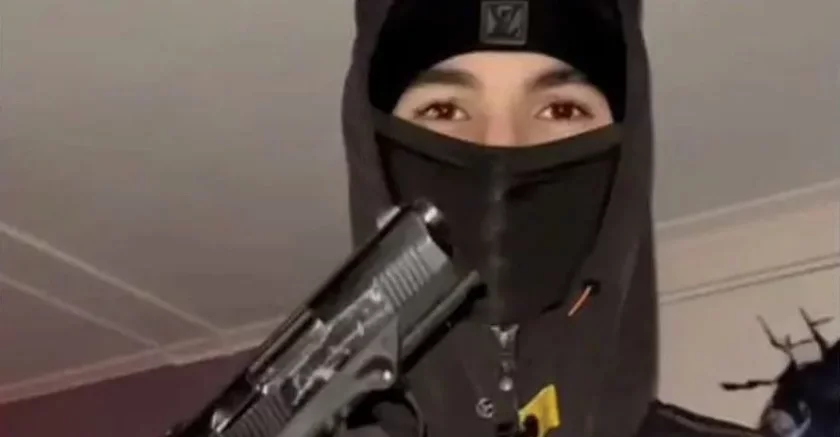
In a suburb of Stockholm, a man dressed in black emerged from the darkness of a winter night. He had a pistol. He approached 20-year-old Murad Abdelkader, a student returning home after a shift at McDonald's, writes the BBC.
The armed man began shooting and continued to fire one bullet after another at Abdelkader, getting closer and closer. He fired the last bullet into his head as Murad lay on the ground.
The killer turned out to be an 18-year-old teenager, Attila Azimov. And in February 2025, he killed the wrong person.
Azimov, who received a life sentence for this attack, became a contract killer for money – he was hired by a network called "Foxtrot", an organized crime group linked to the Iranian authorities. Their specialization is finding external perpetrators for contract killings.
Since 2022, Foxtrot is believed to have ordered around 35 murders, as well as carried out attacks – successful or unsuccessful – on European targets linked to Israel. Explosives and grenades were used in two cases.
The group hires teenagers for such attacks, promising them cash for completing tasks. They rarely have to pay, as the perpetrators are usually apprehended by the police.
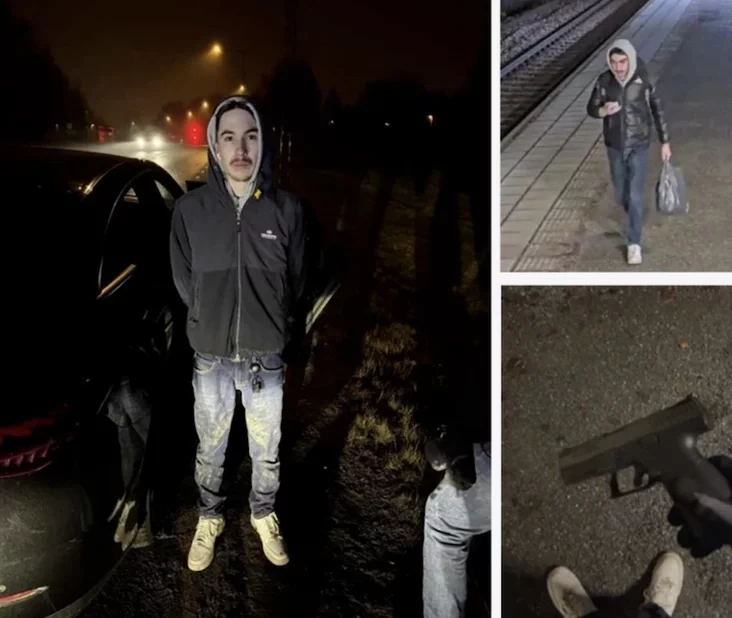

This is exactly what happened to Norwegian teenager Johannes Natland, who was found guilty this week by a jury at the Old Bailey (Central Criminal Court in London) of conspiracy to murder in West Yorkshire, northern England.
The GRIMM task force – a European community created to combat this problem – claims that young killers are found through social networks, and tasks are given to them in formulations similar to instructions in computer games.
According to Andy Craag from Europol's European Serious and Organized Crime Centre, vulnerable young people become "outsourced killers".
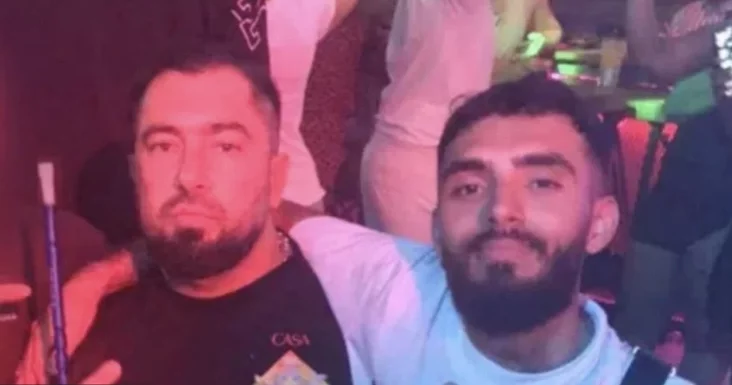
Diamant Salihu, an investigative journalist for Swedish broadcaster SVT, has been studying the activities of the "Foxtrot" group and its ties to Iran for three years.
"The Iranian regime gives orders to the Foxtrot leader to involve his network in attacks on its enemies," he explains. "These could be dissidents, journalists who are critical of the regime, or people connected to Israel."
This cooperation began after October 2023, when Majid moved from Turkey to Tehran.
"He could only continue to live freely in Iran if his people helped the regime," says Salihu.
In April 2025, a month after the arrest of the young Norwegian Natland, who was only 18 years old, "Foxtrot" and Rawa Majid himself were sanctioned by the UK government.
Natland flew to the UK specifically to carry out a "Foxtrot" assignment somewhere in the area of the northern city of Huddersfield.
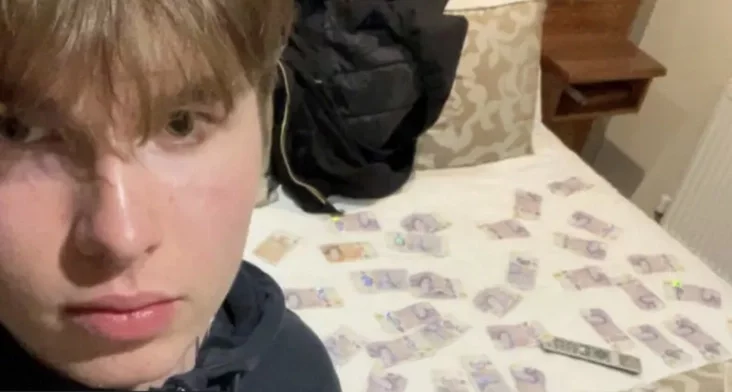
Natland's case clearly demonstrates the methods of recruiting contract killers.
The young man from a family of two journalists in Stavanger, Norway, had a rather comfortable childhood, but after becoming addicted to drugs, he experienced a psychotic episode, ended up in a rehabilitation clinic, and then briefly – in an orphanage.
There he met another teenager, known online by the nickname UnknownHustler.
"Unknown Hustler" forwarded an online request to Natland, seeking someone willing to kill for money.
"Kill in England, 270K," the advertisement stated. The price was given in Norwegian kroner (approximately 28,000 dollars).
However, Hustler received the offer from another teenager nicknamed "The General". The General was only 16 at the time, and had already been living in the orphanage for three years.
As a result, The General involved Natland in carrying out the assignment.
Later, the teenager was connected with a "Foxtrot" member under the nickname "Agent 47" (an obvious reference to the elite assassin from the computer game Hitman). Swedish police believe that this pseudonym hides Ali Shehad Ahmed, one of the close associates of the "Foxtrot" leader.
Agent 47 bought Natland a one-way ticket to Manchester and even helped him with getting a temporary passport.
In the Signal messenger, he guided him through all stages of preparation, and eventually handed him over to a person nicknamed "1", who handled logistics.
According to instructions in the style of computer games, "1" provided the Norwegian with a map and videos showing a weapon cache hidden in a wooded area near Huddersfield. Another video showed how to find the reward cache.
When Natland checked into a hotel in Huddersfield with the weapon, "Agent 47" sent him another message: "We have a lot to do tomorrow."
The Norwegian teenager did not manage to complete these "tasks" because he was arrested. He never found out who he was supposed to kill.
The Counter Terrorism Command is trying to find out if the planned murder had any connection to Iran.
The young "General", who recruited Natland for the murder, was a rather active intermediary. In Sweden, he hired Attila Azimov, who is now serving a life sentence, to carry out death orders, as well as another 17-year-old who, three weeks before Azimov's attack, killed a man named Ahmed Zamzam, who lived in Lund in southern Sweden.
The two teenage killers did not receive payment because they were caught by the police.
Journalist Salihu says that this is very characteristic of "Foxtrot": "They don't care if the teenagers get caught. If they are apprehended, they won't be able to demand the promised fee. We don't know of a single case where these underage killers were paid."
"They deliberately look for younger and younger teenagers – they think less about the consequences and are more willing to take risks," says Salihu.
The General was eventually caught after trying to organize the murder of a 14-year-old son of a Norwegian police officer. For this, he hired two teenagers – aged 15 and 17.
The 15-year-old eventually told everything to the police. When the General was arrested, mentions of the planned attack in Huddersfield, UK, were found on his phone. This led to Natland's arrest as well.
In May of this year, The General was sentenced to 14 years in prison.
In the 15 months since the GRIMM task force was established, there have already been certain results. More than 280 arrests have been made, and important suspects have been apprehended.
One of the most significant was the arrest of Ali Shehad Ahmed – the very "Agent 47". He was arrested in the Kurdish city of Sulaymaniyah in Iraq. Sweden has requested his extradition.
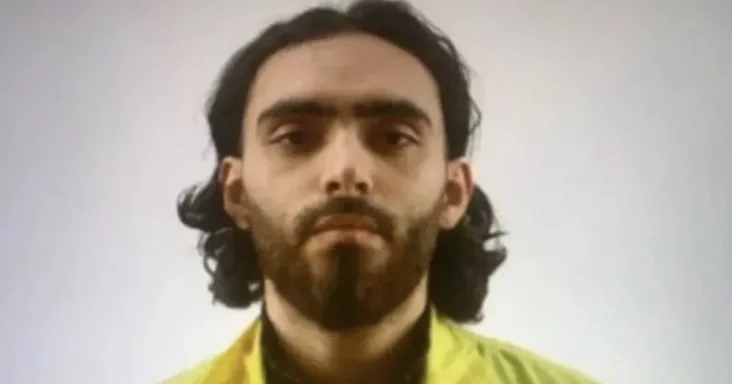
Stefan Hector, Deputy Head of the Swedish National Police Commissioner's Office, stated that his department is constantly expanding cooperation with police forces in other countries to show members of criminal groups that there is no safe place for them anywhere.
In May, Mohamed Mahdidi, known by the nickname Moewgli, a former rapper who, according to Swedish police, plays a far from minor role in "Foxtrot", was arrested in Tunisia.
However, Rawa Majid still remains out of reach – in Iran.
"He is still active," says journalist Salihu. "And as long as his entire network is operating, I'm afraid we will see new attacks on opponents of the Iranian regime."
It is still unclear how severely "Foxtrot" has been impacted.
Meanwhile, they already have competitors – the "Dalen" network is also looking online for people willing to kill for money.
The speed with which these methods spread from Sweden to other Scandinavian countries, and then to the United Kingdom, shows how effective this method of finding killers has proven to be.
Now reading


"The Dutch architect" who rebuilt the Gate of Dawn and built himself a fortress-house in Hajciuniški, turned out not to be Dutch at all. But his legacy is captivating

"The Dutch architect" who rebuilt the Gate of Dawn and built himself a fortress-house in Hajciuniški, turned out not to be Dutch at all. But his legacy is captivating


Statkevich: If mass protests start again, they will no longer be as peaceful as in 2020. And the EU has rightly stopped believing Lukashenka's fairy tales


Comments