


Dima and Toma met in Minsk through a dating app and a year later set off for the other side of the world. In 9 months, they visited 16 countries, rented a campervan for $1, got into a conflict with border guards, and lived a week in a Thai monastery, Myfin reports .
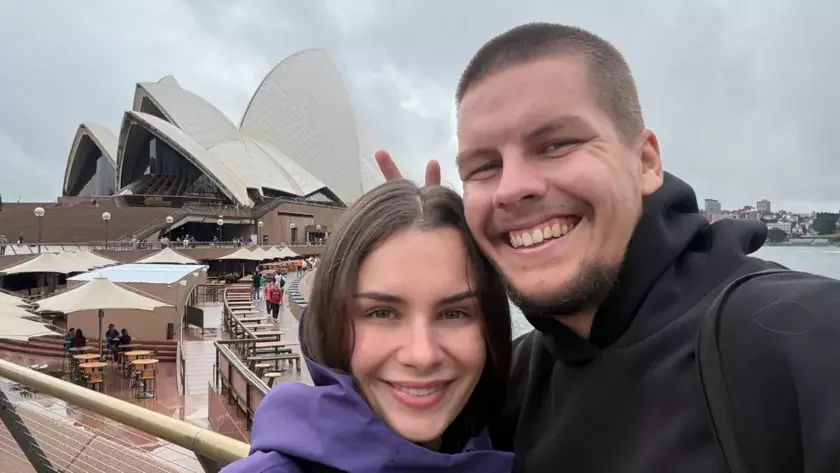
"We planned a super-hobo trip, but it turned out to be more than $1000 a month"
Initially, the couple did not plan to spend much. As Toma admits, they expected to keep within $300 per person.
During the trip, the guy and girl hardly worked. Toma only occasionally held online sessions with clients as a psychologist, and Dima gave rare consultations in his IT field. Job opportunities, as a rule, had to be sought on the go. Dima, by the way, speaks Belarusian in everyday life.
"We specifically rented a separate room so we could work. The most difficult thing was not knowing our plans for longer than a day or two. Today we sleep in a tent by the road, but tomorrow we need to find a place with Wi-Fi to conduct sessions."
The couple took practically no cash on the trip, relying only on bank cards. Dima's investment foresight became a real financial salvation, allowing them to pay for the earliest and most expensive part of the route.
"It really saved us that I didn't just keep money in the bank, but invested in gold stocks. It jumped sharply when Trump started his political 'hustle'. This money wasn't intended for travel, but it helped us a lot. It was with this money that we decided to get to Australia."
"Didn't get vaccinated, now we regret it"
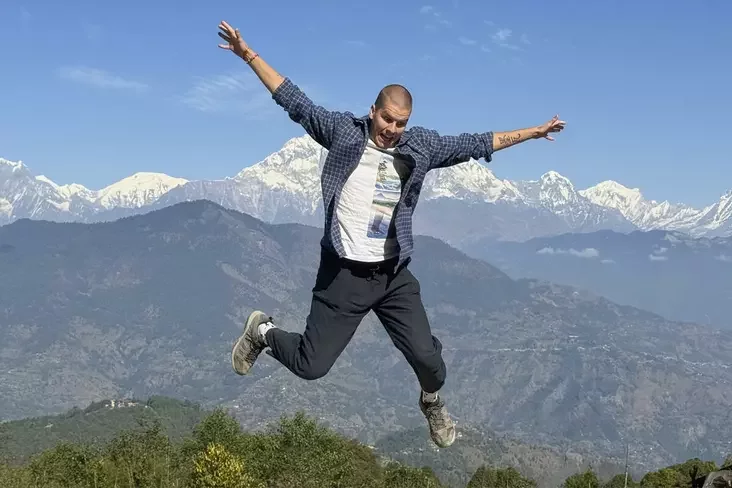
Before leaving, the young people bought a basic first aid kit, but, as they themselves admit, they made a big mistake — they went to Asian countries without medical insurance and vaccinations.
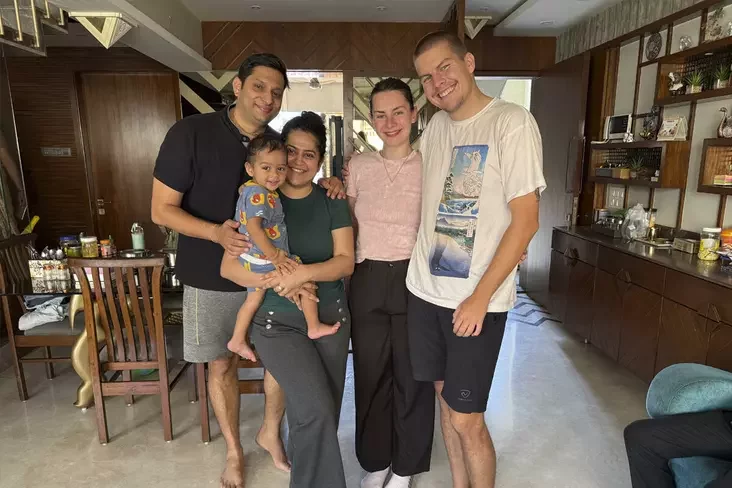
"We like to take risks," Toma jokingly replies. "Immediately upon arrival in Mumbai (India) from Uzbekistan, Dima fell ill with a fever for three or four days. We were lucky that an Indian hosted us via couchsurfing during this period. Apart from a short cold, we were lucky not to get more seriously ill. Although, of course, I wouldn't recommend anyone to do that."
Safety on the journey and 10 days in a Thai monastery
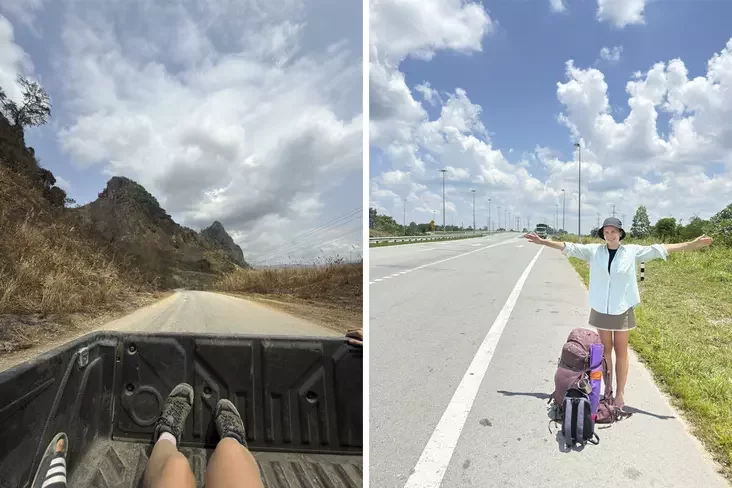
Living in a tent was new to the couple — before this, they had only once gone to Polesia to test equipment. The classic cardboard signs for hitchhiking were used by the guy and girl only in Belarus and China (there the inscription "Going to Sichuan" in Chinese worked perfectly for local drivers).
"Various things happened on the road: from overnight stays on private property near Smolensk in the company of a huge, barking German Shepherd, to tense rides. Near Chelyabinsk, we got into a car with a 21-year-old guy. He had an aggressive driving style and a condescending attitude towards our language. It was very uncomfortable and scary, we even asked him to drop us off, but he insisted on driving further. In such moments, it's better not to argue."
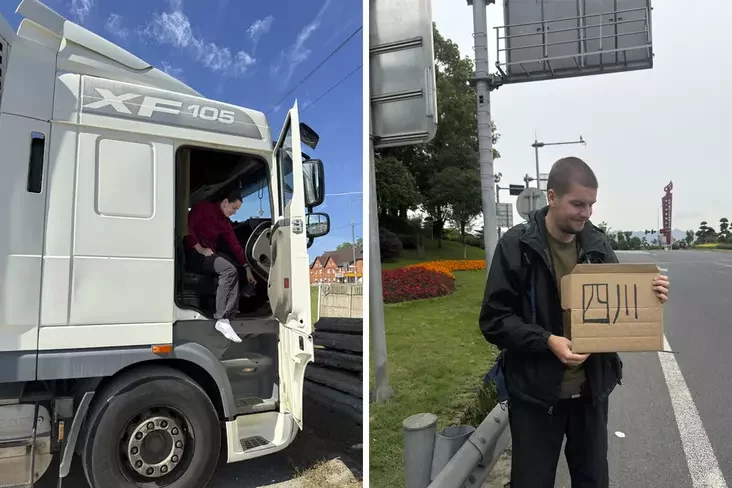
And to avoid unnecessary problems in Muslim countries (especially in Kyrgyzstan), the couple had to tell everyone that they were legally married. But there's also a pleasant side: according to the observations of the young people, people in Asian countries are very friendly. Toma constantly kept notes in Threads, and when she wrote that the couple arrived in Kazakhstan, Kazakhs simply wrote in the comments with invitations to spend the night at their place.
"After several months of intensive hitchhiking, we decided to slow down in Thailand. We rented an apartment for a modest $300 a month and decided to take a break from each other."
While Toma explored the country and arranged sessions, Dima went to live with monks. "In real Thai monasteries, everything runs on donations. The concept of Buddhism is that you own nothing. Taking fixed money means attaching yourself to material things, but donations are seemingly not shameful to take. They gave me my own small room, I lived there for 10 days without contact with the outside world, engaging in spiritual practices."
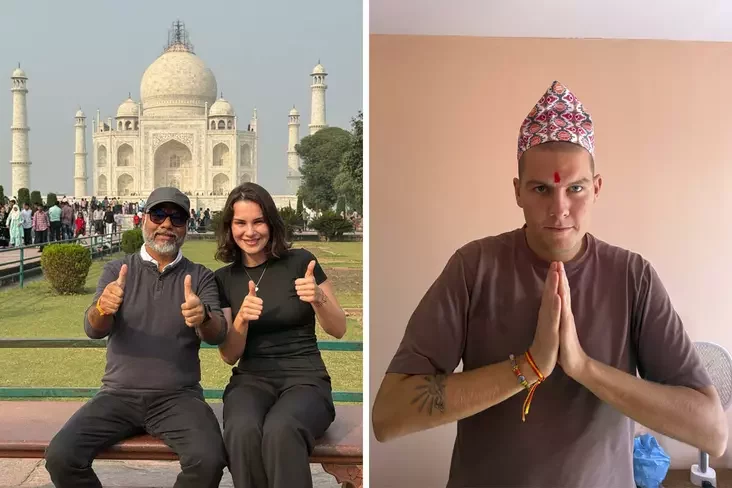
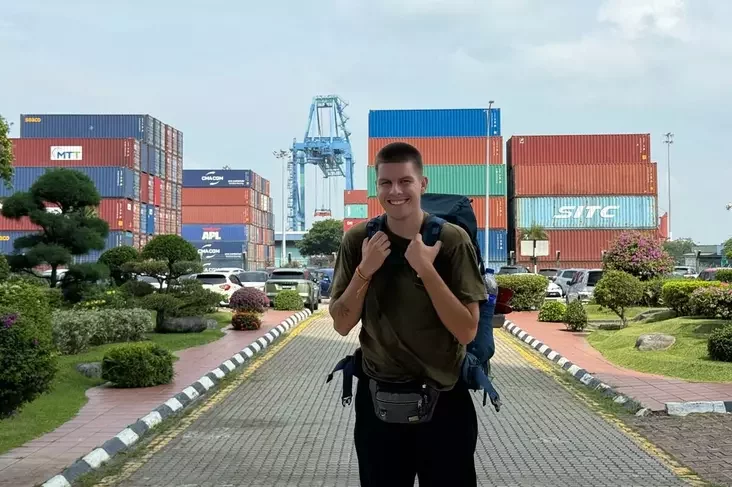
It must be said that sometimes travelers flew from country to country due to closed land borders (India/Pakistan, Myanmar/Thailand) or their absence, as in the case of Australia. Although they lived for two weeks in the port city of Port Klang in Malaysia and tried to hitch a ride on a ship — unfortunately, it didn't work out.
Indian police and travel favorites
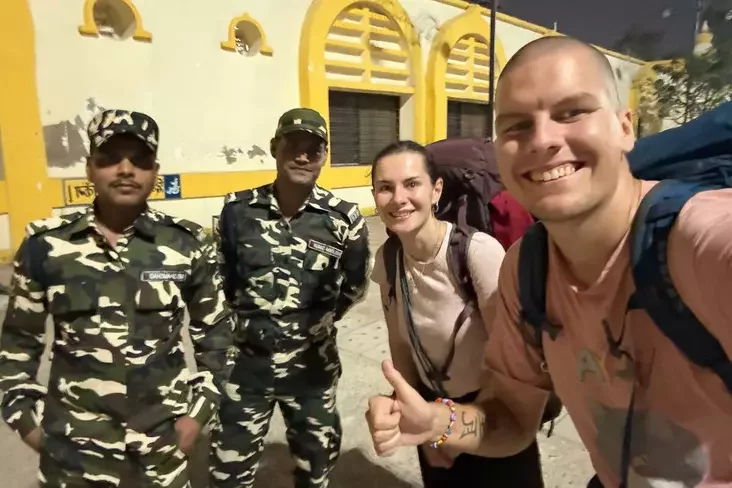
There were enough adventures with local authorities too. When the couple wanted to cross the Indian border, they were stopped by unknown men in civilian clothes on motorcycles, who introduced themselves as police and demanded documents.
"I have a clear position: I will not hand my passport to anyone, especially after stories about slavery in Myanmar," Toma resolutely states. "I held it in my hands while they photographed it. But first, we demanded their IDs. Such disobedience made them tense, but they didn't argue. It's strange that their IDs are stored like photos on a phone, although one of them did have a printed version. Then they explained to us that we couldn't cross on foot, took us to the train station, helped us get on a train, and even waited with us for an hour and a half. We even gave them Belarusian coins as a souvenir."
How much it costs: full budget breakdown
The first months of travel through Russia and Central Asia were paid for from savings. On the road, the budget was occasionally supplemented by rare online consultations. The main sponsor of large expenses, such as the flight to Australia, was Dima's successfully sold gold stocks.
-
Total expenses. They started the journey with a modest $600 per month for two. Closer to the middle of the trip, the monthly budget grew to $1200–1400. Mainly due to the high cost of living in China and Australia.
-
Accommodation. To save money, the couple actively used a tent and stayed via couchsurfing in all host countries or rented cheap accommodation. In Thailand, a month's rent for a full apartment cost only $300. Sometimes the couple found work through the Workaway program (on the island of Borneo/Kalimantan), where they were fed and given a bed in exchange for simple manual labor.
-
Medicine. They did not get travel insurance. They did not get paid vaccinations before starting, deciding to save money and take a risk. Basic antibiotics were purchased directly from local pharmacies, though it's better not to do so.
In 9 months, the couple traveled through 16 countries, speaking mostly English, and relying on a translator in China, Laos, and Vietnam. Of all places, Dima highlights Australia as the country where they were happiest, despite some difficult moments. Now the young people are resting and trying to save up for a new trip to Africa.

"Now the very concept of using something you don't know is alien to me." A big interview with Ivan Shyla about business, earning with AI, women, and Botox

"Now the very concept of using something you don't know is alien to me." A big interview with Ivan Shyla about business, earning with AI, women, and Botox


«I’m Freaking Crazy». Belarusian Singer Shot a Wild Music Video in a Post-Apocalyptic Location. «It's About the Power of a Woman Who Wants to Punish a Man for Betrayal»

«I’m Freaking Crazy». Belarusian Singer Shot a Wild Music Video in a Post-Apocalyptic Location. «It's About the Power of a Woman Who Wants to Punish a Man for Betrayal»


In 2020, "yabat'ka" Amina "actively voted" for Lukashenka. And now she doesn't understand why her own mother reported her, and the police detained her


Comments