


Artificial intelligence created a universal vaccine against all coronaviruses
Researchers from the University of Cambridge have successfully completed the first phase of clinical trials for a universal coronavirus vaccine, developed with the help of artificial intelligence.
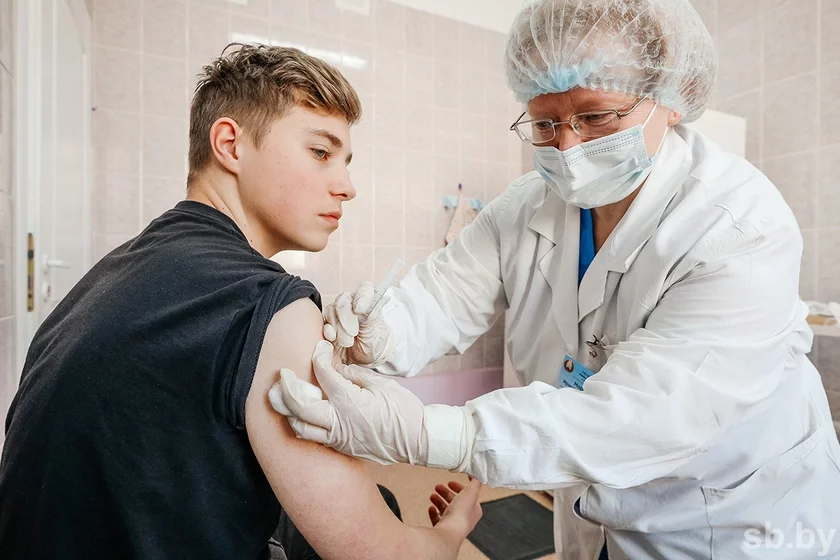
Scientists not only created a synthetic "superantigen" but also solved two major logistical problems of the pandemic: the new drug does not require storage at ultra-low temperatures and is administered into the human body without the aid of a needle.
As the Belarusian popular science Telegram channel cybulinka noted, the results of the British scientists' work on the pEVAC-PS drug were recently published in the authoritative medical journal Journal of Infection. The developers propose a fundamentally new approach in the fight against deadly viruses.
Why do we need a new vaccine?
Over the past twenty years, the world has faced three major coronavirus outbreaks: SARS in 2002, MERS in 2012, and SARS-CoV-2 (COVID-19), which changed life on the planet in 2020.
The problem with modern vaccines is that they are created for specific strains. The virus quickly mutates, new variants appear, and pharmaceutical companies are constantly forced to "catch up" with the disease, updating their drugs.
In addition, a huge number of other sarbecoviruses circulate in bat populations, which can at any moment jump to humans and cause a new pandemic.
To break this cycle, researchers decided to create a pansarbecovirus vaccine — a drug capable of fighting a whole large group of viruses at once, including those that have not yet spread to humans.
The "Achilles' heel" of the virus and DNA technologies
The pEVAC-PS drug is based on DIOSynVax technology. Instead of basing it on one specific virus, algorithms analyzed the genetic code of dozens of different coronaviruses. Artificial intelligence searched for their "Achilles' heel" — conservative, or invariable, regions of the spike protein. The virus cannot change them during mutations, as they are critically important for its survival.
On this basis, the computer designed a synthetic "superantigen." It should teach the immune system to recognize not only already known variants of COVID but also future mutations, as well as bat viruses.
Another innovation lies in the delivery method. Unlike popular mRNA vaccines, which require storage in freezers at ultra-low temperatures, the new drug is a DNA vaccine.
This makes it thermostable, which is ideal for low-income countries and hot climates, where maintaining the necessary temperature is very difficult.
Moreover, the vaccine is needle-free. During trials, it was administered intradermally using a special PharmaJet Tropis jet device, which literally "shoots" the drug through the skin under high pressure. This reduces the volume of the required dose, eliminates the problem of medical waste disposal, and makes the process more comfortable for patients.
Results of the first phase: safe, but with a nuance
39 healthy volunteers aged 18 to 50 participated in the first phase of clinical trials. The main goal of this stage was to test safety. And here the vaccine performed excellently: it was well tolerated at all four tested dosages without any serious side effects.
But as for its ability to induce a powerful immune response, the scientists are maximally honest in their article — the results were quite modest. And there is a logical explanation for this. The fact is that all volunteers already had two or three COVID vaccinations, and many had also experienced waves of the "Omicron" strain. Their baseline immunity and antibody levels were already very high, so observing a sharp jump in neutralizing antibodies specifically from the new vaccine was technically difficult.
Nevertheless, researchers were very encouraged by the microarray blood analysis of the patients. It showed that the vaccine did exactly what was required of it: it prompted the immune system to produce antibodies directed precisely at those same invariable regions of the virus that artificial intelligence incorporated into its design.
What's next?
The first phase proved the main point — the concept of a synthetic universal antigen created by a machine works in the human body and is safe. The needle-free DNA technology also confirmed its convenience.
Now scientists need to refine the formula for the second phase of trials to make the immune response more powerful. If these stages are successfully completed, humanity will receive a reliable tool not only against the endless mutations of COVID-19 but also against hypothetical infections that may emerge from the wild in the future.


Belarusian woman from the USA with an expired passport was taken to the basement at the border and had her phone checked. She compared Belarusian border guards to angels


Comments
І што нам уцюхвалі, што прышчэпка ад кавіду як ад грыпу павінна быць штогадовай?