


On March 9, 1918, the Second Constituent Charter was adopted in Minsk. Two weeks later, on March 25, the independence of the BPR was declared.
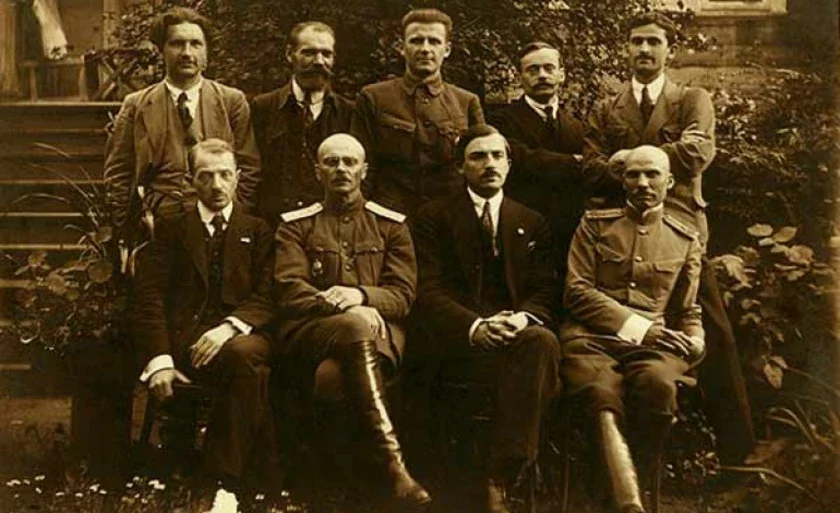
108 years ago, on March 9, 1918, the Second Constituent Charter was declared in Minsk, which was occupied by Kaiser's troops.
A week before this, the Treaty of Brest-Litovsk was concluded between the Germans and the Bolsheviks. The northwestern part of Belarus remained with the Germans, while the Bolsheviks were to receive central and eastern Belarus. Furthermore, the Germans promised the Bolsheviks not to recognize any states in the occupied territories that declared their independence after March 3, 1918. The German authorities in Minsk also did not recognize the People's Secretariat and the Executive Committee of the Rada of the All-Belarusian Congress.
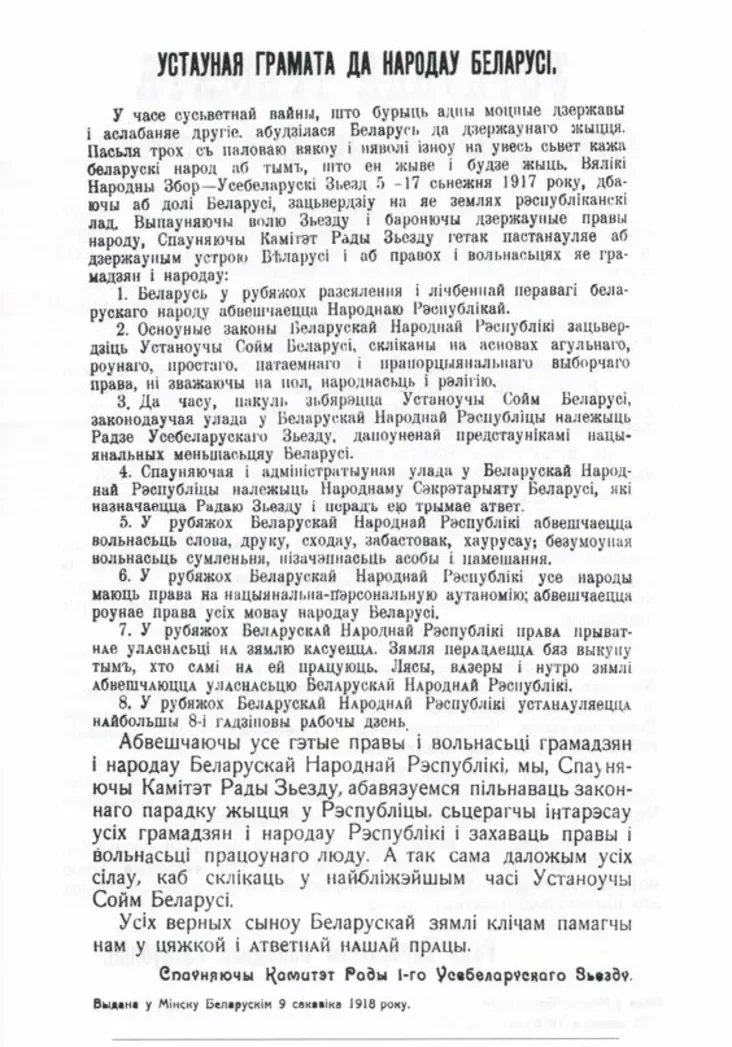
Under these circumstances, Belarusian figures proceeded to declare the Second Constituent Charter. The First Charter had been published on February 21.
The text of the Second Charter consisted of eight points. The Belarusian People's Republic was declared within the settlement boundaries of the Belarusian people. The Rada of the 1st All-Belarusian Congress temporarily assumed legislative power in the BPR.
The rights and freedoms of citizens and peoples of Belarus were declared: freedom of speech, press, assembly. Private ownership of land was abolished, an 8-hour workday was established, and the equality of all languages and the right of all peoples to autonomy were proclaimed.
On March 18, the Rada of the All-Belarusian Congress was renamed the Rada of the BPR, on March 23 the Vilna Belarusian Rada was included in its composition, and on March 25 (which was a Monday) the Third Constituent Charter was adopted, declaring the independence of the BPR.
Now reading


In Russian Yekaterinburg, a scientist of the Academy of Sciences was beaten to death after preventing children from riding ATVs on experimental fields


Comments