


Pompeii was not destroyed by lava. Seven myths about the famous catastrophe
Almost two thousand years ago, the eruption of Vesuvius buried Pompeii and neighboring settlements. The history of this catastrophe is well known, but many popular perceptions about it do not correspond to what archaeologists and volcanologists know today. BBC Science Focus debunks seven myths and misconceptions about Pompeii.
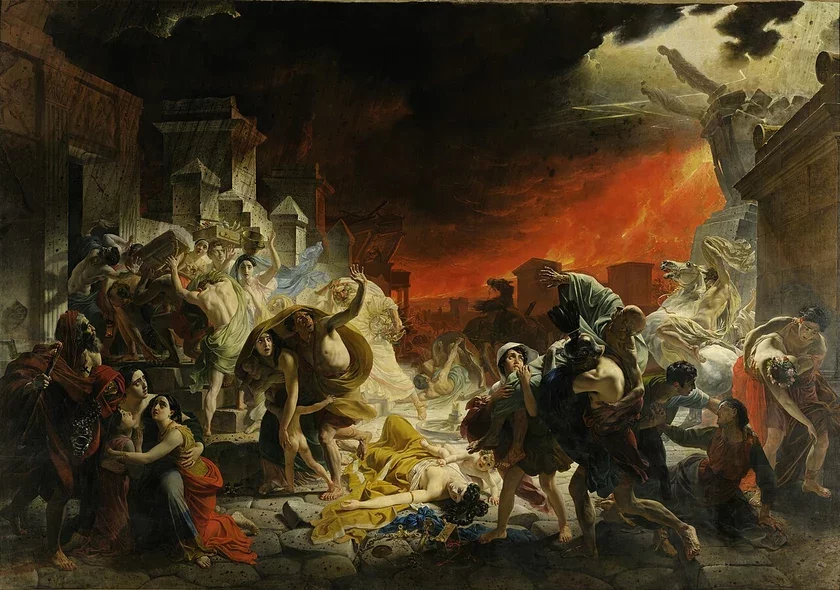
The eruption of Vesuvius in 79 AD remains one of the most famous catastrophes of the ancient world. It is widely believed that the city was covered by streams of molten lava. But this is not true.
1. Pompeii was not destroyed by lava
Volcanologists explain that lava moves relatively slowly, and in most cases, a person is able to escape it. In addition, a lava flow completely burns everything in its path, and then nothing would have remained of the ancient buildings.
During the eruption, Vesuvius ejected a column of stones, ash, and gases approximately 30 kilometers high. The sky darkened in the middle of the day, and ash began to cover the city. Under its weight, the roofs of houses collapsed.
Later, the column of volcanic material collapsed, and flows of incandescent gases, ash, and stones rushed down the slopes of Vesuvius. Their temperature reached several hundred degrees, and their speed was 100-200 km/h. It was these, along with the ash, that buried Pompeii and killed many inhabitants.
2. The catastrophe happened suddenly and left no time to escape
In reality, signs of danger appeared long before the eruption. As early as 17 years prior, earthquakes occurred in the region, after which Pompeii continued to be rebuilt. Some residents even left the city.
Four days before the eruption, a new series of earthquakes began. And when Vesuvius had already awakened, Pompeii was covered in ash for several hours before the deadly flows reached the city. So many residents had time to escape. The problem was that people at that time did not understand the connection between earthquakes and a future eruption.
3. Only Pompeii suffered from Vesuvius
Pompeii became a symbol of the catastrophe, but it was far from the only city affected. Around the Bay of Naples, there was a whole network of settlements and villas that also came under attack. Among them were Stabiae and Herculaneum.
Herculaneum was even closer to Vesuvius. Unlike the residents of Pompeii, its inhabitants had much less time to escape. The volcanic material there hardened almost like concrete over time, so excavating the city is more difficult. However, its remains are exceptionally well preserved.
4. People in antiquity behaved completely differently during disasters
Almost two thousand years have passed since the eruption of Vesuvius, but discoveries in Pompeii show that in everyday life, people were not so different from us. Archaeologists find bread left in ovens, household shrines, and other traces of ordinary life that were interrupted at the moment of the catastrophe.
Psychologists point out that many Pompeians were unwilling to leave their homes, property, and familiar way of life, despite obvious signs of danger. Similar behavior is seen today. For example, before the possible eruption of Mount Agung in Bali in 2017, 100,000 people were urged to evacuate, but only about 40,000 left immediately. People did not want to leave their homes, jobs, and loved ones. Therefore, Indonesian authorities had to forcibly evict people from the area.
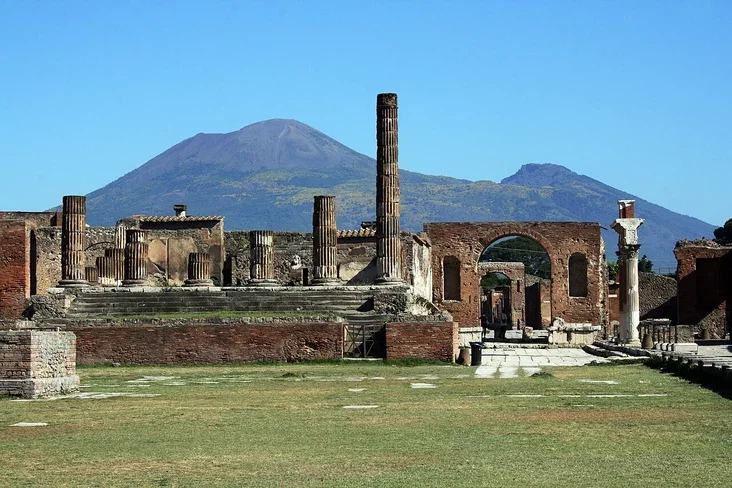
5. Everything in Pompeii has already been found
Archaeologists have been studying Pompeii for centuries, but the city still hides many discoveries. New excavations continue to provide information about the life of Romans, and modern technologies allow us to study what was previously inaccessible.
A particularly interesting example is the charred scrolls from the library of Herculaneum. They are so fragile that it is impossible to physically unroll them. Researchers are now trying to "unroll" them digitally and decipher them with the help of artificial intelligence. One of the scrolls, which was previously impossible to open, has already been read completely.
6. Volcanoes bring only destruction
The eruption of Vesuvius in 79 was a catastrophe, but volcanoes themselves cannot be viewed solely as a source of danger.
Volcanic activity creates very fertile soils, and areas around volcanoes can have a rich ecosystem. This is why people have settled near them for millennia, despite the risk.
7. Almost everyone in Pompeii died
Images of human bodies preserved in ash created the impression of a city from which almost no one escaped. But archaeological finds suggest otherwise.
According to one estimate, about 20,000 people lived in Pompeii, although this figure remains controversial. However, about 1,300 bodies were found in the excavated part of the city.
The much smaller than expected number of dead may indicate that many managed to escape. Some residents left Pompeii after earlier earthquakes, others left in the last days or during the ashfall. Therefore, the history of Pompeii is not only the history of the city's demise but also the history of people who managed to escape and start a new life elsewhere.


Comments