


The Academy of Sciences Library remembered a Belarusian writer. But the language he wrote in was consistently ignored.
On the occasion of the 115th anniversary of Belarusian writer Vasil Vitka, material about him appeared on the website of the Yakub Kolas Central Scientific Library. On the one hand, this is positive, but on the other hand, the approach to presenting the material was, to put it mildly, surprising.
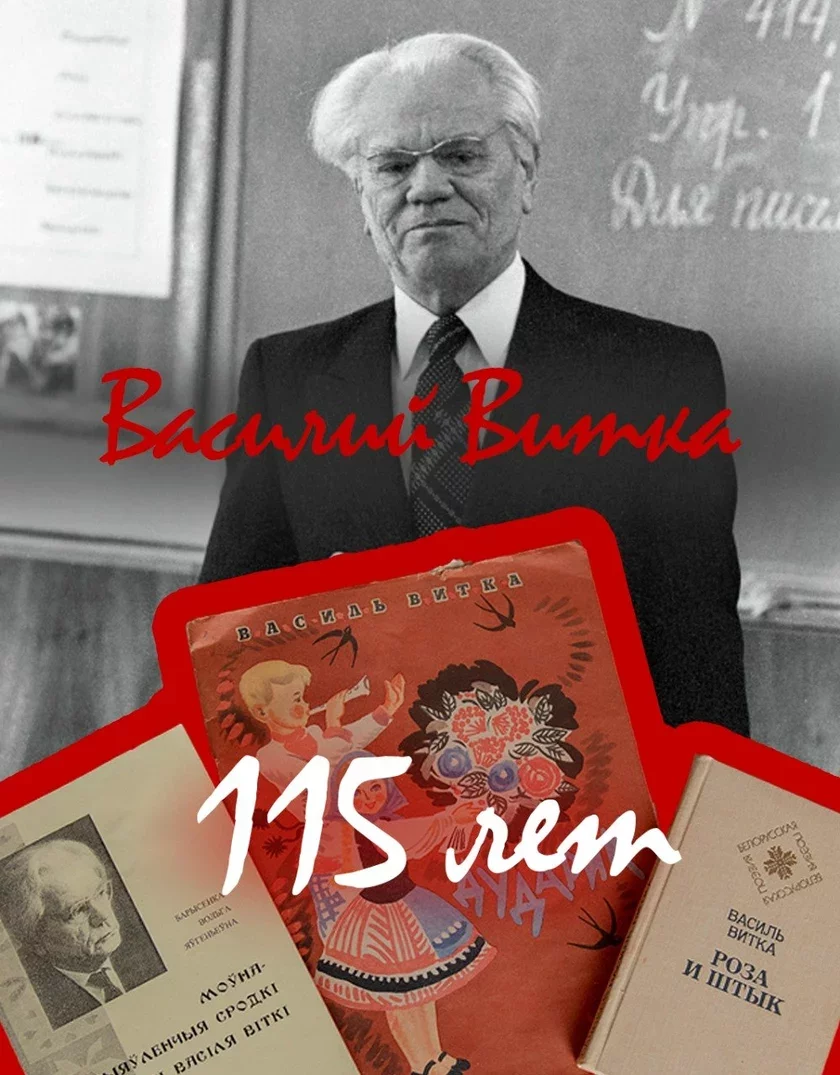
This is how the material about Vasil Vitka is presented in the library's Telegram channel.
Not only is the article itself about Vasil Vitka written exclusively in Russian (even a formal switch to the Belarusian version of the website does not change the language — it remains Russian), but also, only editions of his works translated into that language were chosen as illustrations for it.
Although Vasil Vitka himself wrote both poetry and prose in Belarusian.
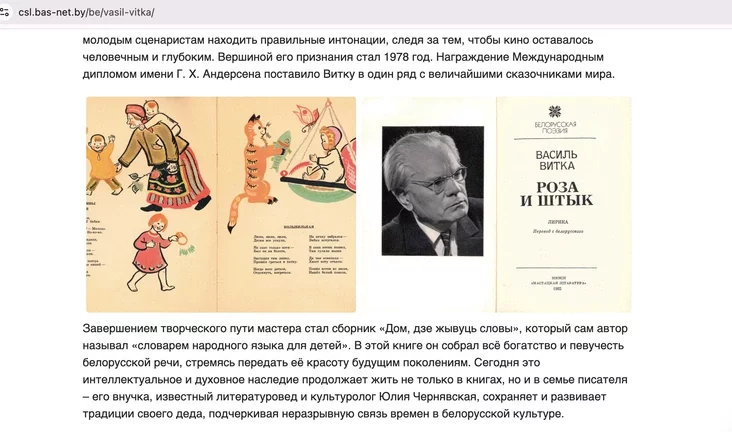
Screenshot from the website
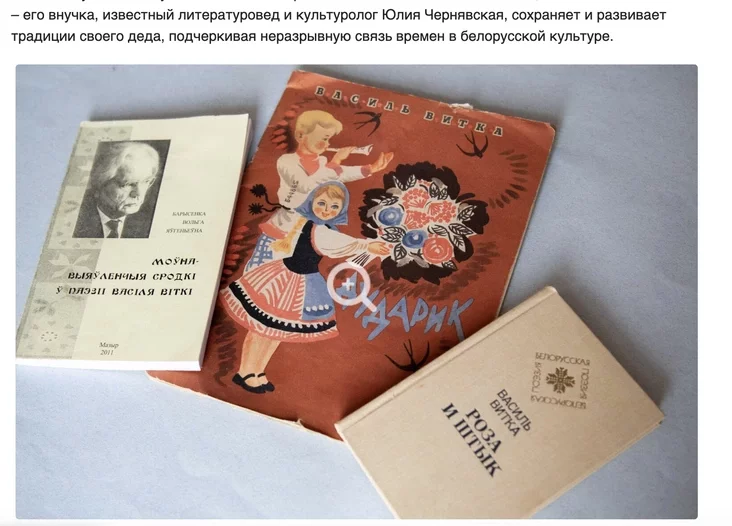
Screenshot from the website
Moreover, in the library's Telegram channel, for its readers, for some reason, even a translation of the title of the children's magazine "Viasiolka" (Rainbow), of which Vasil Vitka was the editor-in-chief for 17 years, is provided in Russian — "Raduga". Probably, those who manage the channel are convinced that its readers no longer know the Belarusian language. One could, of course, think that this is done for the needs of a wide international audience of the channel — but only 346 people are subscribed to it!
The height of absurdity is that Vasil Vitka himself is referred to in Russian in the Telegram channel and partially on the website as "Vasily Vitka", although names in pseudonyms are never translated. This is evident, by the way, even on the covers of his books' Russian translations, where the author is "Vasil Vitka".
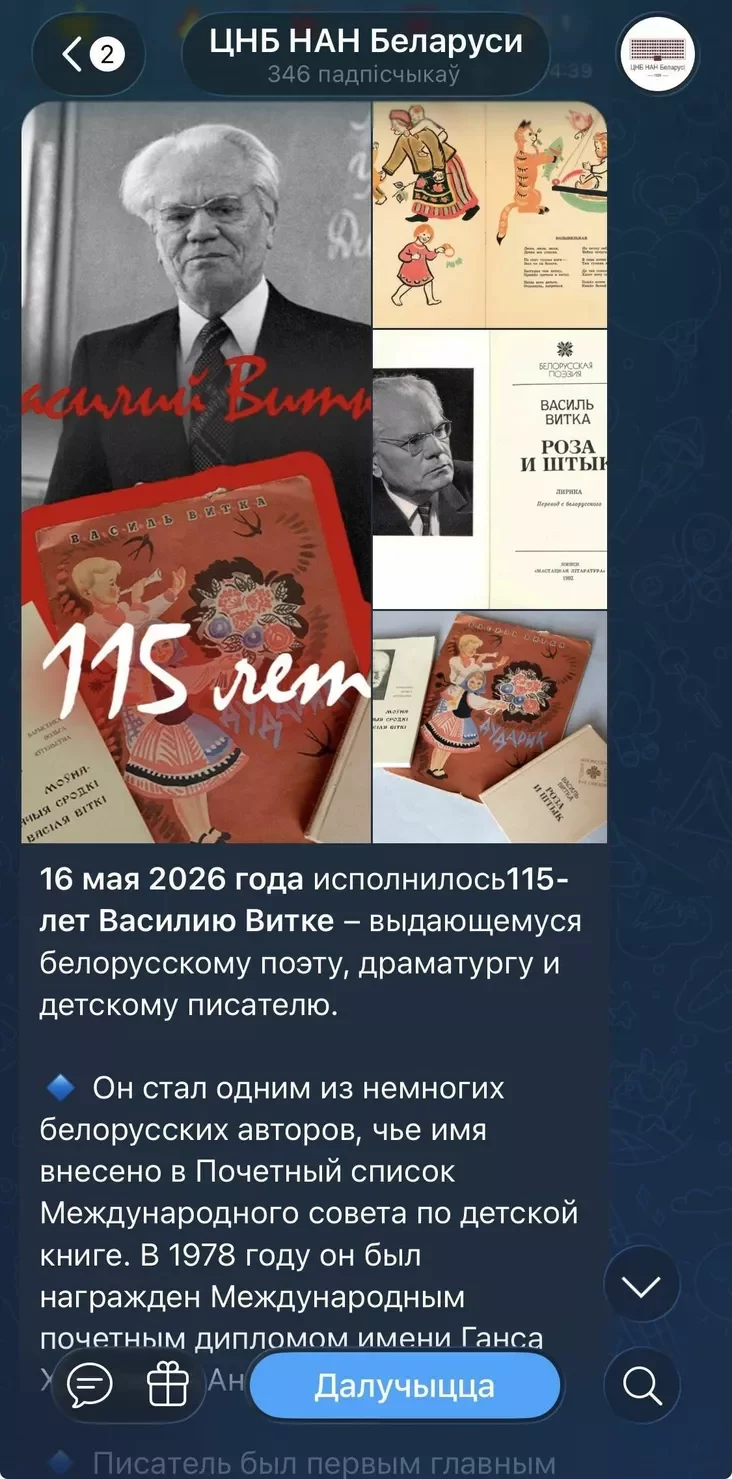
Even Vasil Vitka's granddaughter, the renowned art historian Yulia Charniauskaya, who herself primarily uses Russian in everyday life and work, was unpleasantly surprised by this approach and was the first to express her indignation.
"'No, I am, of course, grateful. But why not in Belarusian? And the books are also translated into Russian. Why?'" Charniauskaya asked the question on Facebook.


A monument to pilots Nichyparchyk and Kukanenka was erected near St. Sophia in Polotsk. But not even a plane of the model on which they died, but a Stalin-era airplane


Comments