


What became of the international children raised in Zhodzina in Belarus's first family-type children's home?
In 1989, Belarus (then still the BSSR) saw the establishment of its first family-type children's home. It turned out to be quite unconventional: under one roof in Zhodzina gathered children whose roots extended to India, Korea, Lebanon, Ethiopia, and even Cuba.
They were brought together under the wing of Marina Sahaidarava, a teacher from Zhodzina — she was almost 50 years old at the time of her first adoption. The woman was not married and had no children of her own, but eventually became a foster mother to 12 children at once.
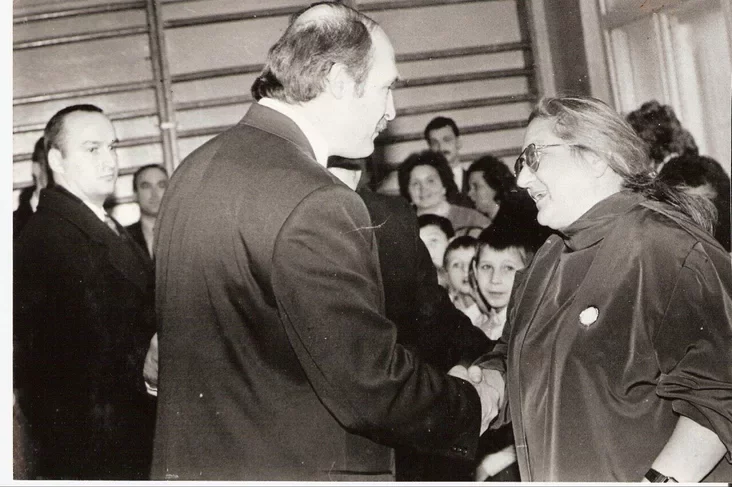
What became of the lives of the children Lukashenka once visited, whom they later asked in letters to be allowed to call "their father"? Truth be told, "father" never responded to them.
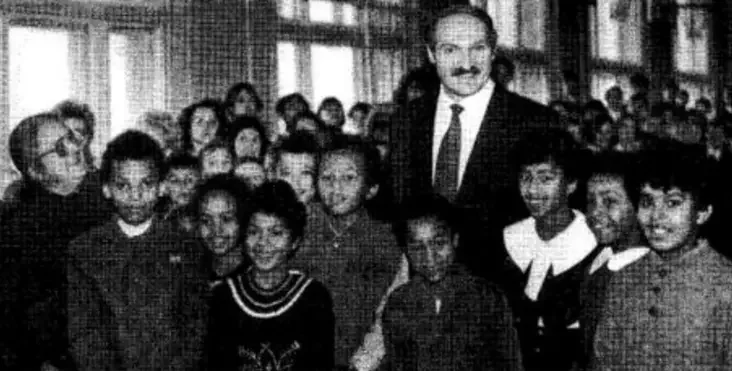
When journalists asked Marina Akhatovna why she decided to become a mother to so many children who weren't her own, she didn't immediately know what to say. Neighbors gossiped that it was all for her own benefit — the woman received a caregiver's salary, plus the Zhodzina City Executive Committee's education department allocated a large cottage for the first family-type children's home. Understandably, such a large number of children couldn't live in the two-room apartment of 29 square meters that Sahaidarava herself and her mother Lyudmila owned.
However, when all the children reached adulthood, the social house was taken away. But more on that later.
The initial impulse to adopt someone was formed by a film she watched about an orphanage — and so the first of Marina's children was a Belarusian boy named Viktar. The boy was found in a train car, and at 3.5 years old, his new mother took him from the Barysaŭ orphanage.
Later, the woman specifically sought out dark-skinned abandoned children across the country. She gave all of them her surname and new, Slavic names. Additionally, she decided that all the children would be Ivanavich (for boys) and Ivanavna (for girls).
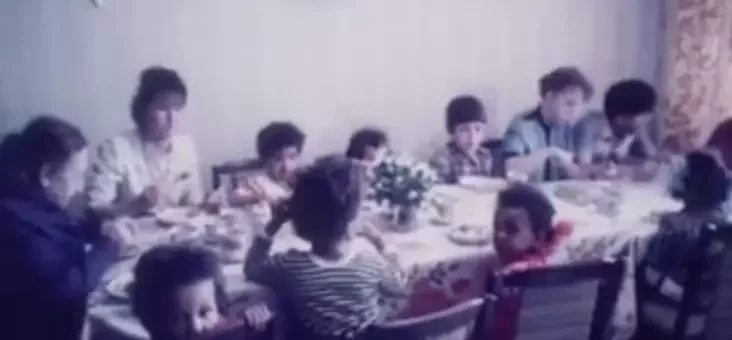
According to family legend, Marina's own father was a repressed Chinese man whom the girl never saw in her life.
"Blond children" immediately rushed to me expecting gifts, while "these ones" (the dark-skinned children — NN) stood silently by the wall. The nurse commented: "Who needs them?" That touched me. I myself am half-breed," Sahaidarava once recalled in a conversation with journalists.
One of the archival stories about the Sahaidarava family on Russian television, 1989.
Vitska the Rogue
This family immediately became a local celebrity — essays were written about them, and TV reports were filmed. Mostly positive ones: a large family, love, support, and mutual understanding. They attended the same school and always had someone to talk to and play with. However, behind the walls of their cottage, many tragedies, both small and large, also unfolded.
The first happened when the eldest, Viktar, got hold of his mother's documents and told all his sisters and brothers that they were adopted. The children were very upset then. To ease the tension, Marina even suggested they look for their real parents, but no one was interested — due to their hurt feelings.
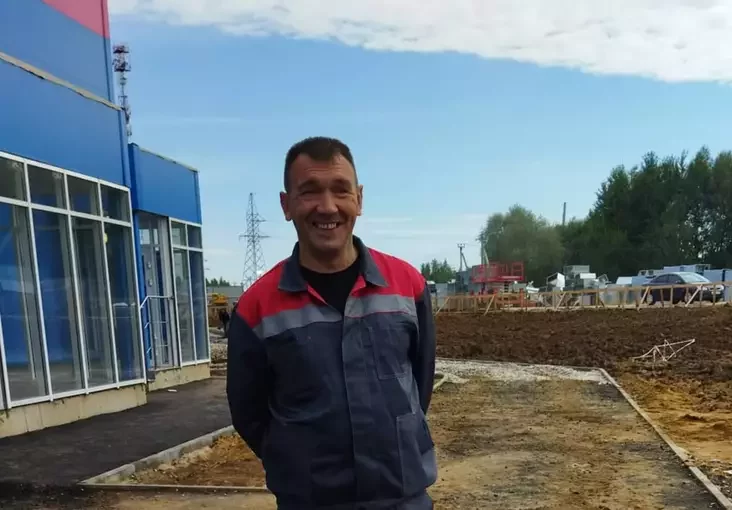
The same Vitska brought his mother a new headache in adulthood — the guy ended up in prison for robbery. His misdeeds didn't end there. According to information shared with us by "Belpol," in his 45 years of life, the man has been convicted at least eight times.
He was held accountable for stealing a half-liter bottle of "Bulbash" vodka, for a "Nokia" mobile phone snatched at the market, for assault followed by taking a leather jacket from the victim, for extortion, and for robbing an apartment.
The man's last known workplace was as a loader at a heavy stamping plant. He did not marry and had no children. And he became a fan of Russia.

Kira, Clonidine, and Pussy Riot
The life of Viktar's younger sister, Kira, unfortunately, also took a downward spiral.
At just 20 years old, while a student at the Belarusian Agricultural Academy, she stole money from her roommate in the dormitory. After serving her sentence, the girl moved to Moscow, where she started playing for high stakes.
Thus, Kira created a fake Russian passport under the name Sviatlana Durhaeva and began meeting wealthy men in upscale places. She spotted one such man, an entrepreneur, in a gaming arcade.
Kira suggested continuing the evening at the new acquaintance's home, where she spiked his drink with clonidine. When the victim passed out, the woman took 20,000 euros, two laptops, and a mobile phone from the apartment. However, the police quickly found the girl using cameras at the entrance and in the arcade.
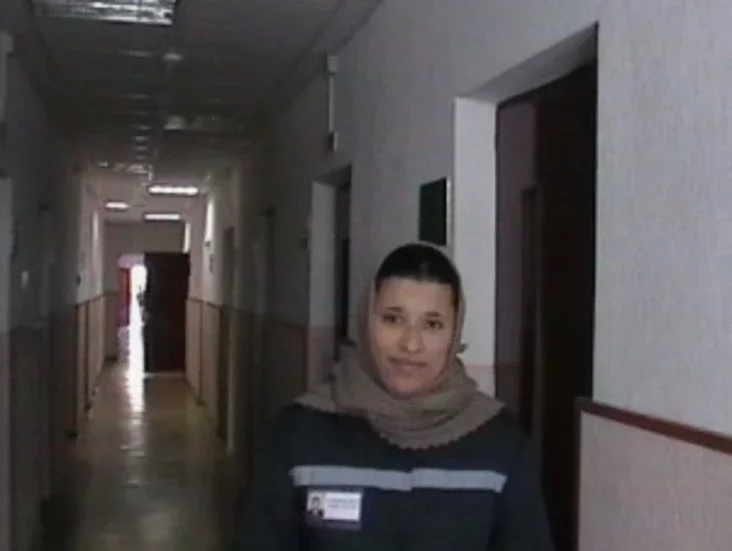
Interestingly, when Kira was released from prison, she briefly became a political activist and gave numerous interviews on the topic of ill-treatment of incarcerated women. She recounted witnessing public beatings, arbitrary solitary confinements, poor food, and lack of medical care.
Her complaints about the Russian Federal Penitentiary Service were then noticed by Pussy Riot members Nadezhda Tolokonnikova and Maria Alyokhina. Together with several other former convicts, they tried to register the organization "Zona Prava" (Zone of Rights) in Russia, but they were predictably denied.
Despite her attempts to stay outside the prison system, Kira again embarked on a criminal path upon returning to Belarus. Almost all of her charges (and there were no fewer than eight), according to "Belpol," were again related to the theft of various sums of money and property. The latest known cases include robbing one apartment for 700 rubles and another for 300 rubles.
Barys: Became a Chef and Sheltered a Cat
Barys's life turned out happier.
He became the eighth child in Marina's family. The boy never doubted that his adoption was a gift of fate. He considers his childhood, with trips abroad and gifts from various foundations, to be happy — he is sure it wouldn't have been like that in an orphanage.
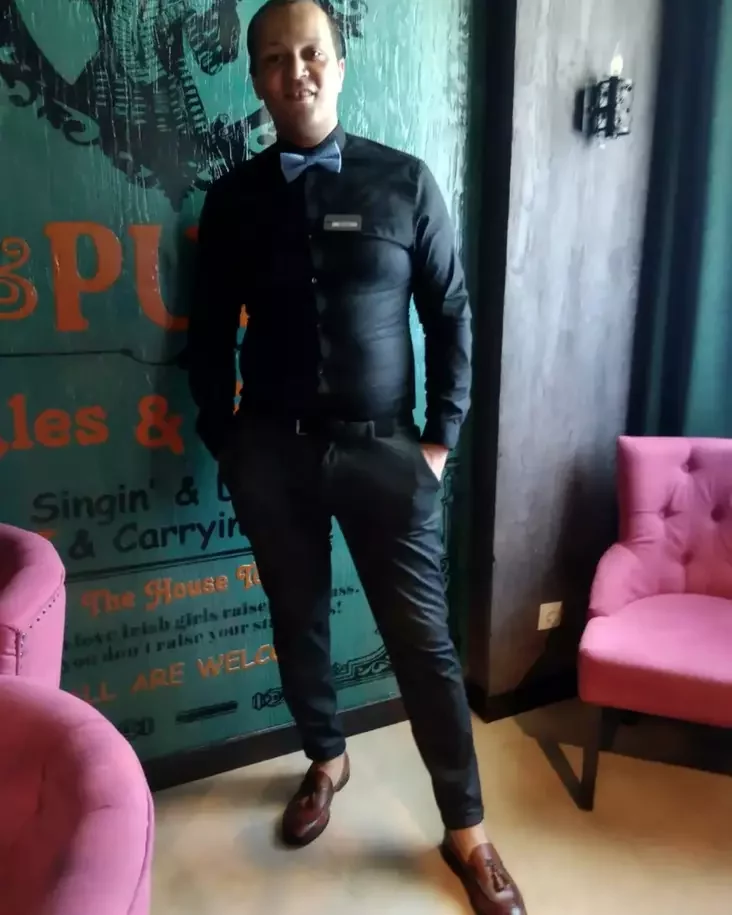
His mother supported Barys when he was having the hardest time — during his coming out about his sexual orientation. While others shouted obscenities at him on the streets of Zhodzina, Marina simply said that she would always love him because he was her son.
The coming out, which was described in detail in "Imena", was not easy for the boy, but after moving from his small hometown to the capital, he began to breathe more freely. And after he adopted a cat, he became even happier.
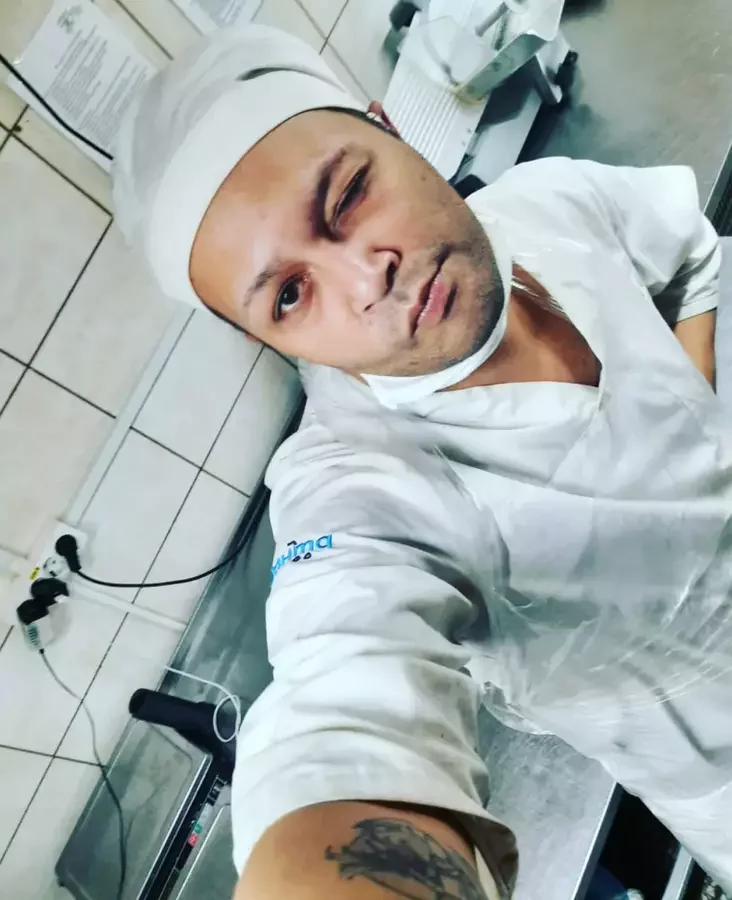
Barys trained as a chef and continues to work in the food industry — sometimes as a waiter, sometimes in the kitchen. Recently, he has been involved in preparing his own "Santa" products.
Sasha: Music Castings and Fighting for Orphan Status Reinstatement
Before Sasha came to the Sahaidaravas, she had been rejected twice: first, in 1986, her biological mother left her at the maternity hospital. A year later, a Minsk family adopted her, but soon returned her to state care due to "the manifestation of characteristic Negroid features."

Sasha graduated from BSU, worked at "Minsk-Arena" and "Victoria" hotel, and was an administrator at a sushi restaurant. In parallel, she tried her hand at creative pursuits, singing at various events and attending castings for vocalists. In 2014, she even participated in an ONT singing show. However, after the show, her career as a singer, unfortunately, did not take off.
At 23, state media actively wrote about Aliaksandra in connection with her fight for the right to her own housing. She was supposed to receive it as an orphan, but the nuance was that Marina Sahaidarava officially adopted almost all foster children, giving them her surname and new names. And even when, in 2005, Sahaidarava's employment contract as a caregiver of a family-type children's home was terminated at her own request (due to age and failing health) and the children's home was disbanded, sending the children to dormitories, legally they still remained the children of their foster mother.
Aliaksandra had to look behind many doors of various instances and eventually go through a court that overturned the adoption. Marina only supported Sasha in this. The girl did eventually receive social housing.
It is known that Aliaksandra is married today and raising children.
Dzyanis: Name Change as a Sign of Protest
Dzyanis was born in Slutsk to a student-accountant and a Nigerian man 12 years her senior. But the young mother immediately abandoned the child. Thus, Dzyanis joined the Sahaidarava family.

Dzyanis trained as a bricklayer-plasterer at the Zhodzina Vocational-Technical Lyceum. He worked as a machine operator at a woodworking enterprise, later as a milling machine operator. In parallel, like his sister Sasha, he dealt with his adoption status.
Dzyanis reasoned that if his biological mother abandoned him, then he was forever an orphan and a child without care, and the adoption was purely formal (meaning, Marina was not his mother, she became a caregiver and only thus infringed on his legal interests to receive social housing).
As a sign of protest, Dzyanis even changed his surname at one point, taking his wife's.
As a result, the court recognized Dzyanis Liasun's adoption as unlawful. This helped him resolve his housing issue.
Abroad: Maksim, Katsiaryna, Zara
Maksim Sahaidarau currently lives with his family in Poland and works as a truck driver.
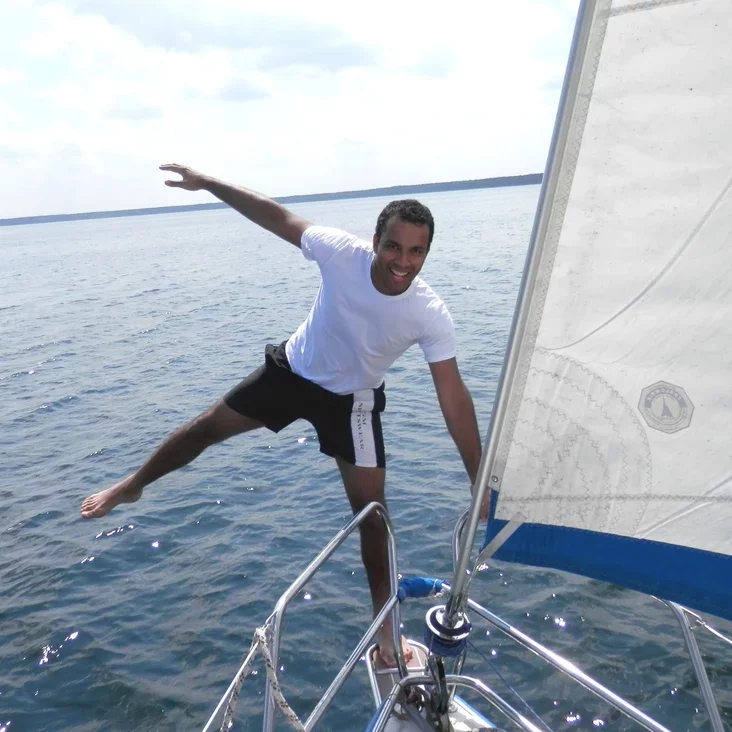
Katsiaryna has long been in Belgium — as far as is known, the children once traveled to this country for health retreats, so it was not alien to them.
Sisters and brothers gladly visit today's Kathryn.

The most active on social networks is Zarana (Zara). The girl lives in Spain, works in tourism, and loves to dance.
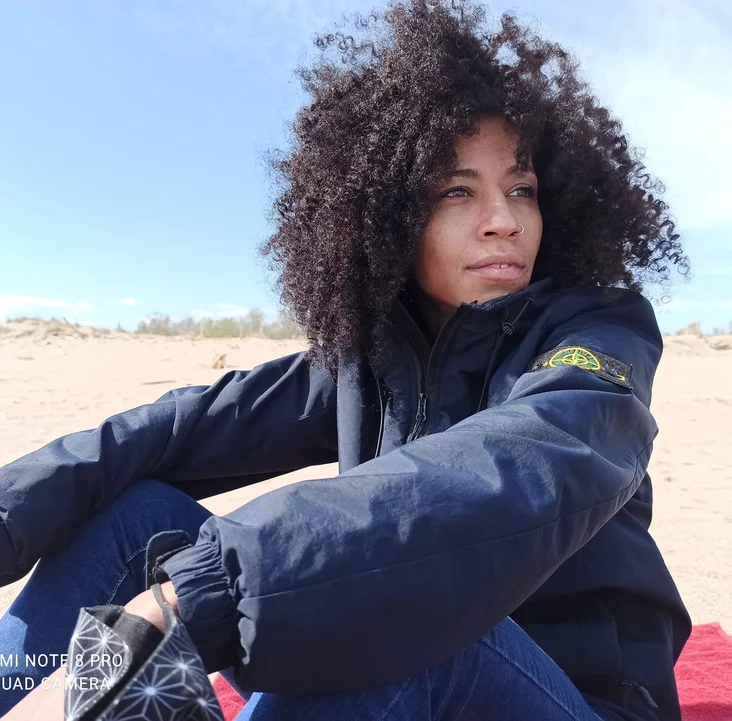
Sometimes the girl uploads her dances to TikTok.
As for the other children whom the woman from Zhodzina once gathered under one roof and introduced to each other, they lead fairly quiet, non-public lives. It is known that the last three children Marina managed to take into her care were Belarusian girls.
Now reading


In the Mironets family, the mother and three sisters have already been convicted for political reasons. Now the husband of one of the sisters has been arrested


Comments
Няўжо не ведалі што гэта за ватны манкурт які зневажае і дзяржаўны сувярэнітэт, і нацыянальныя сымбалы, і беларускую мову, і дэмакратыю навогул?