


Estonia also fears that the Kremlin might embark on an adventure, taking advantage of an opportune moment.
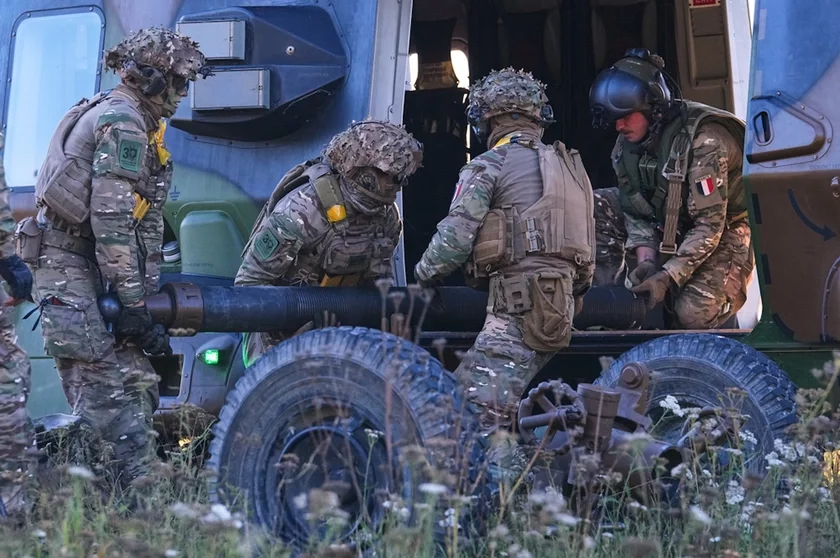
Estonia is permanently moving its troops closer to the Russian border and purchasing weapons capable of striking deep into the territory of the neighboring state, reports the BBC, citing the Financial Times.
Estonian armed forces and intelligence leadership do not believe Moscow is aiming for a full-scale war with NATO — at least not in the next two years, the publication emphasizes. "However, it believes that the belligerent neighbor is preparing for a possible future conflict with this small Baltic state," the article states.
Estonia also fears that the Kremlin "might embark on an adventure, taking advantage of an opportune moment — for example, launching a limited invasion to test NATO's position on collective defense," the newspaper claims.
According to its data, Estonian military and intelligence officers admit that neither Estonia itself nor NATO currently provide reliable deterrence in such a scenario. This has prompted the country to adopt a strategy of "active defense."
"We must start at the border and win in the very first battles," said Colonel Tarmo Kundla, commander of the 1st Infantry Brigade of the Estonian Defence Forces, the country's main combat unit.
As part of the new strategy, his brigade will be permanently redeployed from Tapa to Jõhvi — a city 50 km from the Russian border.
"Deterrence is not working," a senior Estonian military intelligence official told the publication. "For all of us in the Baltic countries, the next one to four years will be a critically important period for solving this problem."
In May, the Estonian government incorporated the term "active defense" into the country's national security concept. "Since then, the country's small but highly professional armed forces have begun a subtle but radical reorganization," writes the Financial Times. "Elite units from Estonia's main military base in Tapa are now being permanently transferred to positions located in the east."
As the newspaper notes, in addition to the new base in Jõhvi, a facility is being built in Narva on the border with Russia, which will be able to accommodate up to 1,000 troops in the event of a crisis.
Now reading


"If the gun fires, it's unlikely to be a machine gun burst." Maxim Znak assessed the reality of Belarusian propaganda's threats to strip political emigrants of citizenship


Comments