


How Belarusian lasers helped research that was awarded this year's Nobel Prize in Medicine
This year's award in the field of physiology or medicine was granted for the creation of a method that allows remote switching on and off of individual cells of the nervous system. To perfect this discovery, international scientific groups investigated the structure of molecules using laser equipment manufactured in Minsk.
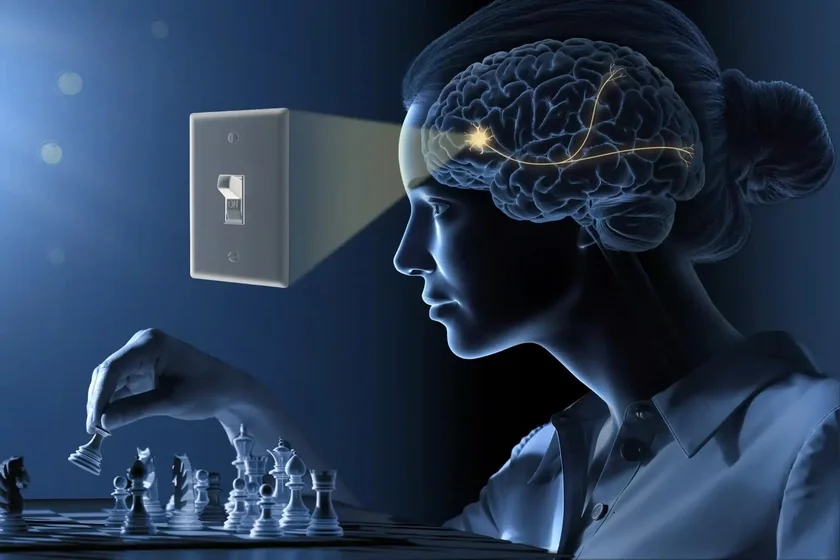
This year, the Nobel Assembly at Karolinska Institutet awarded the Prize in Physiology or Medicine to Karl Deisseroth, Peter Hegemann, and Georg Nagel. The official citation from the committee highlights their contribution to "the discovery of light-gated ion channels and optogenetics".
The research of these scientists has effectively solved a century-old problem in neurobiology: how to study brain function not through passive observation of its activity, but through precise, targeted intervention.

Before optogenetics, traditional methods—electrical stimulation or drugs—only allowed for observing correlations between cell activity and behavior, but did not provide the means to establish direct cause-and-effect relationships. Electrical current simultaneously affected all cell types in the contact area, while chemical agents worked too slowly and influenced entire brain regions at once.
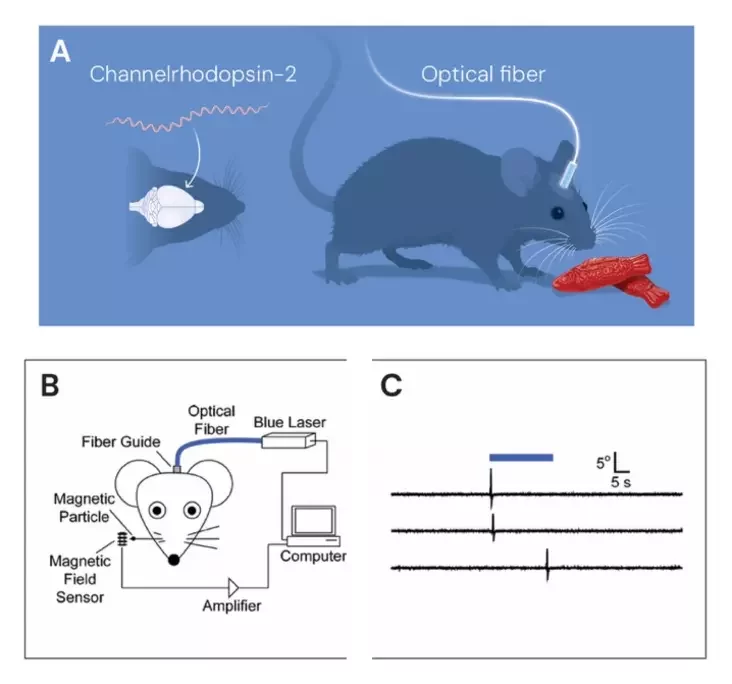
Optogenetics technology for the first time allowed for activating or inhibiting exclusively defined populations of neurons, without affecting neighboring cells. The process occurs on a millisecond timescale, precisely matching the natural speed of nerve impulses.
This very tool opened the way to breaking down complex brain processes into individual components: from elucidating the mechanisms of memory and emotions to understanding the physical nature of neurological diseases.
The Mechanics of Optogenetics: How Light Controls Neurons
The theoretical basis for controlling individual neurons was formulated by Francis Crick back in 1979. By the early 2000s, attempts to create such a tool required complex multi-component systems. For example, the experimental chARGe system developed by Gero Miesenböck used several different proteins from the fruit fly eye and required the constant introduction of an exogenous (external) chemical substance. This made the cellular reaction too slow and unsuitable for precise experiments, akin to trying to assemble a television from individual parts directly inside the brain. Synthetic photoswitches based on azobenzene were also used, which required very complex chemical delivery to neurons.
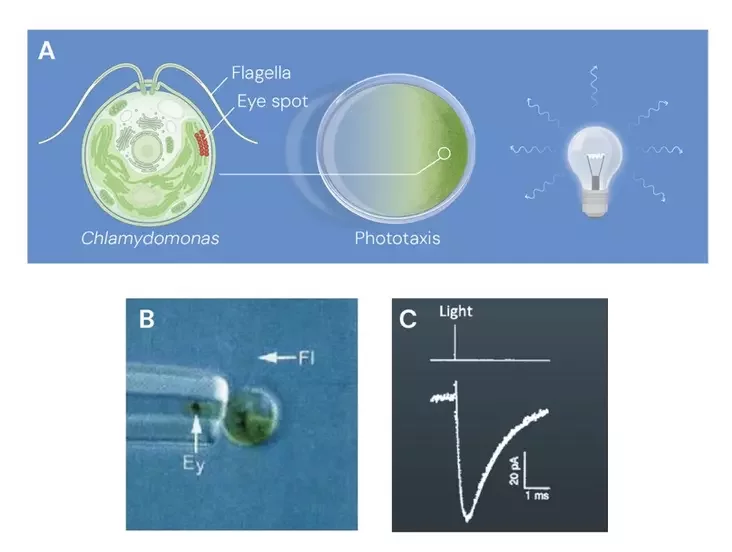
The breakthrough came with the transition to a maximally simple one-component system. Peter Hegemann and Georg Nagel identified Chop1 and Chop2 sequences in the genome of the green microalga Chlamydomonas reinhardtii, which encode the proteins channelrhodopsin-1 and channelrhodopsin-2.
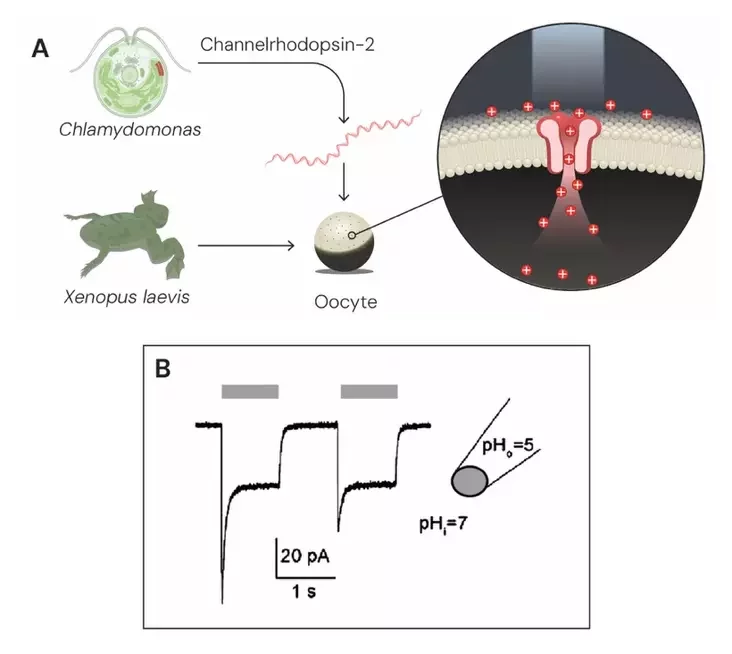
Experiments on oocytes (immature egg cells) of the African clawed frog Xenopus laevis showed that these molecules are true light-gated ion channels, capable of functioning as biological gates and allowing charged particles to pass through them at millisecond speeds.
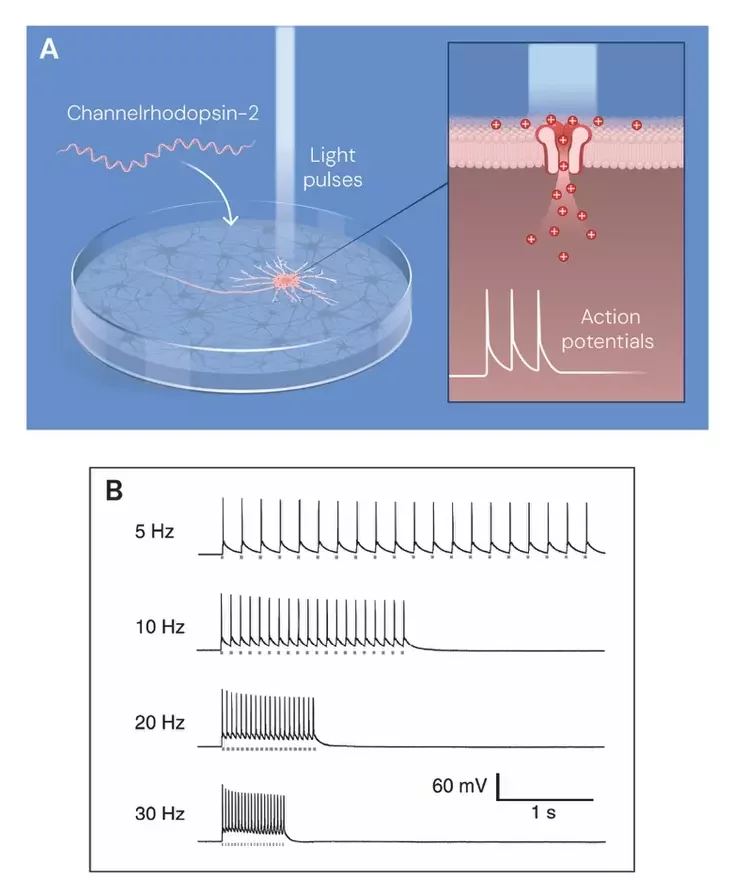
To integrate these gates into the mammalian nervous system, Karl Deisseroth's laboratory used lentiviral and adeno-associated viral vectors, i.e., inactivated viruses that deliver genetic material.
To ensure that gene integration did not occur in all cells indiscriminately, scientists applied cell-specific promoters — DNA sequences that serve as 'switches' for specific genes.
These elements act as genetic zip codes, allowing light-sensitive proteins (opsins) to be inserted strictly into target neurons. A key finding was that the mammalian brain already contains natural 'fuel' for these proteins — all-trans-retinal (a derivative of vitamin A). This eliminated the need to artificially introduce additional chemical substances into the brain.
The mechanism of cell excitation works through photoisomerization — an instantaneous change in the protein's spatial shape under the influence of light. When a blue beam acts on channelrhodopsin, its internal molecule absorbs a photon and literally pushes apart the transmembrane helices of the protein.
The formed pore allows positively charged ions to enter the cell, and such a rapid influx of particles changes the electrical charge of the membrane. As a result of this biological short circuit, the neuron generates an electrical impulse and transmits the signal further.
For the reverse process, the inhibition of nervous activity, researchers adapted proteins from salt-loving microorganisms. Under the influence of yellow light, they function as active pumps, forcibly pumping negatively charged chloride ions into the cell or expelling protons. The accumulation of the corresponding charge acts as a biological brake and completely blocks the neuron's ability to transmit signals.
However, the natural properties of these proteins proved insufficient for solving complex medical problems. Scientists began artificially modifying their amino acid structure, creating mutants with specific characteristics. Some modifications allowed the protein to be transformed into a toggle switch that is activated by one light pulse and remains open until switched off by light of a different color. Others provided ultra-fast kinetics, capable of setting a maximally precise rhythm of activity for the cell.
Why Biologists Needed Physicists
To transform optogenetics from a laboratory phenomenon into a real medical tool, scientists needed to understand the deepest molecular mechanisms of opsin function.
Natural proteins are perfectly suited for the vital activity of microorganisms, but treating human diseases requires absolute predictability. To safely implement this technology for restoring vision in retinal degeneration, alleviating epileptic seizures, or controlling tremor in Parkinson's disease, researchers needed to know precisely how an ion channel opens, how long it remains active, and what causes it to close.
The problem was that the protein's response to light is not at all like simply pressing a button. After absorbing a photon, the molecule goes through a photocycle — a complex series of sequential changes in its structure. These intermediate forms, which in science are called intermediates and designated by the letters K, L, M, N, and O, exist for only fractions of a second or even microseconds. For example, it is precisely during the formation of intermediate M that charge transfer and the direct opening of the channel occur, after which the protein rapidly returns to its initial state.
It is impossible to observe such instantaneous transformations with a conventional microscope. To capture molecular changes occurring within a thousandth of a second, biologists needed the tools of quantum physics, specifically the methods of laser flash photolysis and time-resolved spectroscopy.
The essence of this approach requires perfect synchronization. A powerful and very short laser pulse must simultaneously strike the protein sample to initiate the photocycle in all molecules at once. At the same moment, another light beam continuously probes the sample, and a spectrometer records the slightest changes in light absorption at different wavelengths.
Only such high-speed molecular imaging allows for understanding which specific amino acids should be altered during artificial mutagenesis to extend or shorten the protein's operational time. However, for conducting such experiments, biological laboratories required light sources with unique characteristics — lasers capable of emitting nanosecond pulses of precisely specified power without the slightest timing errors.
Belarusian Lasers in Opsin Research
Solving the problem of ultra-fast molecular imaging required equipment capable of generating powerful and maximally stable light pulses.
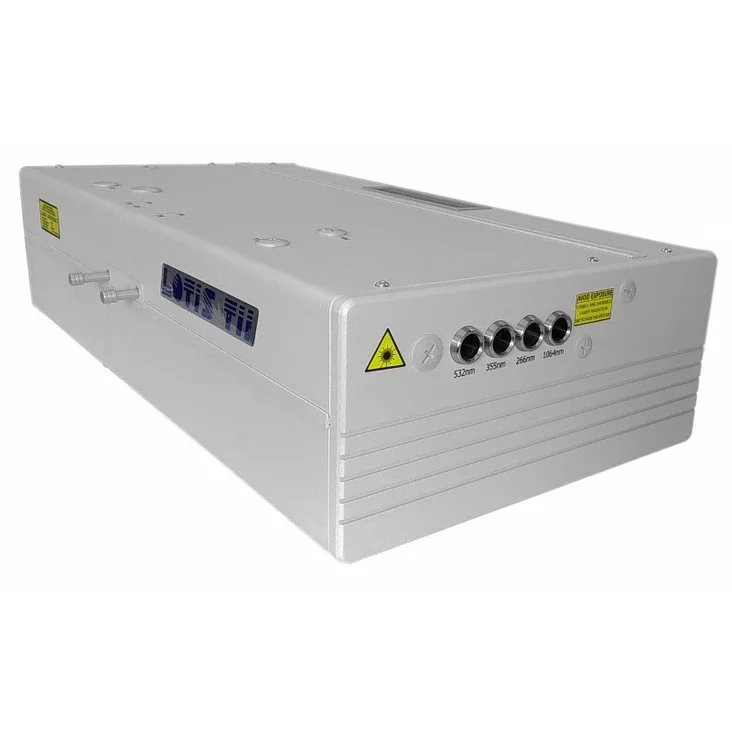
Concrete evidence of the use of Minsk-made lasers is documented in fundamental scientific works that thoroughly deciphered the mechanics of optogenetics. Among them are studies on protein structure conducted by leading international teams of biophysicists in direct co-authorship with this year's Nobel laureate Peter Hegemann himself.
To capture the kinetics of light-sensitive proteins, researchers directly used a solid-state Nd:YAG laser model LS-2134UTF and a parametric light generator system LT-2214 manufactured by the Belarusian enterprise LOTIS TII.

In practice, this physical process looks as follows. To initiate the photocycle in a protein and not miss a single microsecond of its structural changes, scientists needed a light pulse lasting only about 7 nanoseconds. The Belarusian laser generates a powerful basic pulse, which then passes through a parametric generator. This additional module allows physicists to smoothly change the wavelength and tune it, for example, to precisely 470 nanometers to obtain an ideal blue color.
Such a precise laser shot simultaneously initiated the reaction in all molecules of the laboratory sample. Immediately afterwards, spectrometers step-by-step recorded how the protein helix deformed and how the ion pore formed. It was thanks to these measurements that neurobiologists were able to understand which specific amino acids are responsible for the speed of channelrhodopsin function. The technical reliability of the Minsk-made installations ensured that flawless recording of the protein's intermediate states, without which the transformation of optogenetics from an interesting biological phenomenon into a working medical tool would simply have been impossible.
What is LOTIS TII
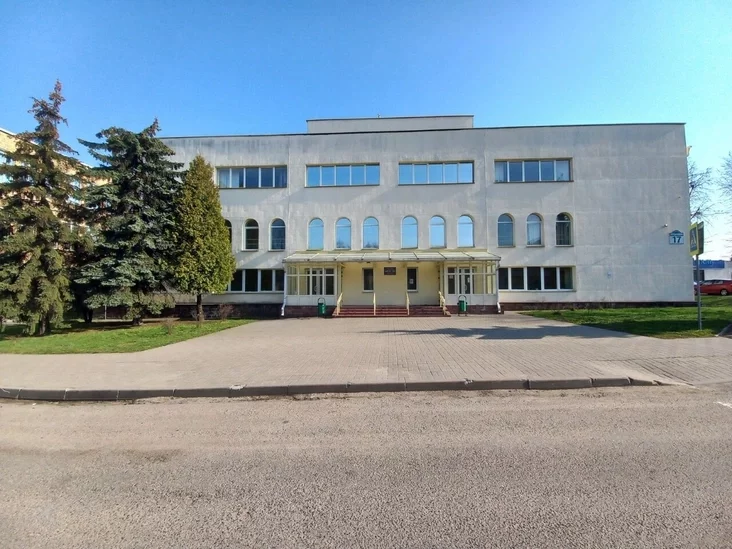
In February 2026, the Belarusian-Japanese enterprise LOTIS TII celebrates its thirtieth anniversary. Its history began when a group of graduates from the Physics Department of Belarusian State University and former employees of the Institute of Physics of the BSSR Academy of Sciences, led by Vladimir Kononov, began independently developing technology.
In 1996, they joined forces with Tokyo Instruments, forming a joint venture.
Currently, the company's office and production facilities are located in Minsk at Kastrychnitskaya Street, 17.
According to official data, since its inception, the enterprise has supplied more than 1600 lasers and laser systems to 34 countries worldwide. The equipment is primarily exported to scientific centers in Japan, the USA, and Europe, providing high-precision equipment to laboratories engaged in fundamental physics, biology, and medicine.
Two Realities of Belarusian Optics
The modern Belarusian optical school is a direct heir to the scientific and industrial base of the Soviet Union. At that time, the BSSR effectively served as a high-tech intellectual assembly shop for the entire country, which allowed for the formation of a powerful personnel potential in the field of laser physics and instrument engineering. However, today this technological legacy is being used in diametrically opposite directions.
While one part of Belarusian manufacturers works for creative purposes and provides equipment for global medical discoveries, another serves Russian interests in the war against Ukraine.
Large state-owned enterprises, such as 'BelOMA', 'Peleng', and the Scientific and Technical Center 'LEMT', are focused on fulfilling defense orders for the Russian military-industrial complex. According to investigators, the volume of military and dual-use products supplied from Belarus to Russia amounts to hundreds of millions of dollars.
Belarusian factories mass-produce 'Sosna-U' gunner sights and thermal imaging systems for Russian T-72 and T-90 tanks, fire control systems, as well as optical units for armored vehicles and grenade launchers. As a result of their integration into Russian arms production, these companies have been placed on the sanctions lists of the European Union, the USA, and the UK. The technological potential of the industry, capable of providing tools for global science, in this state-owned segment has been entirely reoriented towards the needs of the neighboring country's military industry, leading to restricted access to Western components and global markets.
«Nasha Niva» — the bastion of Belarus
SUPPORT USNow reading


Do you remember Piatrusha, who ripped out the wires for the "Changes DJs"? He was demoted to the third league of officials after months of unemployment


Comments
Даю заданне Офісу Ціханоўскай: Уключыць прадпрыемства LOTIS TII ў санкцыйныя спісы за тое, што яны плоцяць падаткі ў Беларусі, а значыць спансуюць рэжым. Даручыць выкананне Анатолю Лябедзька, каторы павінен аформіць заяўку і перадаць яе партнёрам у ЕС праз літоўскіх партнёраў.