


Despite the fact that repressions have not stopped, Lukashenka never opened a second front with Ukraine, so the West is taking new steps to establish communication with Belarus. The likelihood of such a scenario was written about in a Nasha Niva article already in the autumn of 2024. What can be expected next?
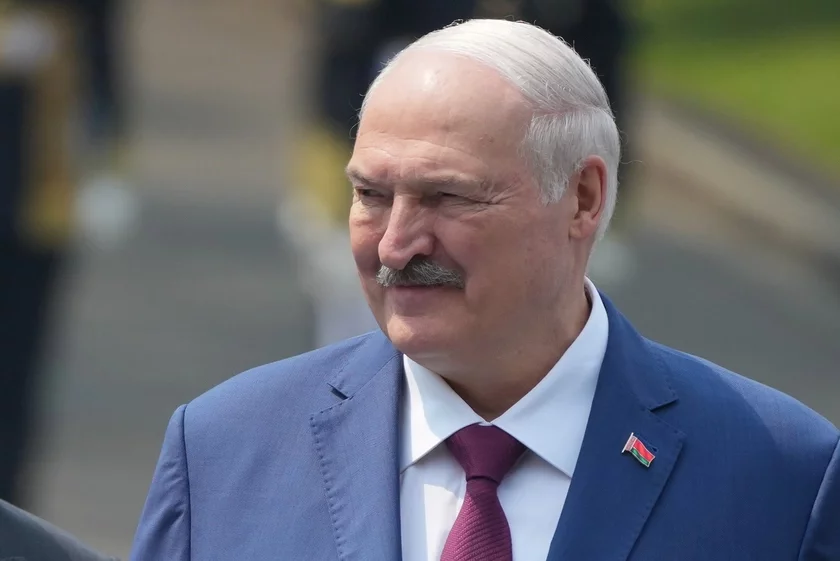
The Ice Has Broken
September was busy with contacts between Lukashenka's regime and the West. After Cole's next visit, another 25 political prisoners were released and deported to Lithuania. In response, the United States removed OJSC "Lakokraska" and the "Bellesbumprom" concern from its sanctions list. The first shipment of Belarusian potash fertilizers in four years was sent to the USA.
On the sidelines of the UN General Assembly in New York on September 22, at the initiative of the Belarusian side, a meeting took place between the foreign ministers of Belarus and Poland, Maksim Ryzhenkov and Radosław Sikorski. This was the first such contact since the events of 2020 and the sharp deterioration of Belarusian-Polish relations.
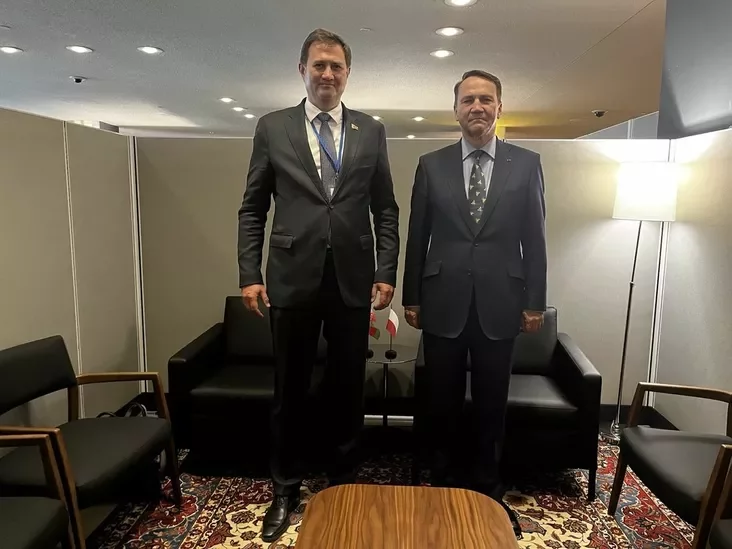
An Advance from Warsaw
Prior to this, in the first half of September, journalist, activist of the Union of Poles, and former political prisoner Andrzej Poczobut traveled to Belarus and successfully returned to Poland. This is, undoubtedly, a clear signal from Minsk that the regime wants to improve relations with Poland, which will soon open a new embassy building in Minsk.
Furthermore, there are signals that Belarus is ready to legalize the activities of the Union of Poles in Belarus (SPB).
And while contacts with the American side began last year, with Poland they are relatively recent. For now, only the first steps are being taken at the diplomatic level — Sikorski said that if a neighbor wants to unfreeze and improve relations, Poland is always ready to agree.
Dzianis Kuchynski, in turn, called this contact a political advance, with which one cannot but agree. And as we see from previous steps, Poland has also made advances before.
Such was the case with the opening of "Berastavitsa". Poland initially said it would resume operation of the checkpoint the day after Poczobut's release. But in the end, it opened "Bobrowniki" and, in addition, "Kuźnica" almost half a year before Poczobut was released.

Now the ball is in Lukashenka's court. And Poczobut's statements about his intention to return to Belarus to work on a book there will be one of the tests for the regime. If Minsk truly intends to improve relations with Warsaw, then Poczobut's arrival and his continued peaceful stay in his homeland will play an important role in this.
It also cannot be ruled out that the regime may proceed with the registration of the Union of Poles, which has not had legal status since 2005.
In response, Poland, for example, could launch bus and cargo traffic through the "Kuźnica-Bruzgi" checkpoint, which, since its resumption of operations in November 2025, can only be crossed by passenger vehicles.
Also, if Minsk demonstrates its interest in improving relations with Poland through its actions, talks may begin about lifting the remaining COVID restrictions, which were introduced in the spring of 2020 but were not subsequently canceled due to Lukashenka's behavior.
This includes both the resumption of passenger railway connections and the reopening of three more checkpoints in the Brest region: two road checkpoints "Sławatycze-Domachevo" and "Połowce-Peschatka," as well as the pedestrian checkpoint "Belaya Vezha-Pererov" in Belovezhskaya Pushcha.
Demands on Lukashenka Have Lowered
At the same time, it is very important to understand that for all possible improvements, much less is now required from Lukashenka than was previously the case. There is no talk of holding new fair elections and completely stopping support for the Russian military machine.
In fact, the main requirement is not to make life difficult for neighbors. According to Sikorski, among the topics discussed with Ryzhenkov were the situation on the border and regional security.
That is, Minsk first and foremost needs to end the migration crisis and prohibit drones and missiles from flying through its territory. Both topics have a strong practical aspect. In addition, it is necessary to stop oppressing the Polish minority — and the minimum plan, one could say, will be fulfilled.
Naturally, it is also important for Poland, even from a reputational point of view, that repressions in Belarus cease and no political prisoners remain in prisons. But these are already more internal Belarusian issues.
Don't Bother Your Neighbors and Live Peacefully
If one looks at the sanctions that were introduced against Lukashenka's regime, it is clear that the sharpest reaction was to those actions which directly affected the interests of other states.
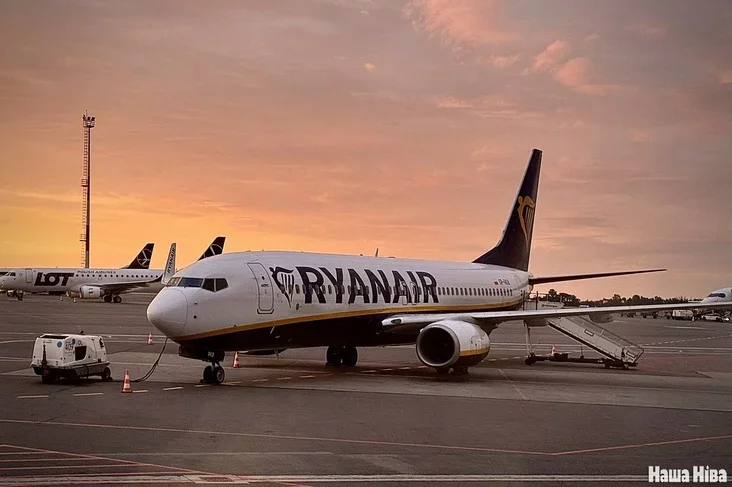
Such was the case with the forced landing of the plane with Pratasevich, with the migration crisis, and, naturally, with complicity in the war against Ukraine.
As for the political part, the answer seems obvious: the West chooses the strategy of "don't anger the old man." Therefore, questions of holding fair elections and the democratization of Belarus are unlikely to be among the first conditions for improving relations with the West.
This does not mean that Poland or any other country is satisfied with the fact that a regime controlled from Moscow has been in power for 32 years in its neighbor, which periodically carries out hybrid attacks and has turned the country into an outpost of Russian imperialism. But they can do nothing about it, because, perhaps, the only currently possible option to remove Lukashenka is the Venezuelan scenario, which, of course, no one will repeat in the case of Belarus.
The fact that (at least for now) there is no talk of democratization in Belarus was confirmed by John Cole, who admitted that he did not raise these issues during his visits to Minsk.

Significant Warming Should Not Be Expected
Therefore, one should not count on a thaw similar to the one that occurred in 2015-2020. Under Lukashenka, a return to that level of relations with the West and relative freedoms within the country is absolutely impossible.
But Lukashenka still needs a certain thaw in relations with the West, so, provided that no one reminds him about holding fair elections and democratization in Belarus, he is probably ready for numerous concessions. However, a very important question immediately arises here: how independent Lukashenka is in his relations with the West.
It is beneficial for the regime to improve relations to gain economic bonuses from it. Lukashenka probably sees that some kind of resumption of communication with the West can positively influence the economy.
Furthermore, less dependence on Moscow could give him a bit more room for maneuver in relations with Putin. Especially when recalling 2020, when he initially named the Kremlin, not the West, as the source of threat to his power.
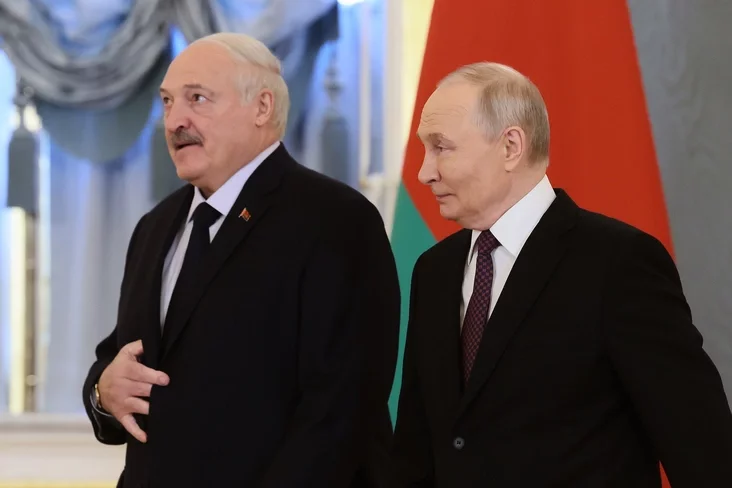
At the same time, ordinary Belarusians also receive their benefits from any improvement in relations with the West.
At the same time, it is important for Belarusian society that through these warmings, Western politicians and bureaucrats do not begin to form the mistaken impression that everything is now normal in Belarus, so that Belarusians are not forgotten and completely abandoned to the will of dictators.


Comments
У беларусов была возможность уехать. С 2020 года была куча возможностей вырваться из авторитарного колхоза. И многие таки вырвались.
Те кому и так норм пусть живут себе. Освободиться там никто особо и не хочет.