


From Bone Loss to Impaired Vision: How Space Affects the Human Body
As manned space flights expand the boundaries of what is possible, scientists strive to understand and minimize their physical and psychological impact on the human body, writes Euronews.
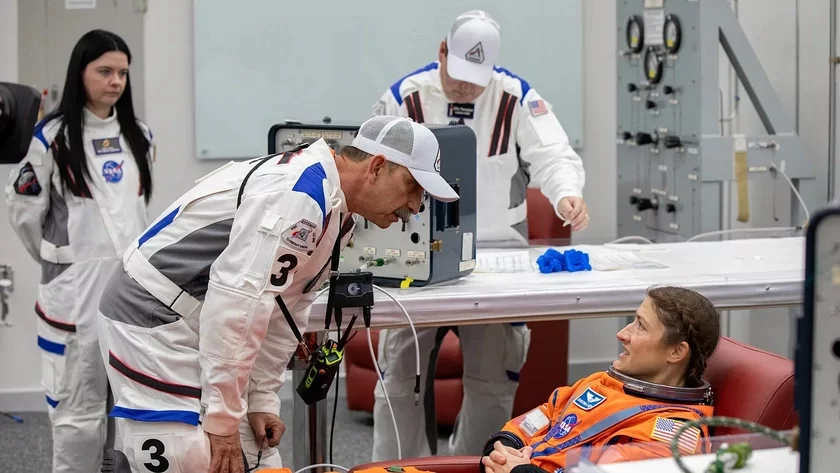
The crew of the manned Artemis II mission returned to Earth, having traveled 406,771 kilometers to the far side of the Moon — further than any human has ever ventured into space.
Specialists are trying to understand how such flights affect the human body, as space missions become more frequent and prolonged, and the associated health risks extend far beyond anything we encounter on Earth.
NASA identifies five primary hazards of human spaceflight: radiation, isolation and confinement, distance from Earth, gravity or its absence, and hostile or closed environments.
How Does the Body Change in Space?
As it turns out, the human body is not adapted to life in space.
Changes in gravity or its prolonged absence lead to bone mass loss, fluid redistribution in the brain, and impaired heart function.
Even transitions between different levels of gravity can severely complicate spatial orientation.
According to NASA, finding ways to increase human resilience to these factors is one of the key priorities in preparing for missions to the Moon and Mars.
Reduced gravity also affects the heart and blood vessels, with the severity of these changes depending on the duration of the flight and increasing as it lengthens.
Disruptions in the cardiovascular system can lead to blood clot formation, arrhythmia, and decreased blood pressure.
According to NASA data, during a four-to-six-month mission, bones lose 1 to 1.5% of their density monthly.
Prolonged exposure to weightlessness, in turn, causes fluid redistribution in the body, which can affect vision and intracranial pressure; this complex of disorders is known as Spaceflight-Associated Neuro-ocular Syndrome (SANS).
Changes in Habits and Daily Routine
In space, time and daily routines are not arranged as they are on Earth. Astronauts live in unusual day-night cycles, which affects their sleep and circadian rhythms.
For example, the crew of the International Space Station sees 16 sunrises and sunsets per day, and this directly impacts their sleep patterns.
Other changes in daily life are related to meals and the nutrition available during the mission.
Astronauts' needs for calories and nutrients differ from those on Earth. Studies of previous flights have recorded instances where crew members received insufficient energy, fluids, calcium, and sodium.
Therefore, the space food system performs a dual task: it provides astronauts with sufficient energy and simultaneously supplies the body with substances that help counteract the adverse effects of spaceflight.
NASA specialists ensure that food is palatable, safe, nutritious, has a long shelf life, while remaining easy to prepare and sufficiently diverse to avoid "menu fatigue".
A Challenge for the Psyche
In addition to physical strain, space flights also affect the mood and mental state of astronauts.
Isolation, confined spaces, detachment from Earth, and constant stress increase the risk of anxiety disorders, depression, and low morale.
According to NASA, sustained research into crew mental well-being is crucial for the successful and safe execution of future missions.
Among mental health support measures in space, space agencies recommend, in particular, keeping a journal, daily physical exercise, listening to music, and regularly writing to loved ones.
What Happens if an Astronaut Gets Sick in Space?
Given all these health risks, the question arises: how does the crew manage illnesses during a mission?
According to NASA, regardless of the duration and objectives of the flight, any human space mission requires a certain level of medical provision on board.
Nevertheless, to reduce the need for medical assistance during flight, the agency emphasizes prevention: vitamin supplements, comprehensive body examinations, and a 14-day quarantine before launch.
Based on the most likely diagnoses, NASA forms a set of onboard medical supplies so that the most common and serious conditions can be effectively managed.
Most illnesses are treated approximately the same way as on Earth. However, treatment limitations necessitate prioritizing multi-purpose medications with minimal side effects.


Young teacher resigned from school and moved to Batumi. But the head of studies still filed a complaint against her with the police for her TikTok livestreams

Young teacher resigned from school and moved to Batumi. But the head of studies still filed a complaint against her with the police for her TikTok livestreams


"If I were an investigator for the KGB, I would highlight the very same thing." Fiaduta on the hidden meanings of "The Ears of Rye Beneath Your Sickle," the security forces' attention to his manuscript, and the enigma of the third part of Karatkevich's novel


Comments
гэта тычыцца асабліва т.зв. мужчын, якія б'юць сябе пяткамі ў грудзь) а такіх, на жаль, бальшыня