


"Much of what I did then, I wouldn't repeat today." Katsiaryna Andreeva told how she re-evaluated her life
"A good journalist is a journalist who produced the material and got to safety," reflects the reporter after five years of imprisonment.
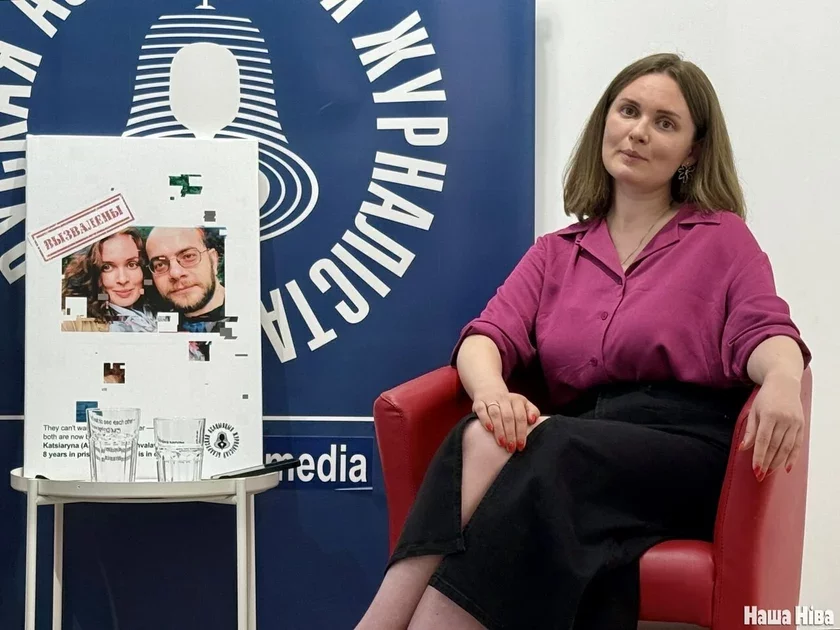
She now holds her phone confidently. But she admits: after her release, she literally had to learn the most ordinary things anew.
"I didn't remember how to hold a phone. And often in the colony, I would just make a gesture as if I had a phone in my hand and was scrolling through a feed. In reality, all technical skills dissipate. But stress, anxiety – they don't disappear. And now, when an unknown number calls me, it's just a strange wonder to me. I find these technologies very difficult. But the hardest part is to feel that you are no longer an object."
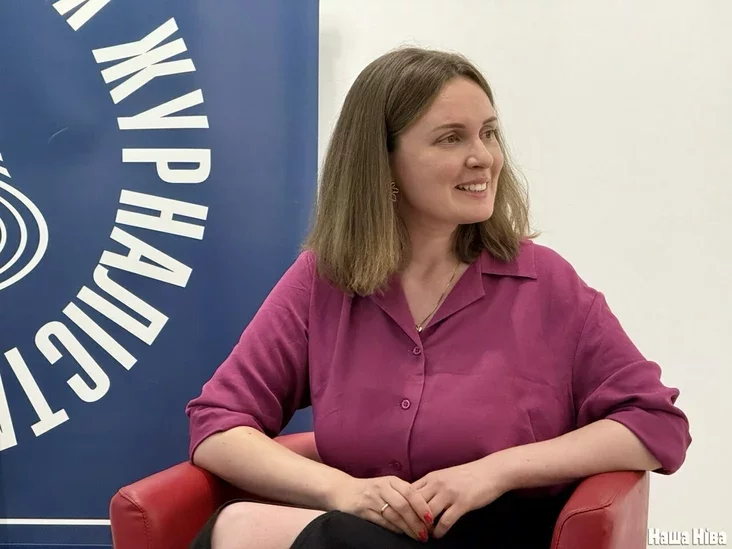
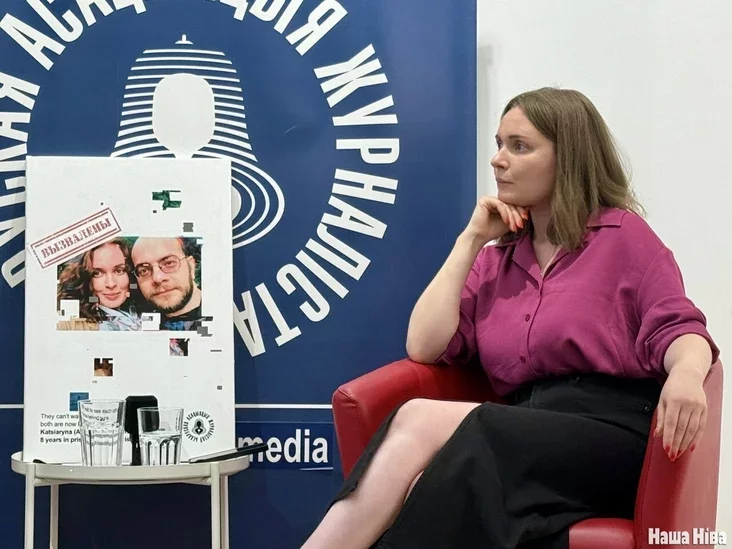
Three months ago, journalist Katsiaryna Andreeva was released after more than five years behind bars. At a meeting at the Belarusian House in Vilnius, she once again recalled her detention, trials, colony, and also spoke about what her life looks like after her release. About reflexes that don't let go, a sense of guilt towards Darya Chultsova, her husband Ihar Ilyash, with whom she has had no contact for several years, and the journalism she returns to as a changed person.
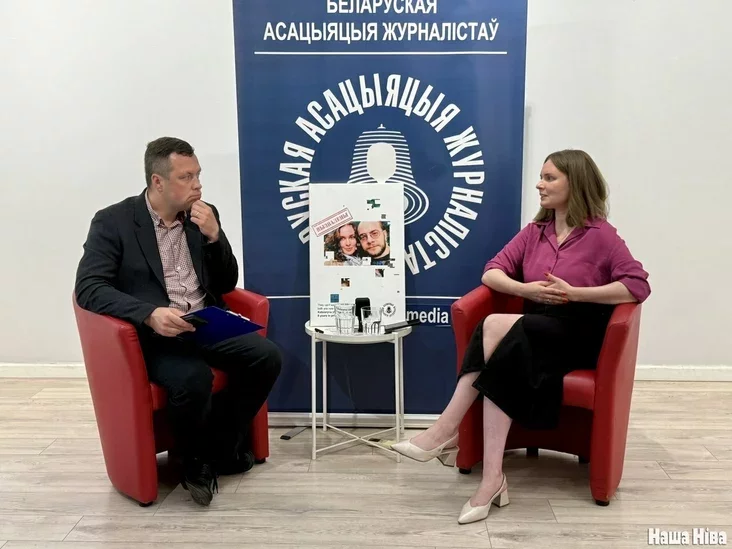
"Walking through Warsaw and catching yourself being afraid of the police"
In three months, Katsiaryna Andreeva is still only learning to be a free person.
"Over five years in the colony, a person gets used to every step being regulated. When you can stand up, when you can sit down, when you can walk. And after release, it turns out you can just go out and go wherever you want," the journalist says.
Some reflexes still don't let her go. In the center of Warsaw, when she sees police officers, she automatically wants to greet them. Her brain still perceives men in uniform as a threat. Unknown phone calls cause anxiety. And the sound of footsteps behind her can momentarily return her to the prison reality.
Another unexpected consequence of years in the colony is fear of men.
"We recently talked with the girls we were with in the same colony and realized that you start to feel threatened by any man. Because for five years you were only in a female environment. Men are colony staff, administration, security forces. That means danger. These are reflexes that will last a long time," Katsiaryna says.
Now she is learning to live a normal life anew. And in this, she finds an unexpected positive:
"You re-experience a lot of things. For example, when I flew on a plane, I was happy like a child! You can rediscover the simplest things from a free life."
"I'm returning to journalism"
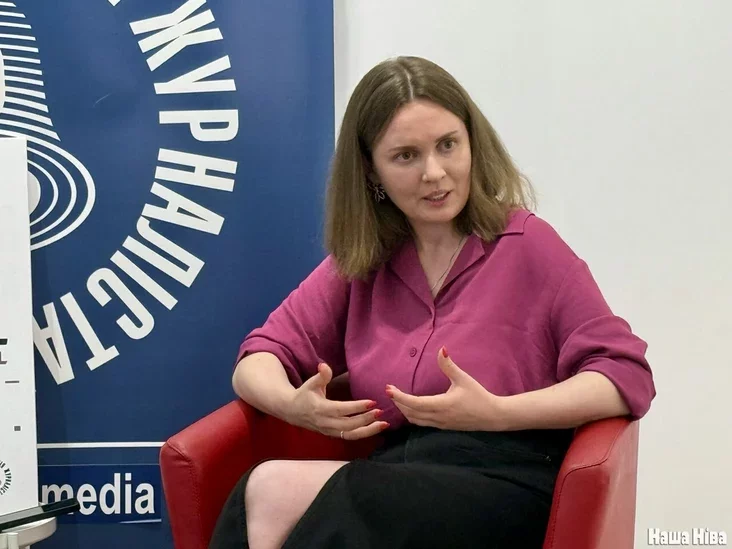
Katsiaryna Andreeva speaks confidently about returning to her profession. She has already received documents allowing her to work legally and confirms: she will appear on air again in the new season of "Belsat". True, in a new role – as a studio host.
But she admits: journalism after 2020 will never be the same.
"We no longer have the audience we had in Belarus. We don't work for ourselves. We work for people. We can no longer guarantee the safety of our heroes. And for me, this is very important now. I don't want anyone to suffer because of me," says the journalist.
Moreover, today she critically evaluates her own work from six years ago. Katsiaryna Andreeva admits that she reviews her old streams and understands: she wouldn't repeat many decisions now:
"I absolutely do not idealize that work of mine. I criticize myself for it. It's not always necessary to be so close to events to cover them thoroughly. A journalist must produce the material and get to safety. The desire to touch events, to be as close to them as possible - this does not justify such a style of work. I have much to criticize myself for. And much of what I did then, I wouldn't repeat today."
This experience, she believes today, cost too much.
"I feel guilty towards Dasha"
Perhaps the most personal words were spoken when Darya Chultsova was mentioned. Both journalists were arrested after a live stream from Minsk's "Square of Changes" in November 2020.
Katsiaryna Andreeva admitted that she still feels personal responsibility for her colleague ending up behind bars. At that time, she was the more experienced journalist in the pair, making key decisions, choosing the apartment from which they broadcast, and later, when hundreds of thousands of people were already watching the stream, she decided not to stop the broadcast.
"I chose the decision to go to that apartment. I found the people who let us in there. I organized all of it. And then, when I saw the number of stream views, I also made the decision to stay. I coordinated it with the editor. But, frankly, even if the editor had told me to stop the stream and leave, I think at that moment I would have done the opposite," Andreeva recalls.
She now believes that it was a mistake. And this experience became one of the main professional conclusions of recent years:
"A journalist who has been imprisoned will no longer produce the next material and will not cover events the next day. A good journalist is a journalist who produced the material and got to safety."
When the journalists met again behind bars after their detention, the first thing Andreeva said to Darya Chultsova was: "I feel guilty for you ending up behind bars."
"I haven't seen or heard Ihar for several years"
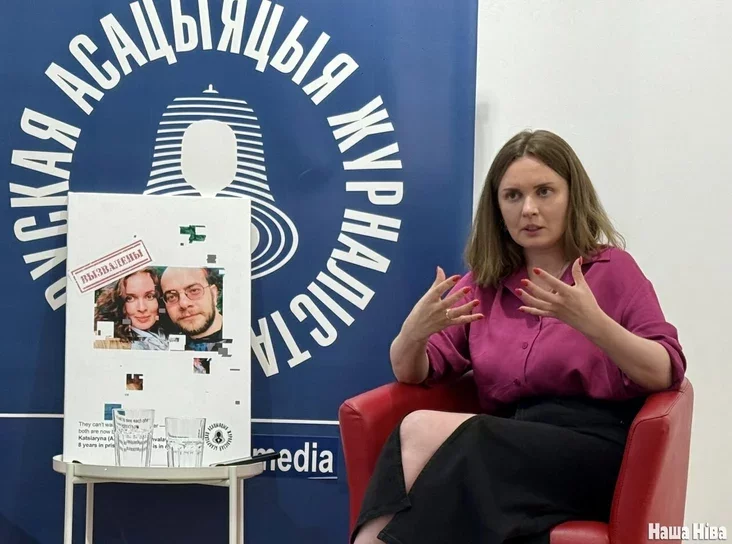
Andreeva speaks calmly about her husband Ihar Ilyash, but it's immediately apparent that this is the most painful topic.
There has been no contact between them for several years. Since Ihar's arrest in 2024, they cannot write to each other or speak on the phone.
Nevertheless, he learned about her release on the very same day; he was not in the punishment isolator at the time. Katsiaryna says that after this, it became at least morally easier for him to endure imprisonment.
Physically, the conditions remain very difficult. According to information known to her, Ihar is engaged in manual rubber processing. He is also frequently thrown into the punishment cell (SHYZA).
"He is now suffering in many ways not even because of his profession, but because of his connection to me. He was directly told: 'Your wife is Katsiaryna Andreeva, so you will have these conditions, this attitude.' This, of course, is very difficult to comprehend," says the journalist.
Katsiaryna admits that she cannot now make plans for the future without her husband.
"I miss him very much. It's like a part of your soul, a part of your body, is missing. That's why it's very difficult for me to plan anything independently now. For me, Ihar is a very important moral compass. And I want to coordinate all my plans, all my thoughts, everything with him. When he is released, we will sit down and consult. How he sees his future. Whether he wants to stay in journalism, whether he wants to do big projects. For now, I cannot think about this alone."
"Don't call me a symbol"
During the meeting, Andreeva was referred to several times as a symbol of Belarusian journalism and an example of courage. Each time, she gently objected.
For her, everything that happened was simply work performed by dozens of Belarusian journalists.
If one were to look for an example, she says, then for her, such a person remains the former editor-in-chief of Tut.by, Maryna Zolatava. "I admire her immensely. Both as a person and as a professional," Andreeva admits.
"I'm no longer ready to pay such a price"
Katsiaryna said that in recent months, she has repeatedly encountered expectations, as if after her release, she should immediately return to active work.
"I encountered such an attitude. As if, once Katsiaryna is released, she'll immediately dive back into journalism, active work. No, it doesn't work that way. I wish there was understanding and no these inflated expectations. It's very hard to explain to someone who hasn't been behind bars. We simply don't have the strength for many things right now," says Andreeva.
After her release, the journalist was even asked if she would go to work in Ukraine.
"I politely respond that I don't have such plans for now. Over these years, I have changed not only as a journalist. My life priorities have changed. I was willing to pay with my freedom and safety for my work. But I was never willing to pay with the safety of my family. Perhaps this doesn't sound very heroic. Perhaps someone would like to see a story about Katsiaryna Andreeva sacrificing herself for her profession. But it's not like that. Now I understand one thing: risking myself - yes, risking my family - never again," she notes.
"I can't read my poems now"
During her years in captivity, Katsiaryna read a lot. Albert Camus's "The Plague" particularly stuck with her:
"When I reached the fifth part, when the plague begins to recede... I just burst into tears. I couldn't stop. Then I even copied that passage into a letter to Ihar."
But about her own poems, she speaks quite unexpectedly:
"I am very grateful to the people who distributed them. I know they were set to music. Ihar even managed to write to me about it. But... for some reason, I even felt a certain irritation. I can't explain why. I felt a little embarrassed by my own poems. I read them - and I felt awkward. You know how it is when, after many years, you open a notebook with your poems written in tenth grade."
After her release, she hasn't written a single line. Almost everything she wrote in the colony, she lost.
"Before my release, all my correspondence, my entire archive – diaries, poems, notes, letters – everything I had collected for five years, was taken from me. When they led me out, I saw an empty, torn cardboard box. My papers were gone. It's a great pity. Especially the last word at the closed trial. Now it simply doesn't exist," Katsiaryna recalls.
"Don't demand that political prisoners be strong immediately"
During the meeting, Katsiaryna Andreeva was asked to give advice to those who are currently meeting people after their release.
"It's very good that no one is organizing press conferences immediately after release now. There's no need to immediately ask questions that require some expert opinion. It seems to me that our community's attitude towards political prisoners should be very delicate," the journalist emphasizes.
She says that many who are released return with severe trauma. And the most important thing now is not to expect them to immediately return to normal life.
"We brought a small Belarus out with us here. And we need to be more tender with each other. We need to remember that before you is simply a living person who has experienced very severe trauma. Be there for them. Sometimes just being there is the most important thing," she is convinced.
-
"Two misses out of two words." A Slutsk shawarma place upset Belarusians with errors in Belarusian-language advertising
-
"In short, we're screwed!": Pro-government artist Sviatlana Zhyhimont is going to Russia by car
-
The National Human Rights Index for 2025 Published. It Has Not Decreased for the First Time in 7 Years
Now reading


Ukraine's Ambassador for Belarus Issues Responds to Vyachorka's Discussion and Tsikhanouskaya's Critics: Your Mutual Intolerance Plays a Very Unconstructive Role


Comments
Слава мужнай журналістцы!