


«You'll only lower your testosterone level, which is already lacking in the country». Pavel Arakelyan laments Belarusians' superficiality, but doesn't pity himself
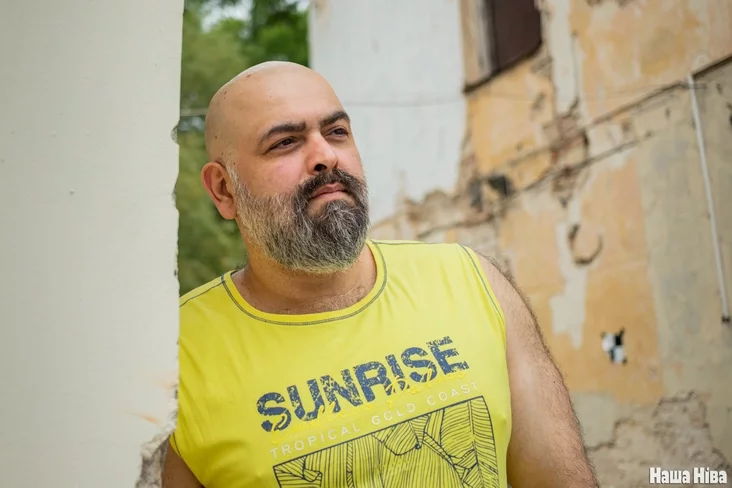
Pavel Arakelyan, one of Belarus's best jazz musicians, didn't want to leave the country until recently. Nevertheless, about half a year ago, the jazzman, who had experience with yard concerts in 2020, moved to Lithuania. Arakelyan told "Nasha Niva" about his experiences in Belarus and the difficult process of adapting to new realities.
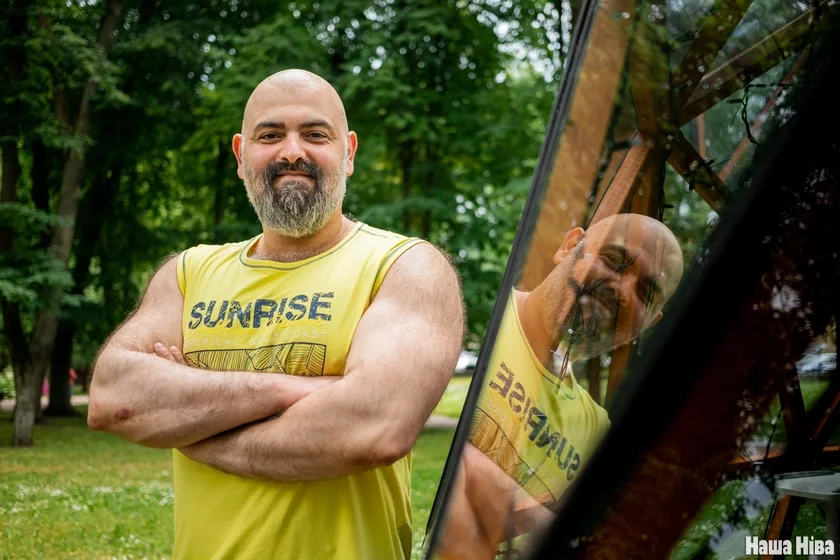
«I couldn't just sit idly by»
Arakelyan was one of those who stayed in Belarus until the very end. He defined it for himself as — "I won't leave as long as my people are fighting." Now the musician believes he delayed his departure much longer than planned. "I stayed in the country for a long time after Belarusians stopped fighting. Somewhere in mid-2021, it became completely clear that's it, people are living their lives in the circumstances they found themselves in," he says.
Pavel recalls how the protest movement gradually subsided, people drifted away from it. And now, according to the musician, we have reached a point where there are no special ways to fight anymore. With the beginning of Russia's full-scale invasion of Ukraine, protests temporarily intensified, there were also railway partisans, but this was a minority, as Arakelyan says. After mid-2021, the maximum possible protest became drawing something in the entrance hall when no one was around, and, according to the musician, it can hardly be called an effective struggle.
As for the manifestations of solidarity that were part of the national uprising in 2020, the jazzman rather believes in their existence outside Belarus.
"At a household level, people sometimes help each other, but it all didn't lead to anything global, to a trend that would allow Belarusians to feel confident.
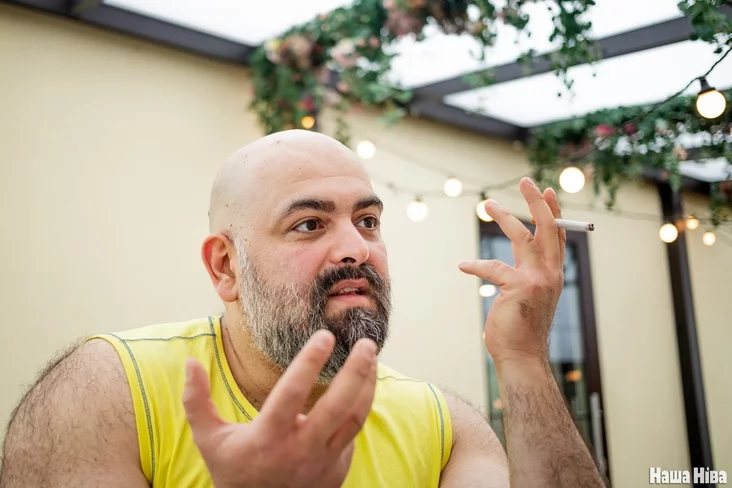
Journalist political prisoners are helped by their media, but mostly all solidarity remained at a household level. You have a friend in prison – you help his wife, parents with a penny, but nothing more.
There was a wave of solidarity, but now," says Arakelyan, "people in Belarus understand the situation, but nothing global is happening. They quietly support each other, and that's it."
When Pavel concluded that Belarusians had reconciled, he decided not to wait for any changes in the country. He considered it important to take care of his elderly mother, and his diabetic cat. He explains: if he had been imprisoned in 2020, there would have been people to look after his loved ones. In 2022, such help seemed unlikely.
And Arakelyan, as often happens with activists, received a signal of danger. An unknown person, a former KGB officer, contacted him and warned him: the system already has materials to initiate a criminal case against the musician.
It was September 2022, and the jazzman's new acquaintance was very surprised that he was still at large. He asked if Pavel was ready to go to prison.
According to the musician, he was ready for it all along: "The only thing is, I couldn't allow myself to just sit idly by.
Somewhere at the end of 2020 — beginning of 2021, I felt like another symbol who should remain in the country, because if everyone who had served days now left, what would happen? But the law of showbiz is this: if you're in the media, you're a symbol. And I hadn't been in the media for so long that everyone had pretty much forgotten about me."
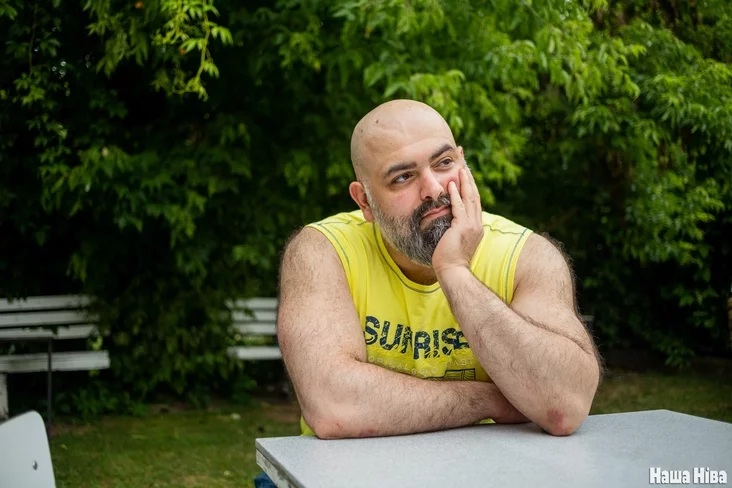
To have means of living, the man sold his musical instruments: tenor saxophone, soprano saxophone, trumpet, and flugelhorn.
It sounds like a musician's nightmare, but Pavel mentions that he did it all without deep emotional distress: "I just prioritized, understood that there are more and less important things, things that need to be done.
And I forbid myself to sit and ruminate, I don't cry over life at night. It's counterproductive, especially when it comes to self-pity, as you'll only lower your testosterone level, which is already lacking in the country.
If I have to sell instruments – I sell them, if there's a need and a chance – I'll buy them."
«If you're a pro-regime supporter, what jazz is for you?»
For his new life, Pavel chose Vilnius. He did this for his mother, as it should be easier for an elderly woman to adapt in this city: close to Belarus, part of the population knows Russian, Belarusian, Ukrainian languages. If he had moved alone, Pavel muses, he would have gone further from Belarus, for example, he had an invitation to work in Germany.
The same German colleagues who invited him helped him acquire instruments in Lithuania that he had lost in post-protest Belarus. Pavel Arakelyan's first days in Lithuania turned out to be quite difficult. "A week after I moved my mother and cat to Vilnius, she fell, broke her shoulder and hip, requiring a huge amount of money for treatment, as Belarusian insurance didn't work. And then my colleagues organized some charity concerts in Germany, close friends also helped, and the Freedom House organization contributed. Then we managed to get my mother treated and buy an instrument, albeit a cheap one, because it was needed for work," he recounts.
Already on his first day in Vilnius, Arakelyan played at a jam session, as he wanted to integrate quickly into the local music scene. This is a special type of concert where musicians, locals and guests, gather, and everyone is given space to come out and play, improvise, even if it's a completely unknown artist.

Pavel Arakelyan says that his friend, Lithuanian musician Ieva Baranauskaitė, practically dragged him by the hand to the concert. At first, it was difficult because the jazzman hadn't practiced for two years, but then he got into it. During such events, as Arakelyan says, you start playing, meeting people, and people see that you're a normal person and a good musician, and contacts are formed.
Pavel can be seen at events at Jazz Cellar — a place he calls Vilnius's main jazz club. He notes that there's a very interesting culture there, which was greatly lacking in Minsk, as it never had real jazz clubs.
Pavel reveals the realities of the Belarusian jazz scene: "Sometimes they deceive the public there, bring in the wrong musicians they promised, and there are simply pro-regime supporters in Belarusian jazz.
If you're a red-green pro-regime supporter, what connection can you have to jazz? It's an oxymoron. How can you play the music of freedom if you're against freedom? What Finberg did also has no relation to jazz. I suspect that such people exist in Lithuania too, but I see that mostly everything here is organized at a very high level."
And in Vilnius, as Arakelyan says, people know what jazz and good music are. If you deceive and play poorly, you will be completely unwanted as an artist.
The jazzman is confident that society has no right to forgive deceit and lack of quality. Such an approach, he says, leads to the paradigm of "let it be as it is," "as long as there's no war," and so on.
"Even if the audience lacks experience and opportunities to compare what it sees and hears, it understands when it is treated with soul. The audience is not stupid, if it's fed rubbish once, it won't come back," says the musician.
«'Black Square' is nonsense? But for some reason, you didn't paint it.»
In present-day Belarus, Arakelyan is convinced, music is unnecessary. How could it be otherwise, he asks, when no freedom of expression is allowed in the country?
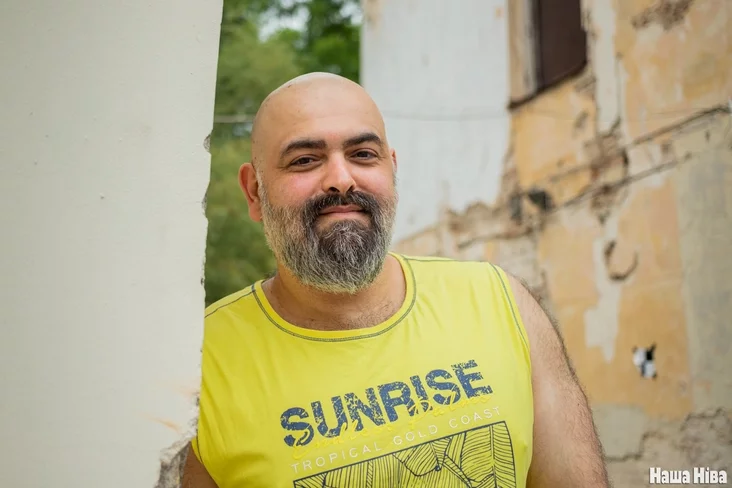
Pavel recalls that even in 2020, amidst an atmosphere of killings and violence, he wasn't in the mood for music, but for him, it became a means of uniting with people, which is why he performed, for example, at yard concerts. Now, the jazzman says, before concerts in Belarus, much has to be agreed upon, and this isn't about creativity, but about the coexistence of craftsmen with terrorists.
"We have a unique situation: the dictator hates the titular nation. I haven't heard of such a thing. He hates everything national, and therefore this is an occupation, and it began a long time ago. They gave us some time, ignored some things, but now they are given total impunity. As if to say, 'you see Belarusians - beat them, act as harshly as possible with them.' Finally, all these security forces are doing what they want.
So what can be created in Belarus now, what kind of creativity? Write a couple of poems in a drawer? For me, that's impossible," Arakelyan explains.
In such a Belarus, full halls are gathered not by jazzmen at all, but by artists like Grigory Leps, who gathered a full "Minsk-Arena" a few months ago. Pavel calls this a result of the informational and cultural space Belarusians were steeped in during Soviet and post-Soviet times. He cites Lithuania as an example — a country with less than three million inhabitants, but with a self-sufficient show business. In Belarus, local culture was considered secondary for a long time, and cultural products created in Russia came to the forefront, and now we are reaping the fruits of this.
Compared to Minsk, Vilnius is now like New York, Arakelyan believes, this capital has a completely different number of top musicians.
Where does all this come from? "Because people cherished their own, because they paid for it with blood, and Belarusians did not pay, were not ready to do it, and unfortunately, are still not ready.
In the culture of almost each of our neighbors, sometimes in the anthem, there is a variation of the phrase 'freedom or death,' and only Belarusians lack this. Does that mean captivity is better? Then we will remain in it until we pay the price with our blood and until all those who could not pay learn to cherish it," he asserts.

Pavel describes Vilnius musicians as entirely European in their thinking, capable of extensive experimentation. Belarusian colleagues, he says, are afraid to go beyond what is permitted: "what's by the notes is good, what's not by the notes is not so good." Lithuanians, however, do many interesting projects, have numerous educational programs, foreign internships, and bring professors to the country for master classes.
Information for Lithuanian musicians is valuable, so young performers eagerly snatch every bit of information from more experienced colleagues; nothing like that was close to existing in Belarus.
"Here, artists of 16-17 years old come to jam sessions, then you see them two to three weeks later at another jam session, and they've already grown significantly. There's healthy competition, a thirst for development, and people to learn from.
Moreover, in terms of improvisational music, Lithuania is now dictating its rules to almost all of Europe, on par with Germany. And this is despite the fact that Lithuania is one of the smallest countries on the continent," Arakelyan marvels.
Pavel explains that the Vilnius conservatory has a faculty of improvisational music, where students learn to play without notes, to catch each other's vibe. This is the essence of music, the jazzman is convinced, what helps work in any of its styles, create rock or waltzes: the ability to feel the vibe, mood and atmosphere, the metaphysical part of music.
Arakelyan compares this to visual art: "Sometimes people say, 'Black Square' is nonsense, I can do that too. But for some reason, you didn't paint this 'Black Square'; Malevich painted it, and it's worth millions of dollars."
«If nothing changes, the same people who marched under the white-red-white flag in 2020 will elect another 'Little Lukashenka' for themselves»
The jazzman is ready to apply the Lithuanian experience in Belarus and enthusiastically talks about how good music teachers could be brought to our country, and concerts organized. Geographically, we are close to the European family of nations; we only need to draw closer to it in our way of life, and then we can adopt Western musical knowledge. Arakelyan would gladly take this on — he is confident that Belarusians have the appropriate potential, and he has already tried to organize concerts in his homeland.
On the other hand, the life of struggle has tired the musician. He reflects:
"The question is, how long will this [dictatorship in Belarus] drag on. I'm almost forty, and I want to live peacefully, not fight against something unclear my whole life. Against Lukashenka, against his regime, against people who are incapable of reflection."
Pavel is ready to return to Belarus only if his safety is guaranteed there. He believes that in his homeland, Belarusians will have a lot of work to do, not only musical but also political. It seems he is ready to make efforts towards this, but under one very important condition. "If I see there's a chance to work towards a deeper understanding of processes, I will participate in it as much as possible.
But for now, I look at how Belarusians relate to politics, and my thoughts are pessimistic. Everything is very naive, superficial. People used to do this before too — voted for whoever was prettier or spoke well. As of now, it seems to me that if nothing changes, the same people who marched under the white-red-white flag in 2020 will elect another 'Little Lukashenka' for themselves and will be happy with him until protests start again," he says.
Arakelyan is convinced that Belarusians should cherish their true heroes, people who have been in opposition their entire lives and have demonstrated dedication to their homeland for years, such as Statkevich, Seviarynets, Dashkevich. However, Pavel laments, other names are heard in the media, and therefore, other heroes are on the agenda now. The old stars of the opposition are needed by Belarusians, but, as the musician believes, they will not be allowed political activity, even if something changes tomorrow and these people are released.
And this is not the only thing that saddens the jazzman. He reflects: "Imagine that tomorrow Lukashenka, Putin, their relatives, ministers, and security forces disappear, and in Russia, a conditional Khodorkovsky comes to power, and for some time Moscow doesn't care about Belarus, or the Kalinoŭski Regiment enters the country and takes power. And again, we did nothing for freedom."
If you get something easily and don't cherish it, you can lose it,
Arakelyan is convinced. Thus, Belarusians can once again find themselves at the same point where they are now, even if they gain their freedom.
So what then to believe in, what to hope for? Pavel shares that he himself would like to know the answer to this question: "Now I'm building my life around my main principle — as far as possible, not to multiply misfortunes and sorrows, not to do anything that leaves darkness in this world. I try to treat someone better, I help someone with small things.
It's easier for me that way. In any religion, there are a dozen postulates that help people coexist and develop. They are approximately the same in all of them: do not kill, do not rape, do not steal, and so on — and one should simply not forget about them. Not because God will punish otherwise, but because then there's a chance that our species has the right to exist."
«Nasha Niva» — the bastion of Belarus
SUPPORT US"You have to live on something." Pavel Arakelyan sells his musical instruments
"Belarus is now a country of great hope." Conversation with Lyavon Volski

We told you: "Don't think this is small change"! Data revealed on how much income tax Belarusians in Lithuania transferred to various public structures


Comments