


Nastassia Kostiugova on Statkevich's and Tsikhanouskaya's position: The proposal to «squeeze out» sounds like a proposal to wait for something unclear, and for an unclear duration
The appeal of a group of political prisoners to the leadership of the European Union countries elicited reactions from Mikalai Statkevich, Eduard Palchys, Mikalai Dziadok, and Sviatlana Tsikhanouskaya. «Nasha Niva» asked political consultant Nastassia Kostiugova to share her thoughts on those statements.
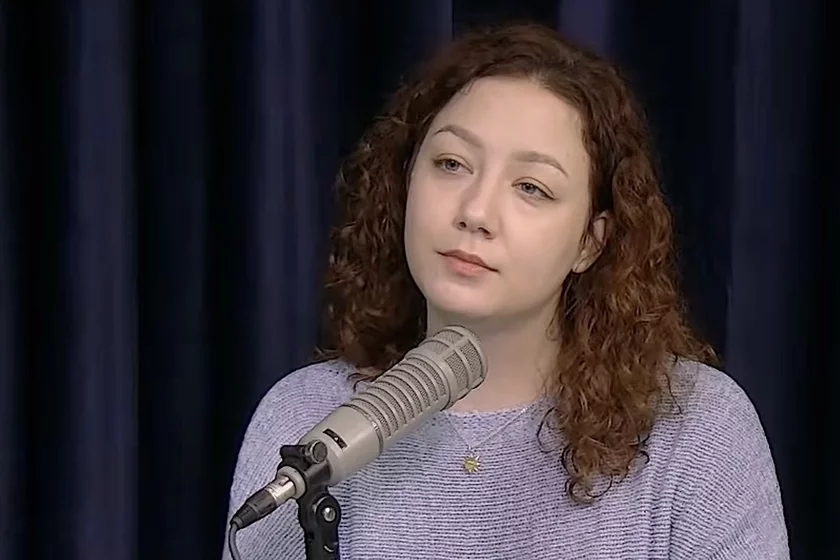
«Nasha Niva» assumed that Nastassia Kostiugova, with the participation of Valery Kavaleuski, worked on the text of the political prisoners' appeal to EU countries, as the ideas formulated in it are close to those advocated by these individuals. However, Ms. Kostiugova categorically refutes this: «I learned about the letter after Zhyhar's post [with sharp criticism], and I went to acquaintances and colleagues to find out what he might mean. And that's how I found out that a letter was being planned».
At the same time, Nastassia Kostiugova agreed to answer questions about what she thinks of the criticism of the letter.
— What do you think about Mikalai Statkevich's criticism of the letter?
— Statkevich is known for his principled approach, and he implements his principles through actions. He did not leave Belarus, risked himself once again, and I understand him when he says that a political idea is more important than life and safety — he lives out this conviction himself. However, this choice is his personal choice; everyone has the right to dispose of their life and health for their convictions, but not to demand this from others.
I think the main dividing line between different approaches is that proponents of increasing pressure, firstly, believe that someone is going to increase it, and secondly, believe that this will not only happen but also lead to a change in the regime. Supporters of the de-escalation line, however, do not understand what this belief is based on, and they do not receive convincing answers to their questions. Therefore, this proposal to «squeeze out» sounds like a proposal to wait for something unclear, and for an unclear duration.
Read also: Statkevich on the appeal of Zolatava and Kalesnikava: It devalues suffering and sacrifices, it is an ideology of opportunism
— What do you think about the reactions of Eduard Palchys and Mikalai Dziadok?
— Both said the letter was good. Both felt the letter lacked political context, but I don't think this letter was intended as a political text. It is a letter calling to resolve a problem that the authors primarily see as humanitarian. They expressed their vision in the text of the letter and took action to ensure their vision was heard and considered. Any active action can face both support and criticism — this is a normal part of public and political life, and Belarusians who want democracy should start getting used to this and not always look for division and catastrophe in it.
Read also: Palchys on the letter from Kalesnikava and Zolatava: «For all that is good, against all that is bad», but in reality, this will leave 9 million in a local North Korea
— What do you think about Sviatlana Tsikhanouskaya's words «The dilemmas being thrown around — pressure or dialogue, negotiations or sanctions — are false. One does not work without the other. Without pressure, the regime will not engage in serious dialogue»?
— I think it's wonderful that these words have finally been uttered by proponents of increasing pressure as well. My supporters and I have long been saying that this dilemma is false from the start; political negotiations presuppose levers and incentives. I think it took time for the participants of the democratic movement to get used to the idea that negotiations are not an encouragement but a tool, and it should be used to achieve one's goals, rather than waiting for everyone else to start using it except us — solving only their problems and pursuing only their interests.
— And don't you think that maintaining a «hard line» is more likely to lead not to «regime change», but to «change in the character of the regime», «changes within the regime», «softening of the regime», than a transition to a «line of non-resistance»?
— This regime has changed its «character» more than once, but what I agree with the proponents of the hard line on is that its essence will remain.
When I speak of the essence of the regime, I mean that it is ready to move in many directions as long as its power is not questioned — then it will sacrifice everything to maintain it. And if we currently do not possess enough leverage to force it to give up power, then we must use the situation for those issues that can be resolved.
As for changing its character, for Lukashenka, the question of changing the regime's character is a matter of the benefits he will gain from this change, and the cost he will have to pay if there is no change. The Minsk regime has pressing issues — the issue of security, the issue of Moscow's increased leverage over Minsk, economic issues, the issue of the approaching transit. This is the field for work.
Our line is not a line of «non-resistance»; it is a line of transitioning to a language they understand. Okay, you want to resolve issues, let's talk and discuss how to resolve them, but for that, the issues of partners whose attention you seek, and the issues of civil society, must also be resolved. The international context is changing right now, and we are driven by the concern that the interests of Belarusians will not be considered.
The difference is that proponents of the hard line believe that if Western partners are asked not to talk to Minsk, they will listen, while we believe that they have their own interests, and they will start talking anyway, which we have seen many times in recent years. And we may find ourselves in a situation where we were so carried away by our rigid position and demand not to talk that when the conversation begins — it will begin without any consideration of our agenda at all, because we were in principle against the conversation.
Proponents of the hard line are also guided by another fear — that negotiations will restore legitimacy to the regime and take it away from them. But international legitimacy is also a tool that must be used. Our international legitimacy is not eternal; it depreciates over time if not confirmed, and it can only be confirmed by support within the country. It cannot be preserved by requests not to talk to the regime; requests without influence are generally given little consideration in politics. As long as international recognition is maintained, it should be used to improve conditions in the country. In fact, I think proponents of the hard line are coming to the same conclusion, if you look at Pavel Latushka's recent statements — you can see it.
-
In Ukraine, they bid farewell to Belarusian volunteer Vitaly «Vitushka» Tryhubau
-
Belarusian Native Sentenced in Absentia to 10 Years for Organizing Illegal Referendum on Annexation of Kherson Region to Russia
-
Palchys stated that he coordinated the 2020 protests from Minsk and wrote the plans for the first marches
Now reading


It's incredible, but a truckload of cucumbers was brought from Moscow to Olshany — the cucumber capital of Belarus. It was not allowed into the country

It's incredible, but a truckload of cucumbers was brought from Moscow to Olshany — the cucumber capital of Belarus. It was not allowed into the country


"Dima, my half-million-euro microscope is in your clinic. You stole the equipment." The founder of "Novy Zrok" spoke about his relationship with the Abelsky family

"Dima, my half-million-euro microscope is in your clinic. You stole the equipment." The founder of "Novy Zrok" spoke about his relationship with the Abelsky family


"A young wife came to the lieutenant, saw what was happening in the zone, and shot herself." The final part of Ryhor Byarozkin's memoirs about the Gulag and Soviet Minsk has been released


Comments
А мастерство-то не протеряешь! "Гэтыя людзi" Цудоўна як! Прыгажосць тонких редакторских штришков.