


Actor Sacha Baron Cohen apologized to the people of Kazakhstan for the character Borat
British actor Sacha Baron Cohen has for the first time officially apologized to the people of Kazakhstan for the image of Borat — the fictional Kazakh journalist he played in the 2006 comedy "Borat" and its 2020 sequel. The comedian made this statement during his participation in the Happy Sad Confused podcast, writes The Independent.

Sacha Baron Cohen explained that he originally created the character for the BBC, and then Borat supposedly came from Albania. His nationality changed depending on the TV channel that financed the project. When the character started appearing on HBO, Cohen needed a new country, and he chose Kazakhstan — because, according to him, people knew very little about this country.
“I want to apologize to the people of Kazakhstan for the first time, because Borat has nothing to do with Kazakhstan,” the actor said.
Speaking to the audience at the 92nd Street Y cultural center in New York, Cohen also asked Kazakhs not to take the character's image personally. He emphasized that he has no intention of offending anyone and respects the Kazakh people and their culture.
Cohen recalled that early in his performances as Borat, he received a perfectly legitimate complaint from the Embassy of Kazakhstan. Among other things, diplomats drew attention to the character's mustache, noting that Kazakhs do not wear such mustaches. The actor also admitted that he cannot imitate a Kazakh accent and that Kazakhs themselves do not look like Borat at all.
According to Cohen, the point of the character was not to portray Kazakhstan, but to ridicule the ignorance of people who believed that the incredible and absurd things shown in the film could actually happen in a country unfamiliar to them.
The film "Borat", released in 2006, is a scandalous mockumentary comedy by director Larry Charles, in which Sacha Baron Cohen plays the fictional Kazakh journalist Borat Sagdiyev. The plot is based on Borat's trip to the USA to create a report, which, however, soon turns into a search for Pamela Anderson. The main character, traveling around the USA, ironizes American stereotypes and culture.
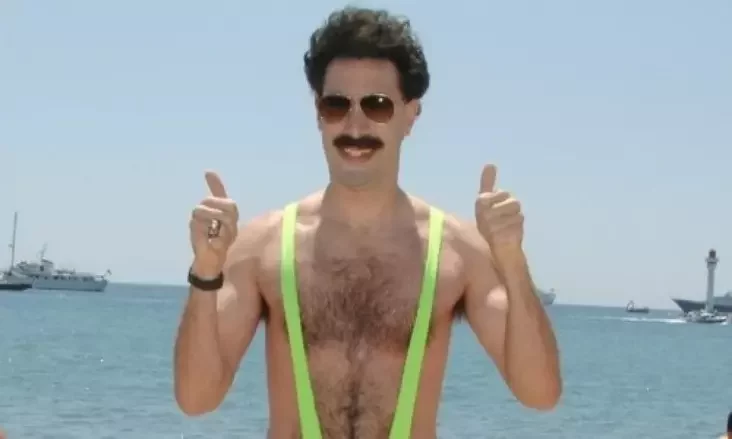
For Kazakhs, this film has predominantly negative associations. Many residents of Kazakhstan, after the release of the film, perceived it as an insult to their people and a humiliation of the country.
After the sequel to the film was released in 2020, a group of Kazakh-American origin published an open letter stating that the image of Borat had caused irreparable damage to Kazakhstan's international image.
Now reading


"Why won't a Belarusian learn the Belarusian language? It's just laziness." Publisher Yaroslav Ivanyuk — on the wanted list, the KGB, and language wars

"Why won't a Belarusian learn the Belarusian language? It's just laziness." Publisher Yaroslav Ivanyuk — on the wanted list, the KGB, and language wars


It's incredible, but a truckload of cucumbers was brought from Moscow to Olshany — the cucumber capital of Belarus. It was not allowed into the country

It's incredible, but a truckload of cucumbers was brought from Moscow to Olshany — the cucumber capital of Belarus. It was not allowed into the country


"Dima, my half-million-euro microscope is in your clinic. You stole the equipment." The founder of "Novy Zrok" spoke about his relationship with the Abelsky family

"Dima, my half-million-euro microscope is in your clinic. You stole the equipment." The founder of "Novy Zrok" spoke about his relationship with the Abelsky family


"A young wife came to the lieutenant, saw what was happening in the zone, and shot herself." The final part of Ryhor Byarozkin's memoirs about the Gulag and Soviet Minsk has been released


Comments
А выбачацца за экраннае дурэнне - падвойная дурасць, мне здаецца.