


There is the highest mountain in the world in the Himalayas that no one has yet climbed. What is the reason?
While thousands of people are assaulting Everest, Gangkhar Puensum, a mountain over 7,500 meters high, remains completely untouched. The reason is not only deadly cliffs and gale-force winds.
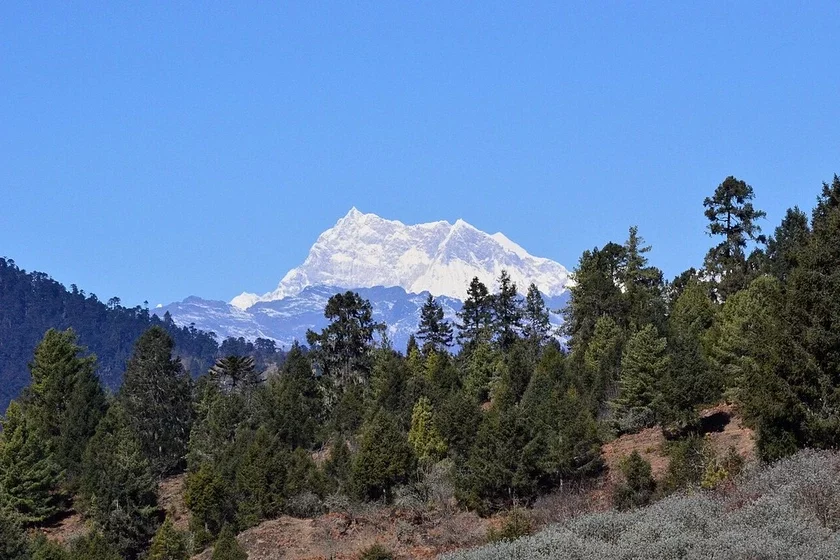
Mount Gangkhar Puensum is located in the Himalayas on the border of Bhutan and Tibet. The peak rises approximately 7,570 meters above sea level and is considered the highest unclimbed mountain in the world to date. Even its precise location was a problem for a long time. Old maps of the region differed significantly from each other, and the first expedition that was going to climb the peak failed to even find it.
As IFLScience writes, Bhutan opened its mountains to foreign mountaineers only in 1983. Between 1983 and 1994, climbing teams from Japan, Australia, and the UK attempted to conquer the mountain, but all were forced to turn back.
The mountain proved to be a serious challenge even for experienced climbers. Difficult terrain, snow, ice, and strong winds prevented groups from reaching the summit. The highest ascent was made by a Japanese expedition in 1985, which reached an altitude of about 6,850 meters.
However, extreme conditions were not the only obstacle for climbers. In 1994, the Bhutanese authorities banned climbing all peaks in the country higher than 6,000 meters, and in 2003, they completely closed the country to mountaineering. One of the reasons was safety: in this remote region, there is a lack of rescue services that could help climbers in case of an accident.
However, the attitude of local residents towards the mountains is no less important. In Bhutanese culture, high peaks have great spiritual significance and are considered dwelling places for spirits and deities.
The name Gangkhar Puensum translates to "White Peak of the Three Spiritual Brothers." Believers consider these mountains home to holy guardian spirits and are convinced that the presence of strangers trampling their sanctuary would bring misfortune to the entire region. These places are also shrouded in legends about the migoi (Yeti) snowman and thunder dragons. The dragon holds a special place in Bhutanese culture and is even depicted on the country's national flag.
The only serious attempt to circumvent the ban occurred in 1998 when a Japanese team tried to climb the mountain from the Tibet side, having obtained permission from China, which had its territorial claims to the area. However, due to diplomatic protests from Bhutan, the permission was unexpectedly revoked.
As a result, in 1999, the Japanese climbed not Gangkhar Puensum, but the neighboring Liankang Kangri, about 7,535 meters high. It is separated from the main peak by an approximately two-kilometer mountain ridge.
Thus, as long as Bhutan maintains its ban on mountaineering, it is impossible to legally climb Gangkhar Puensum from its territory. And there are no signs that the country intends to change its policy.
-
A whole field of cornflowers bloomed near Mogilev PHOTO FACT
-
Kaveryn said that if his offer of an erotic photoshoot for Tsikhanouskaya had not caused such a reaction, he probably would not have apologized
-
Founder of the famous Minsk bar «Karma» has already opened his third establishment in Warsaw. What is it?


Former locksmith of a military unit in Pleschenitsy was heading for a record number of criminal convictions — but disappeared in the very first "meat assault"


Comments