


Whales now live off the coast of Greenland — no longer hindered by ice
Sea ice off the coast of East Greenland is rapidly disappearing, which giant whales are taking advantage of, exploring previously inaccessible waters, writes the BBC.
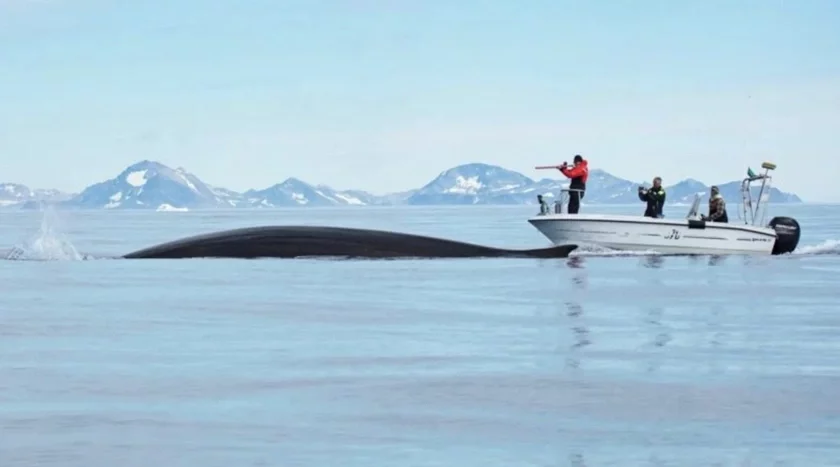
For several years, researchers have been documenting and filming the world's largest mammals — including humpback whales, minke whales, and fin whales — swimming along this coast and finding food during the summer season.
Historically, none of these species lived here, as they were hindered by ice in the coastal waters. But now, due to climate change, the sea has warmed, and the ice has melted.
Scientists describe this phenomenon as a seasonal Arctic "feeding frenzy" — part of large-scale changes in the ecological regime of the oceanic environment off the coast of East Greenland. According to observations from vessels, humpback whales were not present in this region before 2006. In 2007, they were seen seven times, and by 2024, humpback whale sightings had been recorded 150 times.
In 2015 and 2024, researchers conducted systematic aerial surveillance of baleen whales — a group that includes fin whales, minke whales, and humpback whales — off the coast of East Greenland.
They combined this information with data on the movements of 15 whales tagged with satellite transmitters and testimonies from Inuit hunters. All this allowed them to build a complete picture and conclude that in the summer of 2024, about 4,000 humpback whales, 6,000 fin whales, and 6,000 minke whales visited the Greenland Sea.
Lead researcher, Professor Mads Peter Heide-Jørgensen from the Greenland Institute of Natural Resources, calls this a "serious ecological regime shift." Speaking to the BBC, Heide-Jørgensen described the changes in the region as "probably the most radical of all we are seeing in the subarctic."
It is likely that due to rising water temperatures, fish that whales feed on have appeared in the waters off East Greenland.
Scientists estimate that whales of all three species consume at least 800,000 tons of fish during the summer season. It is not yet clear whether the population of these whale species has increased, or if some of them have simply migrated north from other locations.
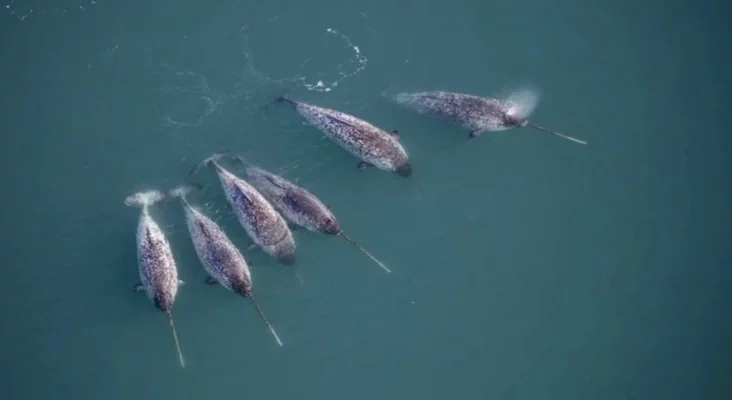
A number of experts interviewed by the BBC are concerned about the migration of animals from West Greenland. For Greenland, where some whale species are hunted, this is a sensitive issue.
However, scientists note that these "opportunistic baleen whales" appear to be adapting to what is happening and may even be benefiting from these climate changes.
But other Arctic species are less fortunate. Narwhals and beluga whales now have to share their habitat with other whales, and sometimes they are even displaced.
"For some species, climate change is not necessarily a problem – it opens up new opportunities," says Professor Heide-Jørgensen. "But other species are losing their natural habitat."
Now reading


Tragedy in Borisov Hospital: patient's granddaughter says he received attention after six hours, when foam was already coming from his mouth — he died


Comments