


Due to rising oil prices, even cheap mass-market clothing may become more expensive
Traditionally, it was believed that during economic crises, cheap brands only strengthen as shoppers start to save. However, today's rising oil prices and logistical collapse create a paradoxical situation: it is precisely the 'budget clothing' segment that may become the main victim of instability due to its total dependence on petroleum products.
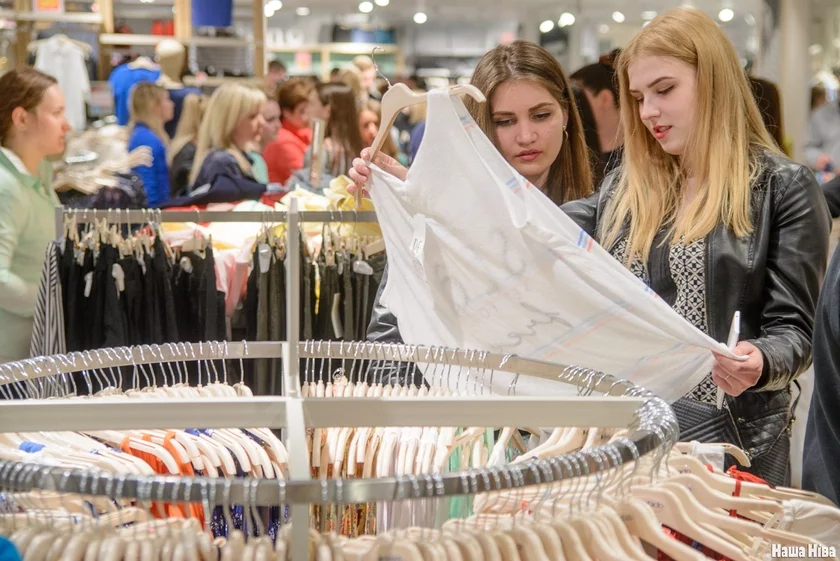
Until now, the retail axiom was simple: if the economy is bad, shoppers go to discount stores. But, as writes The Financial Times, the war in Ukraine and inflationary pressure in Europe have changed the rules of the game.
The reason is that conflicts of this scale hit not only consumer sentiment but also production costs. Virtually all oil-related elements of the supply chain are becoming more expensive. For example, since the beginning of the war, the cost of sea freight between Shanghai and Rotterdam has increased by approximately 20%, and air freight between Southeast Asia and Europe — by a quarter.
Companies that actively use polyester — one of the key materials of the 'fast fashion' industry (fast fashion) — become particularly vulnerable. About 70% of its production costs depend on petroleum products. Therefore, the rise in oil prices by approximately 40% over the last month has already led to an increase in the price of polyester fibers by more than a quarter.
So far, the situation has not fully reflected on financial results. On the contrary, the last year has been quite profitable for a number of fashion retailers. For example, H&M reported a 1.6 percentage point increase in gross margin. Almost all of this growth is explained by two factors. According to analysts' estimates, cheap polyester contributed about 0.8 percentage points to profitability, and a decrease in delivery prices — another 0.6. Together, this accounts for 1.4 out of 1.6 points of growth.
But this effect may quickly disappear. The British chain Next has already warned that rising oil prices will begin to affect production costs, including through increased polyester prices, already in the second half of the year. Analysts also believe that H&M's current 'plus' from cheap raw materials could turn into a 'minus' as early as next year.
The degree of dependence on oil differs between companies. Mid-segment brands, such as H&M, Next, or Inditex (owner of Zara), use polyester in approximately a quarter of their products. However, H&M states that all their polyester is recycled, which makes its production energy-intensive but slightly less dependent on oil prices.
The picture is completely different in the ultra-fast fashion segment. At Boohoo, about half of the products are polyester, and at Shein, its share exceeds 80%. These companies are most vulnerable to rising raw material costs.

If production costs continue to rise, retailers will be forced to increase prices. Next already anticipates such a scenario if the war extends beyond three months. However, a new problem arises here: market demand is becoming increasingly uneven.
Economists predict that affluent consumers continue to spend, while less wealthy ones cut back on expenses. Under such conditions, cheap brands may find themselves in a difficult situation — it is harder for them to pass on rising costs to customers.
While polyester used to be a way to save money, today it is turning into a burden, which could lead to the business models of cheap fashion brands starting to 'fall apart at the seams' among the first.
Furthermore, the general deterioration of the economic situation may lead to an overall decrease in demand. As a result, consumers will not so much 'switch to cheaper alternatives' as simply buy less.


Lithuanian State Security: Karach's "Our House" artificially creates conditions for Belarusians who do not meet international protection criteria to receive a residence permit in Lithuania


Comments