


"WhatsApp Army". How a surge in social media campaigning helped Lula da Silva snatch victory in Brazil
Supporters of Luiz Inácio Lula da Silva, who won another presidential term in Brazil, believe that his re-election was aided by a WhatsApp channel specifically created for the elections, which secured the president's victory from what seemed like an unenviable position.
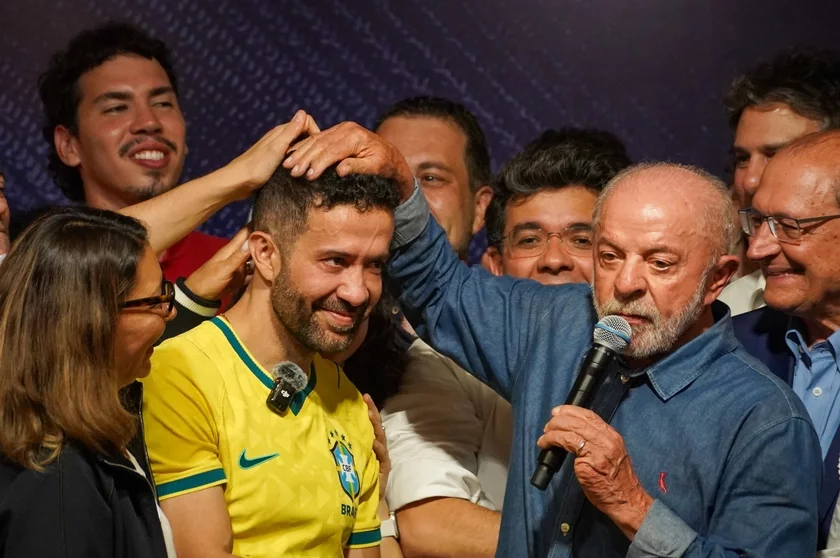
Da Silva, a representative of the left wing of Brazilian politics, was trailing the right-wing candidate, Flávio Bolsonaro, but managed to turn the situation in his favor in just three weeks between the first and second rounds, writes the BBC.
After the first round, many thought the race was lost. And then the "Lula Army" channel appeared on WhatsApp, quickly gaining 10.8 million subscribers. The channel was managed by Brazilian congressman André Janones. It encouraged subscribers to share video clips and inspiring hashtags, and to seek out new voters willing to vote for Lula.
The sharp rise in subscribers in the period between the two voting rounds is particularly remarkable, as it deviates from the usual balance of power in Brazilian politics. For many years, it was the right-wing and conservatives, rallied around Jair Bolsonaro, the former president and father of the current election candidate, who dominated online, especially on WhatsApp and Telegram platforms.
The growth of "Lula's Army" convinced many voters that the Brazilian left had finally understood how to compete in the digital environment. This shift is particularly significant because social media began to play a central role since the election of Bolsonaro Sr. as president in 2018: WhatsApp channels became a defining feature of political campaigns.
Posts in "Lula's Army" often offered ready-made templates that supporters could share with friends and family. Each of them gave subscribers a specific task to promote da Silva's candidacy on social media.
Janones often instructed his "fighters" to "explode" the network with a new campaign video or help a new hashtag "take off."
"Guys, urgent!", "Nobody goes to sleep", "No food before the mission!", "I have one more task for you before bed!" — this is how many of these posts began.
Online and "on the ground"
Before the vote itself, when the latest opinion polls still gave Bolsonaro the advantage, the congressman held a 24-hour marathon, dubbed the "turning point stream."
Many in Brazil's Workers' Party, which Lula da Silva represents, feared Janones' overly combative, confrontational style on social media, worried it would harm attempts to present Lula in a more moderate light. But this tactic by the leader of the "WhatsApp army" worked.
In his speech after the announcement of the results, Lula called Janones "our general" and thanked him for "raising the fighting spirit of our fighters daily."
However, accurately measuring the impact of online mobilization on elections is always difficult. Lula's supporters are confident that the WhatsApp campaign helped, but political process analysts warn that it is difficult to accurately answer the question of how many votes this idea brought (and if it brought any at all).
Political scientist Denilde Holzhacker argues that the main factor that turned the tide in da Silva's favor was a change in strategy. It wasn't about online campaigning, but how it combined with activists' work on the ground. It was there that the message sent to voters was modulated to explain how Bolsonaro's victory would affect the funding of social programs and the loss of certain rights and powers of citizens.
"It must be noted that Lula understood his weakness and completely changed his style," says Holzhacker. "And Janones managed to do something no one expected from the left anymore - to gain an advantage in social media."
Flávio Bolsonaro, the political scientist says, approached the second round overly confident in his victory and failed to effectively convey his message to voters.
Lessons for the future
Sociologist and political scientist Maira Goulart, a professor at the Federal University of Rio de Janeiro, also warns against attributing Lula's victory solely to social media success. "It was a combination of network activity and 'street' mobilization," she says. "In the real world, mobilization was achieved that reduced the number of passive voters and swayed those who were undecided."
She believes that the president's supporters were able to convert online enthusiasm into real electoral participation. "Those who dedicated themselves to the task of Lula's victory worked to rally people and persuade them to go vote."
She argues that these efforts not only contributed to increased turnout but may also prove valuable for Lula's new government.
"I believe this collaborative work has been an important experience and will be useful for a government that will face many more battles. It not only helped reduce the level of abstention but also attracted a significant number of undecided voters."
Lula himself expressed the opinion that the mobilization of supporters that secured his return for a new presidential term could influence his governing style in the coming years.
In his victory speech, he said that the elections had taught him many lessons and promised to change his approach to governing Brazil. "We are going to give people a greater voice in decision-making, and digital communications will play a much more important role in my government," he stated.
Now reading


Do you remember Piatrusha, who ripped out the wires for the "Changes DJs"? He was demoted to the third league of officials after months of unemployment


Comments
Калі левыя прайграюць - як з Трампам ці ў Еўропе - раптам гэта маніпуляцыя алгартытмам карпарацыямі і расійская прапаганда.
Меленшон вось зараз таксама кажа, што яго негатыўны рэйтынг - гэта ўсё Ізраіль і капіталісты маніпулююць медыя, а не пагромы і гвалт, што ён падбівае.
А можа ўсё значна прасцей? Левыя, як звычайна, дамовіліся з крымінальнымі групоўкамі, каб у раёнах, што тыя кантралююць - іх кандыдату намалявалі колькі трэба. А за гэта іх ня будуць чапаць.
Гэтак перамагаюць на выбарах у Мексіцы, Калумбіі, Балівіі, гэтак жа было з Чавесам у Венесуэле і г.д. Сістэма працуе дзесяцігоддзямі.
А ўсе гэтыя сацсеткі - проста пыл у туман.