


Ukrainian publication explained the essence of claims against Commander-in-Chief Syrskyi
The dismissal of Ukraine's Minister of Defense Mykhailo Fyodorov became a catalyst for an unprecedented wave of criticism against the Commander-in-Chief of the Armed Forces of Ukraine, Oleksandr Syrskyi. The Kyiv Independent writes in an analytical article by journalist Francis Farrell about why many Ukrainians and military personnel believe he should resign.
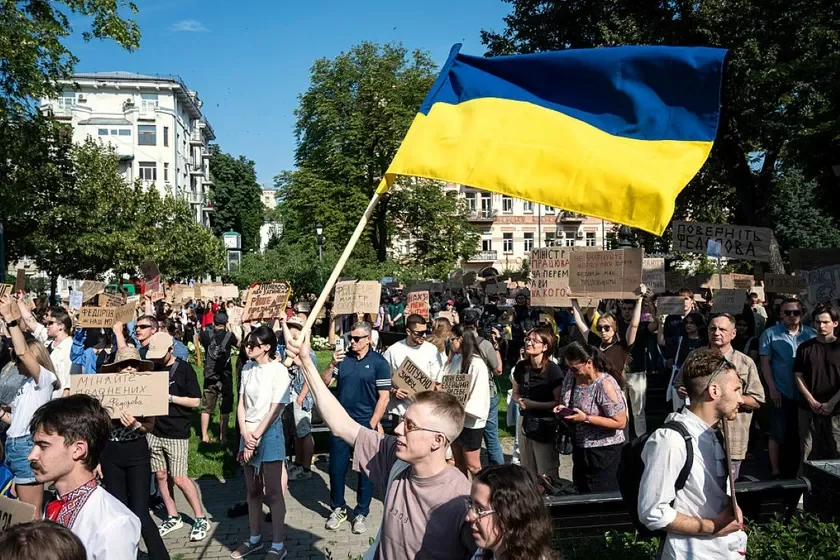
“Fyodorov = more Russian losses, Syrskyi = more Ukrainian losses.” Such posters appeared at protests in Kyiv and other cities after President Volodymyr Zelenskyy dismissed Minister of Defense Mykhailo Fyodorov.
Initially, political motives or the fight against corruption were cited as reasons for the resignation. But the most likely version was a personal and professional conflict between Fyodorov and the Commander-in-Chief of the Armed Forces of Ukraine, Oleksandr Syrskyi.
Zelenskyy effectively confirmed the existence of the conflict. He admitted that he could not make the two leaders work together and in such a situation was forced to choose one side.
Before Fyodorov's dismissal, only a few openly criticized the Commander-in-Chief — mostly those who had already left service or were not dependent on the military leadership. However, after Zelenskyy sided with Syrskyi, dissatisfaction with him, according to the author, spread far beyond the military environment and encompassed a significant part of Ukrainian society.
Old School General
Oleksandr Syrskyi is a graduate of the Moscow Higher Military Command School, an artilleryman who began his service in the Soviet army. At the time of Russia's full-scale invasion in 2022, he was already one of Ukraine's top generals.
His most notable successes came in the first year of the war. Syrskyi led the defense of Kyiv, and in the fall of 2022, he commanded the successful counteroffensive of Ukrainian forces in the Kharkiv region.
However, during the protracted battles for Bakhmut, his decisions became a subject of criticism. Although Russian forces suffered heavy losses, the defense of the city also cost Ukraine significant human resources, especially after the Russians almost encircled Bakhmut in the spring of 2023.
In February 2024, after Volodymyr Zelenskyy had accumulated grievances against the then Commander-in-Chief Valerii Zaluzhnyi, Syrskyi took over the AFU. By then, he already had a reputation as an old-school general with a Soviet mindset, who nevertheless was a military leader with a clear tactical mind and extensive experience.
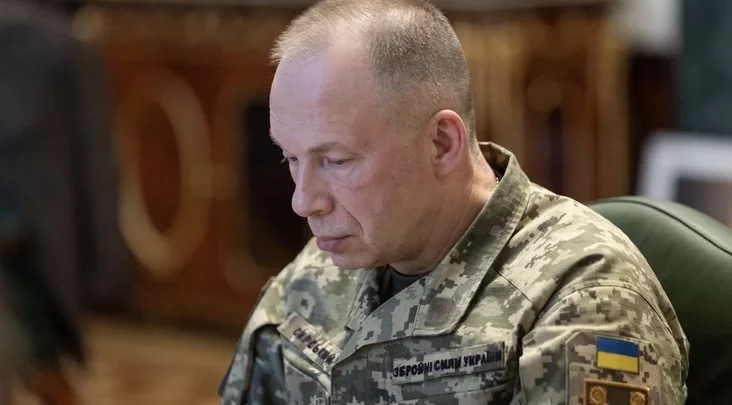
From Micromanagement to “The Butcher”
According to the author, in 2024–2025, Syrskyi failed to adapt the Ukrainian army to a war of attrition, where the main task should have been to inflict maximum losses on the enemy with minimal own casualties. Instead, the article claims, troops often received orders to hold positions or reclaim lost ones at any cost.
This led to heavy losses, after which there were not enough people to occupy and hold more advantageous defensive lines. It was after the battles for Bakhmut that some military personnel gave Syrskyi the nickname "The Butcher."
The situation was further exacerbated by other elements of the so-called Soviet command culture, which Syrskyi embodied. Commanders, fearing punishment for losing positions, allegedly often reported inaccurate information upwards. As a result, the General Staff made decisions based on unreliable information, and brigades and battalions received ineffective orders which they could not effectively challenge.
Another reason for criticism is Syrskyi's tendency towards micromanagement, where orders from the General Staff reached down to the company level.
As an example, the author cites the operation in Russia's Kursk region. The initial offensive is described as bold and well-organized, but later holding the bridgehead turned into a strategic problem. As before in Bakhmut and Avdiivka, delaying withdrawal, according to the author, led to avoidable losses.
“Mobilization Crisis”
The protracted war of attrition, writes The Kyiv Independent, has deepened not only the personnel deficit in the Ukrainian army but also public dissatisfaction with mobilization. By mid-2024, almost no volunteers signed up for infantry service, and forced mobilization became much more noticeable.
The political leadership tried not to touch upon this topic, and the command led by Syrskyi failed to use new mobilized personnel more effectively. Instead of reinforcing seasoned brigades, new ones were created, and units were often moved between front sectors to fill gaps in defense.
The tactic of holding positions at any cost led to high infantry losses. Moreover, in recent years, with the proliferation of drones, it has become much harder for infantry to survive. According to the author, in conditions where Ukraine cannot afford the same losses as Russia, preserving the lives of military personnel becomes a key condition for holding the front.
“Skelya-gate”
Another reason for criticizing Syrskyi was his reliance on assault regiments. According to The Kyiv Independent, these were often larger than entire brigades, received a disproportionately large number of mobilized personnel, and were used for assault operations in the most difficult sectors of the front under the direct command of the Commander-in-Chief.
The author pays special attention to the 425th Assault Regiment "Skelya," which, according to numerous testimonies, had a reputation as a unit where violence, abuse, and heavy personnel losses were common. In June, Babel reported 26 deaths during basic training in this regiment. Following an investigation, the commander was relieved of his post, but, as the article notes, he has not yet faced broader accountability.
Shortly after these publications, the former chief of staff of "Skelya," who at that time commanded the 155th Mechanized Brigade, was arrested. He was accused of ordering the killing of two soldiers from his brigade.
Publications about "Skelya" coincided with the reforms of ex-Minister of Defense Mykhailo Fyodorov, who proposed a significant increase in pay for infantry and assault troops, which seemed like an opposing approach.
Two in a boat became cramped
When Mykhailo Fyodorov took over the Ministry of Defense in January 2026, many expected a conflict between him and Commander-in-Chief Oleksandr Syrskyi. According to the publication, Fyodorov sought to implement reforms, make the system more efficient, analyze military losses, and gain control over the personnel crisis.
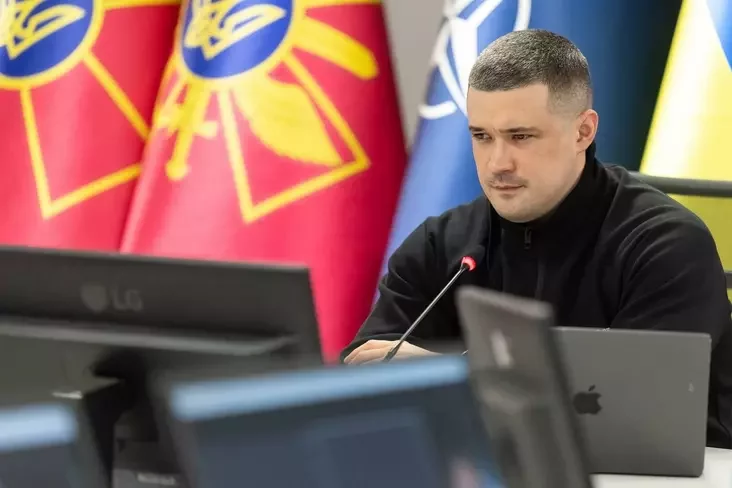
At his press conference after his dismissal, Fyodorov stated that he considered the main problems to be the shifting of responsibility to lower levels, an atmosphere of deceit, inefficient work of several army corps, frequent changes of brigade commanders, and the lack of analysis of sustained losses.
Fyodorov claimed that he was ready to work with Syrskyi, but the latter refused cooperation and, using his relationship with Volodymyr Zelenskyy, secured his dismissal. The author notes that many Ukrainians saw Fyodorov's reforms as a counterbalance to the Soviet style of management associated with Syrskyi.
Will Syrskyi Resign After All?
After Mykhailo Fyodorov's dismissal, criticism of Oleksandr Syrskyi spread far beyond the military sphere. Some volunteers, veterans, analysts, deputies, and even some active servicemen and commanders joined the demands for the Commander-in-Chief to resign. At the same time, other military personnel openly spoke out in his defense.
As protests gained momentum, reports emerged that Zelenskyy was considering Syrskyi's dismissal. Against this backdrop, the president met not only with the Commander-in-Chief and Fyodorov but also with other leading generals, including Mykhailo Drapaty, who is often named as a possible successor to the Commander-in-Chief.
According to the author, the current crisis could become a catalyst for deeper changes in military leadership.
The confrontation between Syrskyi and Fyodorov, the author believes, has become a symbol of the struggle between two models of the Ukrainian army. One relies on the traditional military system, which its critics call "Soviet," and the other on reforms, modern technologies, and management principles borrowed from business and IT.
From The Kyiv Independent article, one can conclude that it is difficult for "outsiders" to say which approach is more effective in the conditions of a harsh war.
The further course of the war may depend on Zelenskyy's final decision.
Now reading


Unfortunate Man from Lyakhavichy Disappeared "in the SMO" on the Third Day, While Sister, Cohabitant, and Wife — with Four Children, but Not His Own — Clashed over Funeral Payments

Unfortunate Man from Lyakhavichy Disappeared "in the SMO" on the Third Day, While Sister, Cohabitant, and Wife — with Four Children, but Not His Own — Clashed over Funeral Payments
A Belarusian woman translated for the President of Ecuador, worked as a flight attendant, and now opened her own language school "Russian with a Russian Woman" in Mexico

A Belarusian woman translated for the President of Ecuador, worked as a flight attendant, and now opened her own language school "Russian with a Russian Woman" in Mexico


Deputy Klishchevich became a Candidate of Historical Sciences with a dissertation on the disintegration of the Belarusian Komsomol during "Perestroika"


Comments