


Physical buttons are back? Automakers begin to abandon sensors and huge screens
This time, Audi announced that it would partially abandon its previously chosen strategy for sensorizing cars.
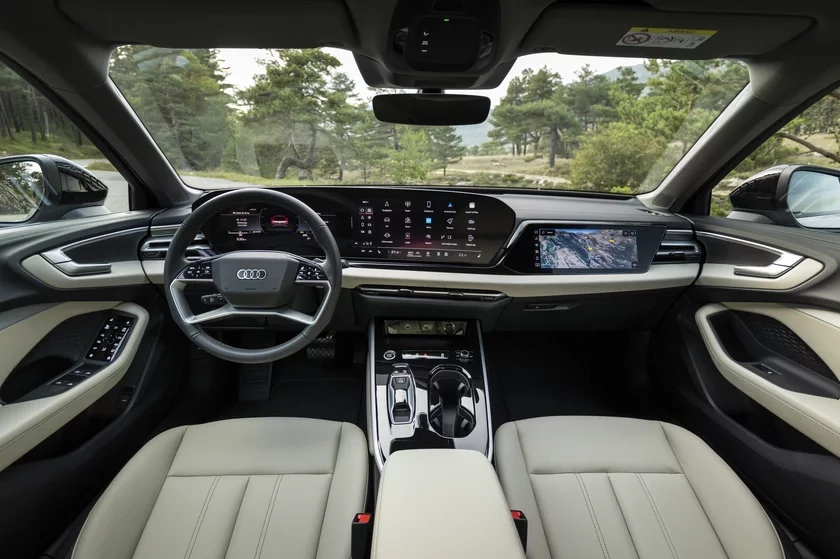
Had enough fun?
It has become known that the German brand Audi has admitted that its previous strategy of transferring almost all car controls to touchscreens or panels was erroneous.
This was stated by the brand's technical director, Ruben Mohrs, to the Australian publication GoAuto. This means that in new models, the manufacturer will bring back physical buttons and switches, which it previously actively abandoned, and huge screens will be replaced by more compact ones.
Audi came to this decision because the new approach to interior design and trim proved unpopular with most people, especially in Europe, North America, and Australia.
The thing is that in its latest models, Audi almost completely abandoned physical buttons: climate control, as well as many other functions, transitioned to a touchscreen.
The buttons for turning on the hazard lights, controlling mirrors, lights, seat heating, and so on, became touch-sensitive.

Physical buttons disappeared from the steering wheel controls, which sometimes leads to accidental presses while driving.
In addition, Audi will abandon the transformation of the car's dashboard into one large tablet, as can be seen in the new Audi Q7.

However, it should be understood that the process of abandoning excessive sensorization will not be abrupt, but will take the next two years. The first Audi model to bring back physical buttons and fewer screens is expected to be the new Audi A4 e-tron.
Not only Audi is rethinking its approach
VW, which completely abandoned physical buttons in 2022, also listened to consumers and began to bring back physical control buttons on the steering wheel, climate control, and multimedia in its new models.
"We will not repeat the same mistake. The buttons on the steering wheel will return to a physical design so that users can control functions without looking. Physical buttons provide tactile feedback, which is convenient. Ultimately, we are talking about a car, not a smartphone," said Volkswagen design director Andreas Minter in 2025, commenting on the return of physical controls for basic functions.

Therefore, the new VW ID Polo came out with physical control buttons on the steering wheel, and physical control for climate, sound, mirrors, and other functions returned.
Japanese automaker Subaru faced negative feedback from buyers and returned the traditional climate control model to the new seventh-generation Outback 2026 model year.
Large screen is no longer a sign of luxury
Mercedes-Benz also questioned the need to turn the car's dashboard into one large screen. Already last year, the chief designer of the German brand, Gorden Wagener, stated in an interview with ABC News that screens are no longer a luxury, as in 2025 huge displays became standard even in budget cars.
"All competitors are equipped with large screens – there is nothing exclusive about that. We should look for luxury elsewhere: in craftsmanship and the refinement of details," Wagener stated.

And this is despite the fact that Mercedes-Benz previously relied on huge screens, but already last year the company admitted that the technological "wow effect" no longer works.
Some did not succumb to the trend
Nevertheless, far from all automakers decided to abandon physical buttons and replaced them with large multimedia touchscreens.
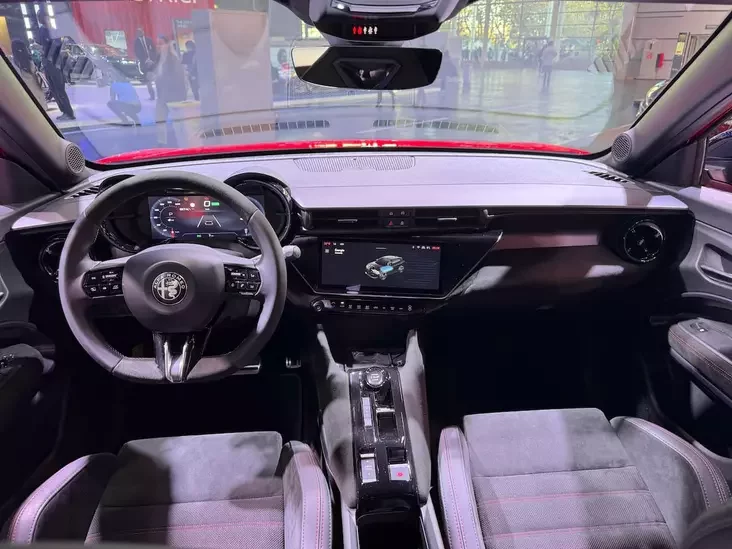
For example, Alfa Romeo stated that it does not intend to install widescreen displays and overload cars with unnecessary functions.
The head of Alfa Romeo said that the company conducted its own research, which revealed that the brand's customers do not need widescreen displays on the car's dashboard.
Hyundai also stated that when designing automotive controls, it will prioritize buttons and dials. Focus group testing showed that touchscreens annoy drivers.
Has a compromise been found?
Which camp will ultimately win the battle between physical buttons and touchscreens is still unknown. But it seems that some automakers have found a compromise solution.
For example, Xiaomi, which only presented its first car at the end of 2023, offers physical buttons for climate control and multimedia as additional equipment.

Additional buttons can be purchased separately; the panel attaches to the bottom edge of the central screen.
Fashion for screens and sensors VS safety
Touchscreens require the driver to shift their gaze from the road to the screen, while in cars with physical buttons and dials, most functions are controlled by touch.
A study by the Swedish company Vi Bilägare, conducted back in 2022, showed that activating similar functions in cars with touchscreens takes almost two and a half times longer than in cars without touch panels.
A study by the University of Washington and the Toyota Research Institute conducted in 2025 showed that touchscreens in cars negatively affect driver attention and reaction.
Even simple actions on the display increase lane deviations by 42%. The accuracy and speed of touches on the display decreased by 58%, and under high mental load, by another 17%.
Now reading


"Dima, my half-million-euro microscope is in your clinic. You stole the equipment." The founder of "Novy Zrok" spoke about his relationship with the Abelsky family

"Dima, my half-million-euro microscope is in your clinic. You stole the equipment." The founder of "Novy Zrok" spoke about his relationship with the Abelsky family


"A young wife came to the lieutenant, saw what was happening in the zone, and shot herself." The final part of Ryhor Byarozkin's memoirs about the Gulag and Soviet Minsk has been released


Comments
Физ кнопки будут в дорогих моделях, гоев дальше будут прогревать на крутизну телявизоров.