


"Perceptions arise that political prisoners must be resilient, composed, grateful. But reality is different." We spoke with people who literally guide deported individuals by the hand
"And when will it be possible to return home to Belarus?" — This question volunteer Nasta from Warsaw heard on the very first night when she met a group of deported political prisoners. Nasta recalls how at that moment, literally "everything inside her fell apart." She later learned that some of the expelled Belarusians did try to return: they went to Belarusian embassies, but it led to nothing.
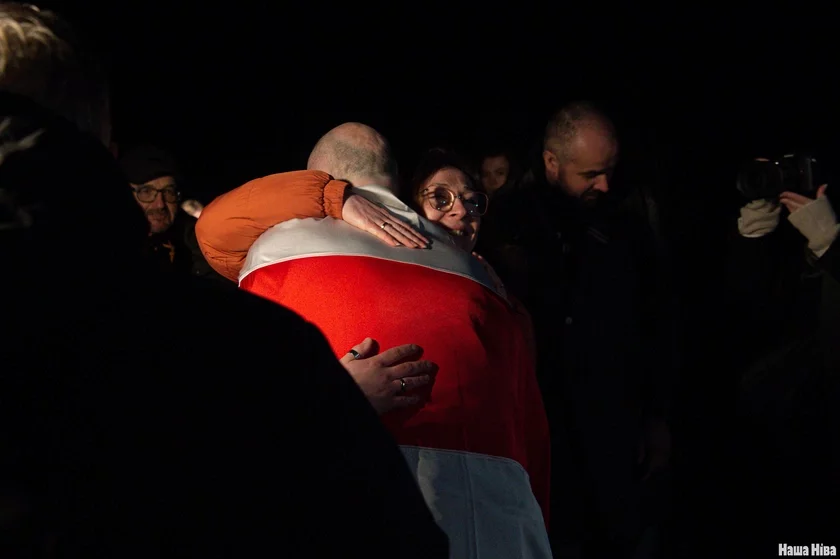
We spoke with five mentors from the Volnyja initiative: from Poland, Lithuania, and Germany. These are Belarusians with diverse life experiences and professions. Among them are an IT specialist, a psychologist, an entrepreneur, a business analyst, and an activist. They structure their work differently, maintain boundaries, and manage the workload, but they are all united by one goal — to help political prisoners whom the Belarusian authorities have expelled from their homeland.
"They are angry that they were expelled from Belarus"
Often, it is with this question — "when can I go home?" — that the work of Volnyja mentors begins. These are people who accompany those who, just a few hours ago, were in colonies, and now find themselves in a new country without documents, without belongings, without support, and without understanding what to do next. Becoming a mentor in "Volnyja" is relatively quick: an application form, short training, a meeting with a psychologist — and then the first mentee. However, psychological resilience, the ability to maintain boundaries, and the motivation to accompany rather than rescue are crucial. This is checked during the selection process: it's important that individuals do not get lost in others' stories or try to live someone else's life instead of their own.
Nasta still remembers waiting for the first large group. Political prisoners were being transported from early morning, without water or food, with bags over their heads. Therefore, the first actions were as simple as possible: feed them and help them call their loved ones.
"We sat up all night waiting, understanding that dozens of people were coming to us. That day, I realized that I didn't know what 80 people physically meant. When the room filled with people, it became clear — it was a lot. I didn't expect to see so many people at once. All very different, yet all in a state of stress."

Mentor Volha from Vilnius says that people react very differently emotionally in the first hours. Some feel relief and literally thank for every step. Others — especially those who were severely intimidated on the way, told they would be taken to the forest and could be shot — remain in a state of shock, confusion, as if frozen.
"If they are 'old-style' activists, they are angry that they were expelled from Belarus. Some were simply aggressive. They immediately asked what they were exchanged for, what was given for their release. Many said it shouldn't have been done. Some had only two months left to serve: people wanted to be released and stay in their own country."
It's hardest for those who have never left Belarus before. They lack experience living in another country and understanding how basic things are organized.
"I don't worry about activists, journalists, well-known people at all. They will find their way, find work. I worry more about those who lived at their own pace: home, work, hardly used the internet. It's hardest for them to settle in."
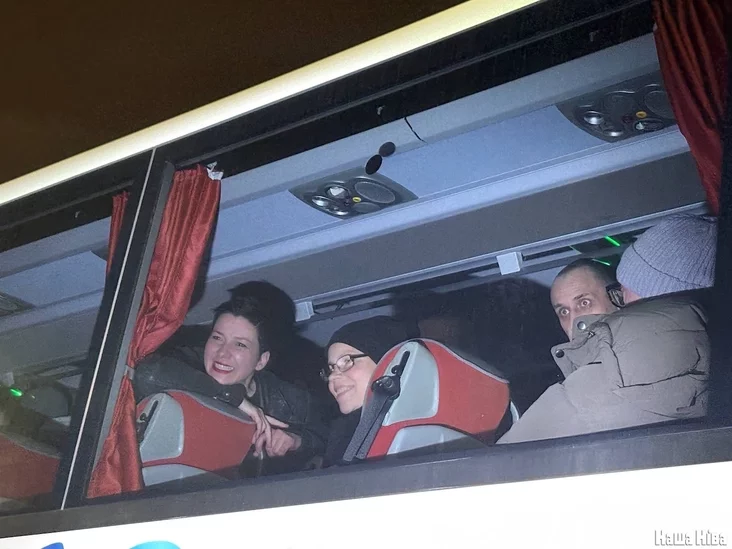
In the first hours, volunteers not only feed and provide a phone. They collect basic information, distribute people. And they explain in great detail where the deported Belarusians have arrived and what awaits them next. The most intensive stage is the first few days after arrival. Mentors drive them to submit documents, to doctors, help with buying basic necessities, and accompany them to institutions. Often, this happens manually: they literally have to travel with their mentees and deal with all tasks on the spot.
"Initially, these are questions like how to use public transport and where to buy a meat tenderizer, and later more profound and complex questions arise, such as how to receive a pension in Poland, for example," Nasta recounts.
Volunteer Alex from Vilnius explains that basic needs (housing, documents) must be addressed as quickly as possible, and the local system explained: from government bodies to everyday processes.
Some find it difficult to master new technologies.
"They simply don't understand what a virtual card is, how one can open an account remotely. They don't have computers, they have nothing. I just came to each one with my laptop, we sat together, filled out applications, traveled, scanned documents, literally step by step."
What volunteers need to be prepared for
Once housing is found, documents are submitted, and the former political prisoner begins to understand how everything works, the help doesn't end; it simply changes. Even if former political prisoners have more or less settled in, they may still have questions. Nasta says that sometimes it all comes down to very simple things:
"My mentee called me at 7:30 AM to ask why the *urząd* (office, institution in Polish — NN) wasn't working. And it wasn't working because it was still closed. And it seems like the person did so much themselves: found housing, and even resolved some document issues. But something so simple, like checking the *urząd*'s operating hours in advance, they couldn't do. And they needed someone to simply answer that question at 7:30 AM."

At this point, the mentor's role changes. They no longer lead by the hand but remain as a support, someone who can be approached even with the strangest question. This is how volunteer Maksim, who lives in Germany, describes his role:
"The most important thing is to give the person the understanding that I am there for them. If help is needed, they can reach out. Then they decide for themselves whether they need it. And if they don't reach out, I assume they have already settled in. But even if a mentee gets in touch after six months, I will help. Because for me, it's not difficult and doesn't require much effort."
It quickly becomes clear that interaction with former political prisoners doesn't always follow the 'helped — received thanks' scheme. Former prisoners can react complexly to things that seem normal to people without prison experience. Sometimes this manifests in harsh or even unfair words, behind which lie tension, fatigue, and an attempt to cope with a new reality. Katsiaryna from Wrocław recalls how she first encountered this:
"My mentee said: 'we have to eat from the trash here while they sit in their offices.' I started investigating, and it turned out that it wasn't about a lack of food at all. A neighboring store, on its own initiative, was providing products with an almost expired shelf life to the temporary accommodation center. There were no problems with food. People regularly received food baskets. However, I felt that moment — to press on my sense of guilt, to evoke pity."
From the outside, this might look like manipulation or whims, but usually behind it is a way to cope with tension and attract attention when other tools are unavailable.
"My mentee often said she would go to Belarus. At one point, I got tired and thought: 'well, let her go, I can't dissuade her anymore.' Later, it turned out she told everyone who helped her the same thing. Now she lives in Poland and even plans to bring her son to live with her."
For mentors, this is one of the most challenging parts of the job. It's important to maintain boundaries and help them navigate this stage, rather than responding to emotions with emotions.
Often, perceptions arise around political prisoners about how they *should* be: resilient, composed, grateful. But in reality, people leave prison in various states and don't always conform to these perceptions.
"Just because a person's political stance aligns with mine doesn't mean everything else will too: behavior, values, background. And this idealization of political prisoners is very dangerous."
"I brought myself into a state close to mild depression"
Each mentor can have several mentees simultaneously. Alex from Vilnius currently has three active mentees and about eight more in the 'second stage,' where assistance is no longer daily, but communication is maintained. He combines this with his job:
"I'm an IT freelancer; I have a flexible schedule. If a mentee writes at night, and I'm working at that time, I'll respond. I can work in the morning, then dedicate the afternoon to assistance, and catch up on work in the evening. When groups arrived, I could simply drop out of work for three or four days, and then catch up on everything.
If urgent help is needed, I can postpone work without harm to myself. And once this 'hot' stage passes, the workload becomes much lighter. The main issues are already resolved, and then it's more about support: suggesting something or helping once or twice a week."

Katsiaryna works differently. She accompanies three people, but also knows all eleven political prisoners who remained in Wrocław. "I took on both coordination and working with people in Wrocław, and with other mentors."
However, such a workload is not always sustainable. Nasta says that at some point, she faced burnout because she hadn't established boundaries.
"At one point, I brought myself into a state close to mild depression because I felt too much responsibility for how these people were living their first days. Then I realized that I shouldn't be a guiding star, but rather a flashlight illuminating the path."
The difference is also visible in the approaches. Male volunteers more often describe mentorship as a task: helping with documents, housing, processes, and gradually stepping back. Alex, for example, talks about 'two stages': intensive help at the beginning and less frequent later. He tries not to delve deeply into personal matters unless the person asks for it. Women more often become emotionally invested in their mentees' fates, saying that this sometimes complicates the work. However, Volnyja volunteers agree on one thing: working long-term without boundaries is impossible. Regardless of the format and number of mentees.
"We're meeting now, and then I'm going to visit friends"
The moment a mentee no longer needs a mentor becomes noticeable through simple things: the person writes less often, asks fewer questions, tries to figure everything out themselves. Maksim formulated it simply: if a person stops getting in touch, it means they have settled in. Katsiaryna has a similar benchmark: the need to come with every question disappears. For the mentors themselves, this is the main criterion: not entirely completed tasks, but the disappearance of constant dependence. Volia, a mentor from Vilnius, talks about successful resocialization:
"Finding psychologists, money for clothes — that's easier. But the moment when a person needs to move on — that's the most important and most painful. I understand this by very specific things. When a person makes acquaintances. When they say: 'We're meeting now, and then I'm going to visit friends.'"
People start making long-term plans: looking for an apartment, thinking about work, making decisions for the future. And there's another important moment. The person starts asking: 'Does anyone else need help?' They have the strength to give something."
Now reading


Tragedy in Borisov Hospital: patient's granddaughter says he received attention after six hours, when foam was already coming from his mouth — he died

Tragedy in Borisov Hospital: patient's granddaughter says he received attention after six hours, when foam was already coming from his mouth — he died


Former Pussy Riot Member Revealed That the FSB Recruited Her Under Threat of Imprisonment. With Her Help, They Wanted to Kill the Publisher of "Mediazona"


Comments
І сапраўды, а што ж здарылася? Чаму ж тое ні да чаго не прывяло? А адказ просты: калі вананцёрка Наста (а разам з ёю ўся нібыта "незалкжежная" інфапрастора) і надалей будуць лічыць прадстаўніцтва акупацыйнага рэжыму лукашэнкі "беларускімі амбасадамі" - то нулявы, і нават адмоўны вынік будзе назірацца яшчэ дзесяцігодьдзямі, а плынь уцекачоў будўе бясконцай. Бо неразуменьне акупацыі, матывацыі ворага і самой прычыны рэпрэсій - нажаль, гарантуе толькі паразу.